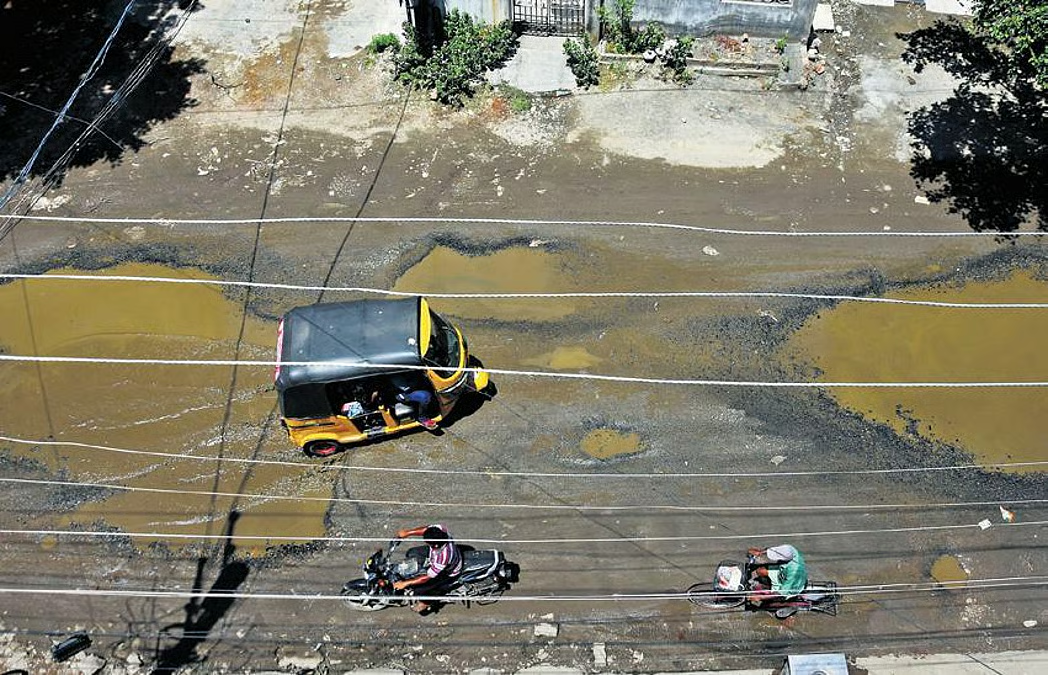
Chennai commuters and local residents are experiencing mounting disruptions following the sudden barricading of a service lane behind the Chromepet bus stop. The lane, controlled by the Highways Department, serves as a critical access route for bus passengers, post office visitors, bank customers, college students, and residents of New Colony. With approximately four feet of the road now blocked, two-wheelers, autorickshaws, and other small vehicles are forced onto the adjoining GST Road, aggravating congestion and raising safety concerns.
The obstruction has not only slowed traffic but has also created secondary urban challenges. Residents report that the barricaded stretch has become a dumping ground for waste, causing foul odours and an increased risk of mosquito-borne diseases. Urban planners note that such unplanned blockages can compromise both public health and the efficiency of essential city transport corridors, especially in densely populated neighbourhoods like Chromepet.Authorities, however, have offered conflicting accounts of responsibility. The Highways Department has denied involvement, while the local municipality has similarly distanced itself. Traffic police indicated that repeated illegal parking along the service lane prompted the placement of barricades to prevent misuse. They also stated that if the current arrangement is obstructing commuters, removal or relocation options would be considered.
Community voices, however, remain resolute. A senior activist from the New Colony Residents Welfare Association emphasised that a public service road cannot be barricaded without legal justification and threatened a peaceful campaign to restore access if the obstruction persists. The situation underscores the challenges of urban governance, where overlapping jurisdiction and unclear accountability often delay resolution of essential civic issues.Urban mobility experts highlight that service lanes such as the one in Chromepet play a vital role in dispersing traffic and providing safe access to neighbourhood facilities. Their partial closure can have cascading effects, forcing vehicles onto high-speed thoroughfares, increasing accident risks, and diminishing overall network efficiency. They also stress that maintaining hygiene and waste management along these connectors is essential to safeguard public health and ensure the roads remain functional.
As citizens demand coordinated action, the situation points to a broader need for integrated traffic and urban management in Chennai. Cooperation between the Highways Department, local municipalities, and traffic authorities is critical to prevent infrastructure misuse, safeguard commuter safety, and maintain the functionality of secondary roads. Resolution will not only improve daily mobility but also reinforce the city’s capacity to manage growing transport demands in a sustainable and people-first manner.