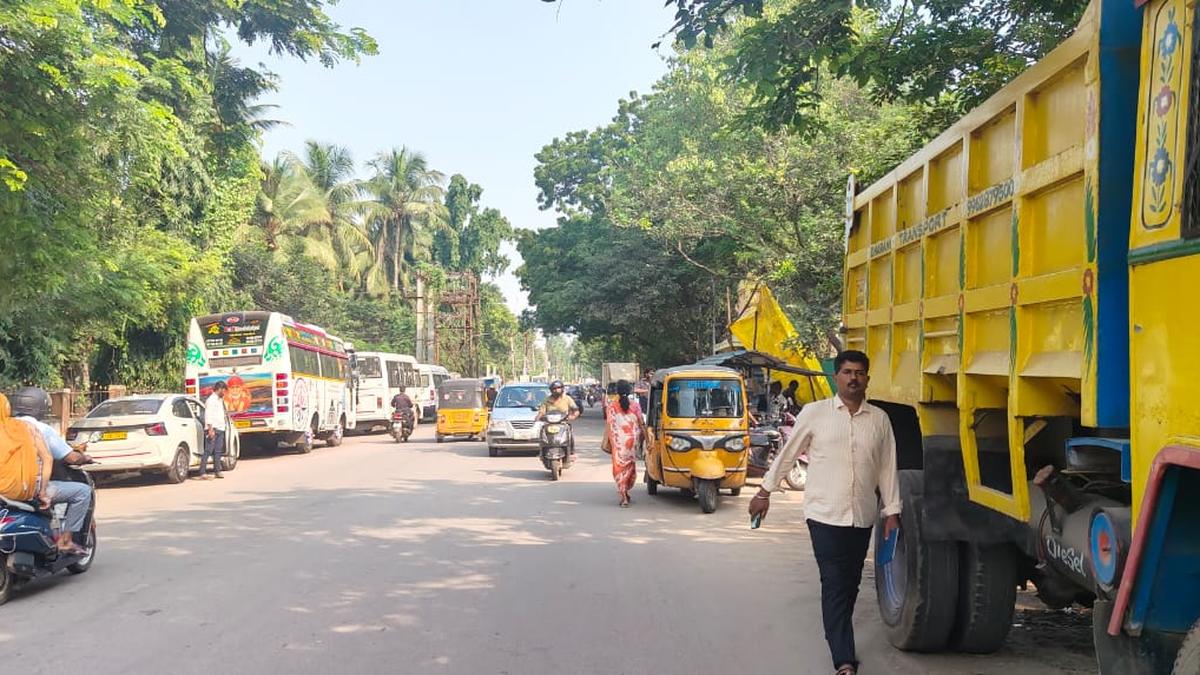
A key residential artery in Chitlapakkam, under Tambaram Corporation, has become a flashpoint for local infrastructure concerns as deteriorating road surfaces and sewage stagnation disrupt daily mobility and raise public health risks. The condition of the stretch, which connects Chitlapakkam Junction to inner neighbourhoods, underscores broader challenges around road safety concerns and last-mile civic maintenance in rapidly expanding suburban zones of Chennai.
The corridor, located in Ward 43 of Zone 3, serves several apartment clusters and independent homes while functioning as a feeder route to adjacent residential pockets. With multiple schools and tuition centres nearby, children and two-wheeler commuters depend on the road throughout the day. However, uneven surfaces, crater-like depressions and waterlogged patches have slowed traffic and forced riders to weave around damaged sections, increasing accident risks. Residents report that sewage overflow has combined with rainwater, forming stagnant pools along parts of the stretch. Apart from mobility hazards, this has triggered hygiene and mosquito-related concerns in a densely populated neighbourhood. Urban planners note that such situations often arise when surface road works and underground utility upgrades are not synchronised a recurring issue in fast-growing municipal jurisdictions.
Tambaram Corporation officials confirmed that repair works are being processed and that tenders for relaying the damaged portions are expected shortly. They indicated that a sanctioned underground drainage project would address the recurring sewage overflow once implemented. However, civic experts caution that temporary patchwork solutions without integrated stormwater and wastewater management may only offer short-term relief. Chitlapakkam’s transformation from a peripheral settlement to a mid-density residential zone over the past decade has intensified pressure on legacy infrastructure. Property developers have added housing stock to meet suburban demand, but road capacity, drainage systems and maintenance budgets have struggled to keep pace. This imbalance has direct implications for real estate valuations and liveability indices, particularly in emerging housing markets that market themselves as affordable alternatives to core city areas.
From a climate resilience perspective, damaged road surfaces and clogged drainage amplify flood vulnerability during monsoon events. Poorly maintained corridors can impede emergency access, disrupt school attendance and increase vehicular emissions due to stop-start congestion all of which deepen road safety concerns and environmental stress. Urban policy specialists argue that suburban corporations must adopt preventive asset management frameworks rather than reactive repairs. Digital complaint tracking, time-bound maintenance contracts and coordinated execution of road and drainage works are increasingly seen as essential for building resilient, people-first neighbourhoods. For residents of this Chitlapakkam stretch, the immediate demand is straightforward: safe mobility and reliable sanitation. For city managers, the episode is a reminder that sustaining suburban growth requires consistent investment in basic infrastructure not just expansion, but upkeep.