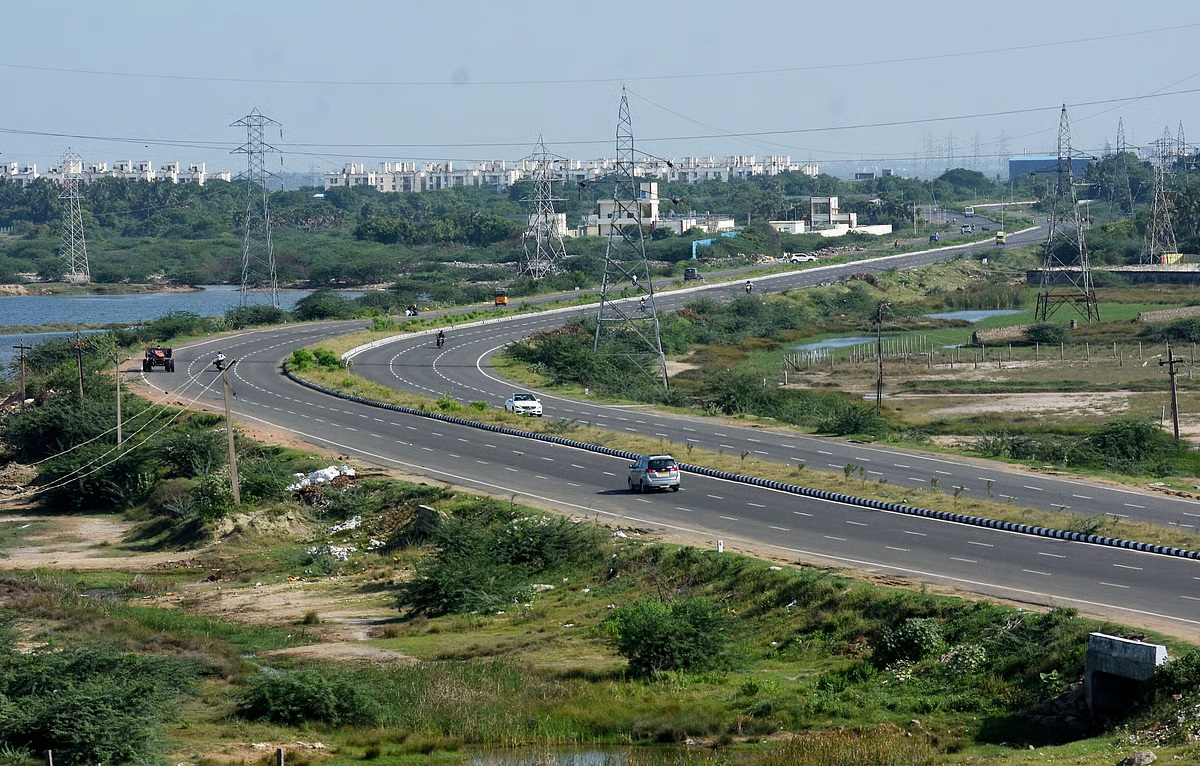
Chennai Bypass Work Stalls Amid Land Transfer Disputes
Chennai’s Tambaram region is facing persistent traffic congestion as the completion of a 9.3-kilometre eastern bypass remains stalled, owing to unresolved land transfer between revenue and forest authorities. The partially operational route, intended to decongest arterial corridors connecting Madambakkam and Perungalathur, has been blocked at its final 0.78-kilometre stretch that cuts through reserve forest near Vandalur and Nedungundram.
Urban planners highlight that delays in infrastructure projects often ripple across city mobility, impacting daily commuters and local businesses. “Even a short unfinished segment in a strategic bypass can significantly reduce the efficiency of the entire corridor,” said a senior transportation official. For residents and logistics operators, the stalled stretch has meant continued reliance on congested neighbourhood roads, undermining the economic rationale behind the bypass.
The impasse stems from regulatory requirements under India’s forest conservation framework. The Highways department has sought clearance to divert 4.46 hectares of forest land, contingent on the provision of equivalent compensatory afforestation. Initial proposals recommended doubling the area as a buffer, but updated guidance under the Van (Sanrakshan Evam Samvardhan) Adhiniyam, 1980, allowed parity between diverted and compensatory land. Despite Stage-I approval and formal applications for Stage-II clearance, coordination gaps between district administration, revenue, and forest departments have prevented progress in transferring the land. Experts in sustainable urban infrastructure note that such delays reflect systemic challenges in integrating environmental safeguards with urban expansion. “Balancing infrastructure growth with forest conservation is critical for climate-resilient cities. But procedural bottlenecks can exacerbate urban congestion and increase project costs,” said an urban development consultant. In this case, the contractor may seek compensation for cost escalations, potentially inflating project budgets and delaying further civic benefits.
From a broader perspective, the stalled bypass underscores the importance of anticipatory land planning in rapidly urbanising regions. Chennai’s peripheral areas, like Tambaram, are witnessing rising real estate and commercial activity, which heightens the economic impact of infrastructure delays. Ensuring timely coordination between forest and revenue authorities, alongside transparent compensatory land allocation, could serve as a template for similar projects across Indian cities. The Highways department has indicated that updated proposals are pending submission, but no timeline has been confirmed for resumption. Until approvals are secured, the final phase of the bypass remains on hold, leaving both commuters and urban planners to navigate the consequences of delayed urban infrastructure in one of Chennai’s busiest corridors.