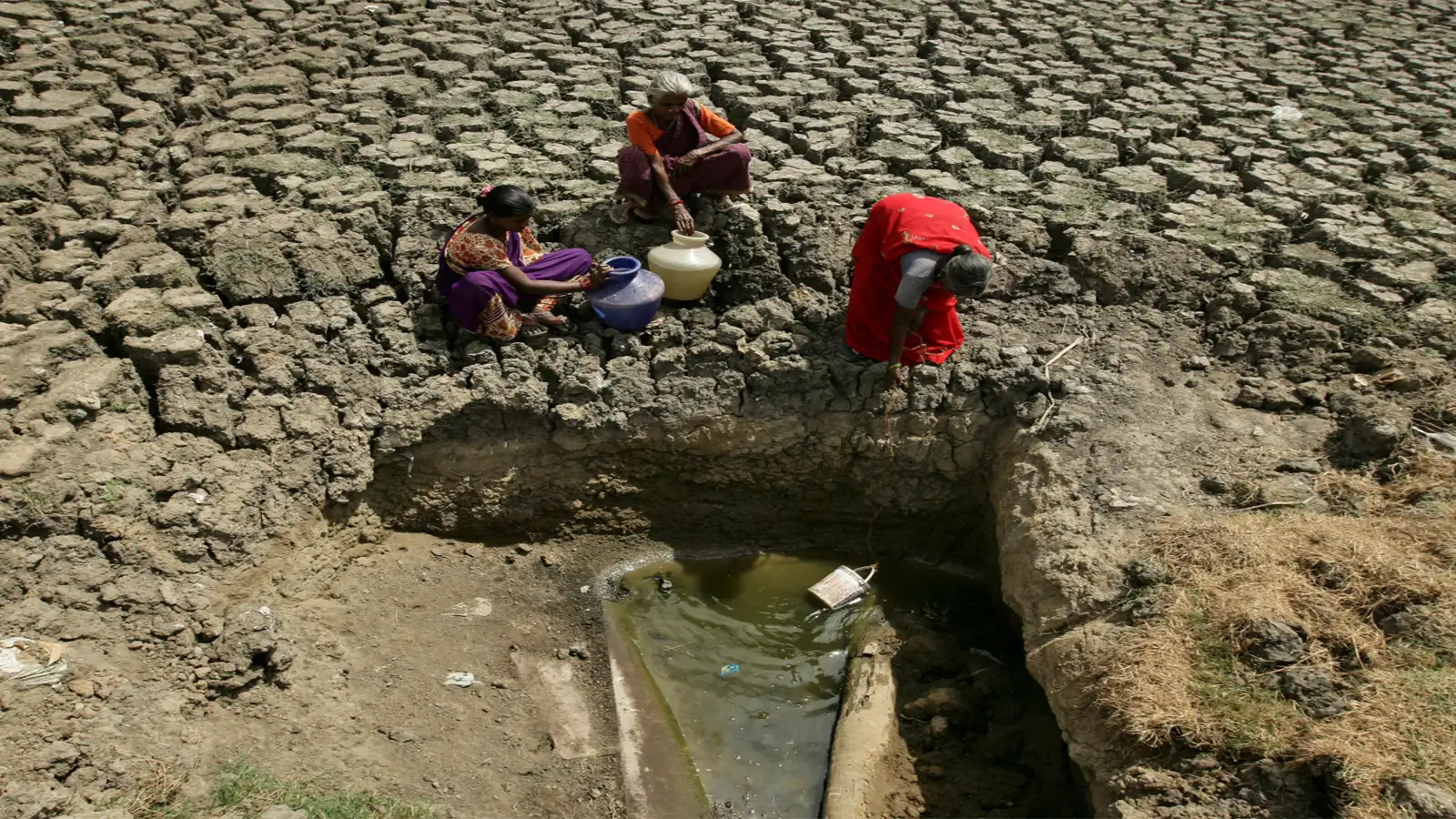
Chennai stands as a highly regulated zone for groundwater extraction, with a staggering 46 out of 51 revenue blocks classified as overexploited as of last year.
This critical situation has necessitated stringent rules governing the digging of borewells and the withdrawal of this vital subterranean resource, a lifeline for a city perpetually on alert for hydrological distress. While Chennai pioneered the implementation of an automatic groundwater monitoring system in 2021, deploying 200 devices and 20 rain gauges across its urban expanse, concerns linger among experts regarding the actionable insights derived from this wealth of data. The legal framework underpinning Chennai’s groundwater management is the Chennai Metropolitan Area Groundwater (Regulation) Act of 1987, a piece of legislation that designates the city and an extensive surrounding area as a ‘notified area’. This designation mandates that any individual or entity seeking to sink a well – be it an open well, dug well, borewell, or any other form of extraction point – for groundwater within these demarcated zones must first obtain explicit permission in the form of a permit or licence. This blanket requirement extends across Chennai city limits and the 302 villages within the Chengalpattu, Kancheepuram, and Thiruvallur districts specified in the Act’s schedule. The detailed operational procedures for this Act are further elaborated in the Chennai Metropolitan Area Groundwater (Regulation) Rules of 1988.
For residents and developers within Chennai city, the onus of securing this crucial permission rests with the Chennai Metropolitan Water Supply and Sewerage Board (CMWSSB). Conversely, for those residing in the scheduled villages within the Chennai Metropolitan Area, applications must be directed to the respective Sub-Collectors or Revenue Divisional Officers (RDOs), highlighting a decentralised approach to the regulatory oversight. The process of digging a borewell in Chennai is a multi-stage undertaking that begins with a meticulous site inspection to identify a suitable and safe location. This is followed by mandatory soil testing to ascertain the optimal depth and the water-bearing capacity of the underlying strata. The drilling itself must be executed by certified borewell contractors, and the subsequent installation of pumps and motors must adhere strictly to the specifications outlined in the granted permit, ensuring compliance with regulatory standards.
For individuals seeking to extract groundwater for domestic purposes, the application process involves submitting Form-I, accompanied by a nominal fee and applicable pumping charges, to the CMWSSB head office, area offices, depots, or via the CMWSSB’s online portal. The competent authority is then tasked with reviewing the application. If satisfied, a permit is granted under Form IV; if not, a refusal is communicated through Form VII. Crucially, the regulatory framework mandates that the authority cannot reject an application without first providing the applicant with a fair opportunity to present their case and address any concerns. A decision on the application is expected within 90 days. In the event of a refusal, applicants have a 15-day window to appeal to the civic utility or the District Revenue Officer, with a provision for an additional 15-day extension if a valid reason for the initial delay is presented. The documentation required for domestic groundwater extraction is comprehensive, encompassing the completed application form with all necessary applicant details, the precise location of the proposed well, legally sound proof of ownership or right to the land (such as a Patta or sale deed), a site plan duly signed by the Revenue Inspector, detailed technical specifications of the proposed borewell (including depth, diameter, type, and pump details), information on any existing nearby wells, the application fee payment receipt, and potentially a No Objection Certificate from neighbouring property owners.
Even existing well users who had not obtained prior permission are mandated to regularise their extraction activities by applying through Form-I, underscoring the retroactive application of these regulations to ensure comprehensive oversight of groundwater usage. For non-domestic or commercial extraction and the transportation of groundwater within Chennai and the specified surrounding villages, a more stringent licensing regime is in place. Entities seeking to extract or utilise groundwater for commercial purposes or to transport it via goods vehicles must apply for a licence from the competent authority using Form-II for extraction and Form-III for transport.
The approval process for these non-domestic licences involves a thorough analysis of several critical factors, including the intended purpose of the groundwater usage, the presence of other competing users in the vicinity, the proposed location and depth of the extraction, the overall availability of groundwater and alternative water sources, the potential impact on existing water supply systems, compatibility with the current water infrastructure, measures in place to control or prevent pollution, factors that could contribute to or cause pollution, the quality of the groundwater, any objections raised by local residents against commercial extraction, and the applicant’s proposed measures for groundwater conservation and rainwater harvesting. The documentation requirements for non-domestic extraction and transport are equally rigorous, including the completed Forms II and III with detailed information about the applicant, the well, and the purpose of extraction. Applicants must also provide ownership documents, proof of installed rainwater harvesting systems, and the application fee. While not explicitly mandated, the submission of a Detailed Project Report (DPR) is strongly advisable as it offers a comprehensive overview of the project’s water usage and sustainability initiatives. Additionally, a consent letter from the landowner is required if the applicant does not own the land, and land conversion documents are necessary if the land intended for non-domestic groundwater extraction is currently classified as agricultural.
The payment of the licence fee for non-domestic and transport purposes must be made at any branch of the State Bank of India, deposited into the Board’s account, with the payment receipt then submitted to the authorities. Upon approval, the licence is issued in Form-V for non-domestic use and Form-VI for groundwater transport, valid for one financial year (April to March) and requiring annual renewal before the end of December each year, following the same application procedure as the initial licence. In a measure designed to ensure administrative accountability, if the competent authority fails to communicate its decision on a licence application within 90 days, the licence is automatically deemed approved. Conversely, any decision to refuse a licence must be formally communicated to the applicant using Form-VII for non-domestic purposes or Form-IX for transport, and no refusal can be issued without providing the applicant an opportunity to address and clarify any objections. Applicants aggrieved by a licence refusal have a 15-day window to file an appeal – to the District Revenue Officer for village areas and to the Government for applications within Chennai city – with a provision for a 15-day extension for valid reasons.
The regulations also explicitly prohibit the use of groundwater in certain scenarios, including for non-potable industrial use when alternative sources are available, for filling swimming pools (unless the organisation promotes sports), and for general gardening purposes, reflecting a prioritisation of groundwater for essential needs. Stringent penalties are in place for violations of these regulations. A first offence can attract a fine of up to ₹2,000, while subsequent offences may lead to imprisonment for up to six months, a fine of up to ₹3,000, or both, underscoring the seriousness with which the authorities view non-compliance in a city grappling with profound water security challenges. The comprehensive regulatory framework in Chennai, while essential for managing its stressed groundwater resources, necessitates diligent adherence and awareness among its citizens and industries to ensure a sustainable and equitable distribution of this precious commodity in the face of increasing urbanisation and climate variability.
Chennai Borewell Rules Amidst Water Scarcity