


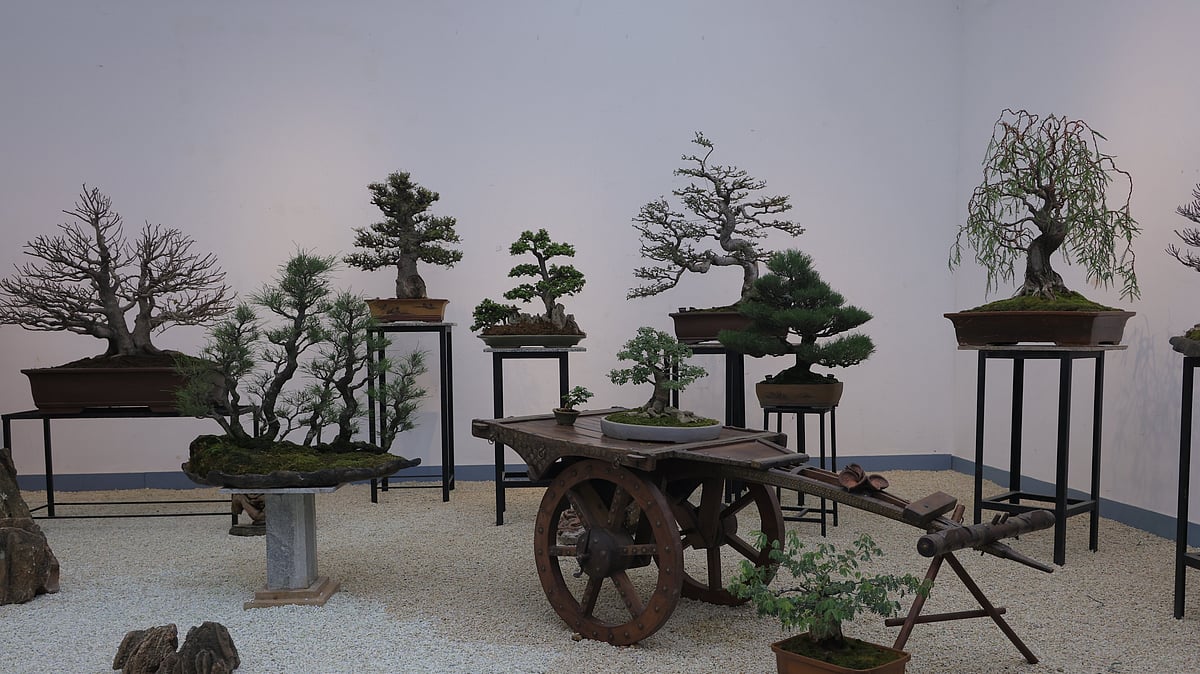
Chennai’s growing engagement with urban nature and mindful design is on display through a two-day exhibition featuring over 120 bonsai trees and suiseki stones, offering residents a window into the art of miniature landscapes.
The event reflects a rising interest in integrating nature into urban living, particularly in densely built environments.Bonsai, the practice of cultivating scaled-down trees, and suiseki, the appreciation of naturally formed stones, are both rooted in traditions that emphasise harmony between humans and nature. Their presentation in a metropolitan setting like Chennai signals a shift towards more conscious and aesthetic engagement with natural elements within city life.The exhibition has attracted enthusiasts, students, and urban residents seeking alternatives to conventional green spaces. In cities where land constraints limit the availability of large parks, such practices offer a way to incorporate greenery into smaller personal and shared spaces, including homes, offices, and community centres.From an urban development perspective, the rise of the Chennai bonsai exhibition trend highlights the importance of micro-level green interventions.While large-scale urban forestry remains critical, smaller initiatives can complement these efforts by promoting environmental awareness and encouraging individual participation in sustainability practices.Experts note that engaging with nature, even at a miniature scale, has psychological and environmental benefits.
Bonsai cultivation, for instance, requires patience and long-term care, fostering a deeper connection with ecological processes. In urban contexts, such activities can contribute to improved mental well-being and reduced stress levels.The Chennai bonsai exhibition also reflects the city’s evolving cultural landscape, where traditional art forms are being reinterpreted for contemporary audiences. By blending aesthetic appreciation with ecological awareness, such events create opportunities for education and community engagement.There are economic dimensions as well.Niche horticulture markets, including bonsai cultivation and related accessories, are gaining traction, creating opportunities for small businesses and artisans. Workshops, training sessions, and exhibitions contribute to a growing ecosystem around urban gardening and design.However, experts caution that such initiatives should complement, not replace, larger environmental strategies. Addressing urban challenges such as air pollution, heat islands, and biodiversity loss requires systemic interventions alongside individual efforts.Urban planners suggest that integrating these smaller-scale practices into broader sustainability frameworks can amplify their impact. Encouraging community gardens, rooftop greenery, and nature-based design solutions can help create more resilient urban environments.
As Chennai continues to expand, the popularity of events like the bonsai exhibition underscores a desire among residents to reconnect with nature. The challenge ahead lies in scaling these interests into broader urban policies that support greener, healthier, and more liveable cities.
Also Read:Chennai Women Entrepreneurship Programmes Drive Inclusive Growth
