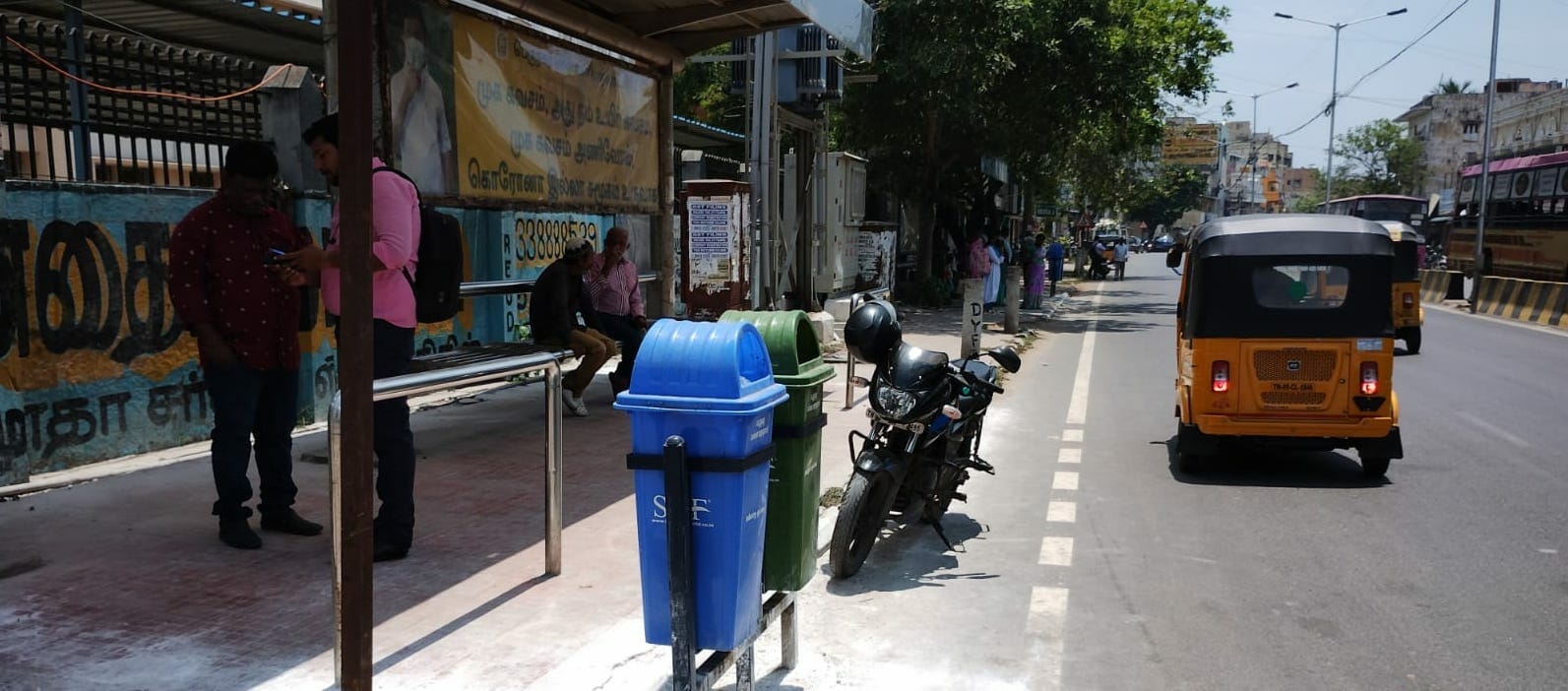
Chennai Bins Obstruct Roads Creating Commuter Risks
Certain central city streets are experiencing unintended safety challenges as pairs of fixed garbage bins occupy portions of the carriageway, particularly near bus stops, parks, and commercial areas. While the initiative aims to encourage proper waste disposal, the placement has created obstacles that could impede pedestrian movement and vehicle navigation, raising concerns about urban planning and public infrastructure management.
Urban planners note that public space optimisation is critical in densely trafficked areas. In neighbourhoods such as Egmore and Chintadripet, bins installed directly on the road surface are reflective at night, drawing drivers’ attention but also increasing the risk of tripping or collision. “The intention of placing waste receptacles is commendable,” said a senior municipal official, “but situating them on active carriageways can introduce new hazards, particularly for elderly pedestrians and those with mobility challenges.”
From an economic and civic perspective, the positioning of street furniture like garbage bins can influence both footfall and safety perceptions in commercial areas. While shopkeepers report active usage by shoppers, in other spots near bus stands, the bins encroach on the space used for boarding and alighting, disrupting commuter flow and potentially slowing public transport efficiency. Industry experts highlight that minor design misalignments can cascade into broader urban mobility inefficiencies, affecting city transport networks and pedestrian accessibility. Environmentally, fixed bins support the city’s zero-waste and sustainability goals by reducing litter and promoting proper waste segregation.
However, their placement must balance environmental benefits with public safety, accessibility, and traffic efficiency. Urban policy analysts emphasise that cities aiming for climate-resilient, inclusive infrastructure must consider human-centred design principles when implementing civic utilities. Poorly sited urban elements, even with positive intent, can undermine broader objectives of safe, equitable, and people-first streetscapes. Looking ahead, municipal authorities may need to review the siting of fixed street bins to ensure compliance with safety standards while maintaining waste management effectiveness. Potential solutions include reallocating bins to pedestrian islands, widening footpaths, or using modular designs that do not intrude on vehicular and pedestrian pathways. Such adjustments would align with the city’s long-term goal of creating inclusive, efficient, and sustainable urban infrastructure.