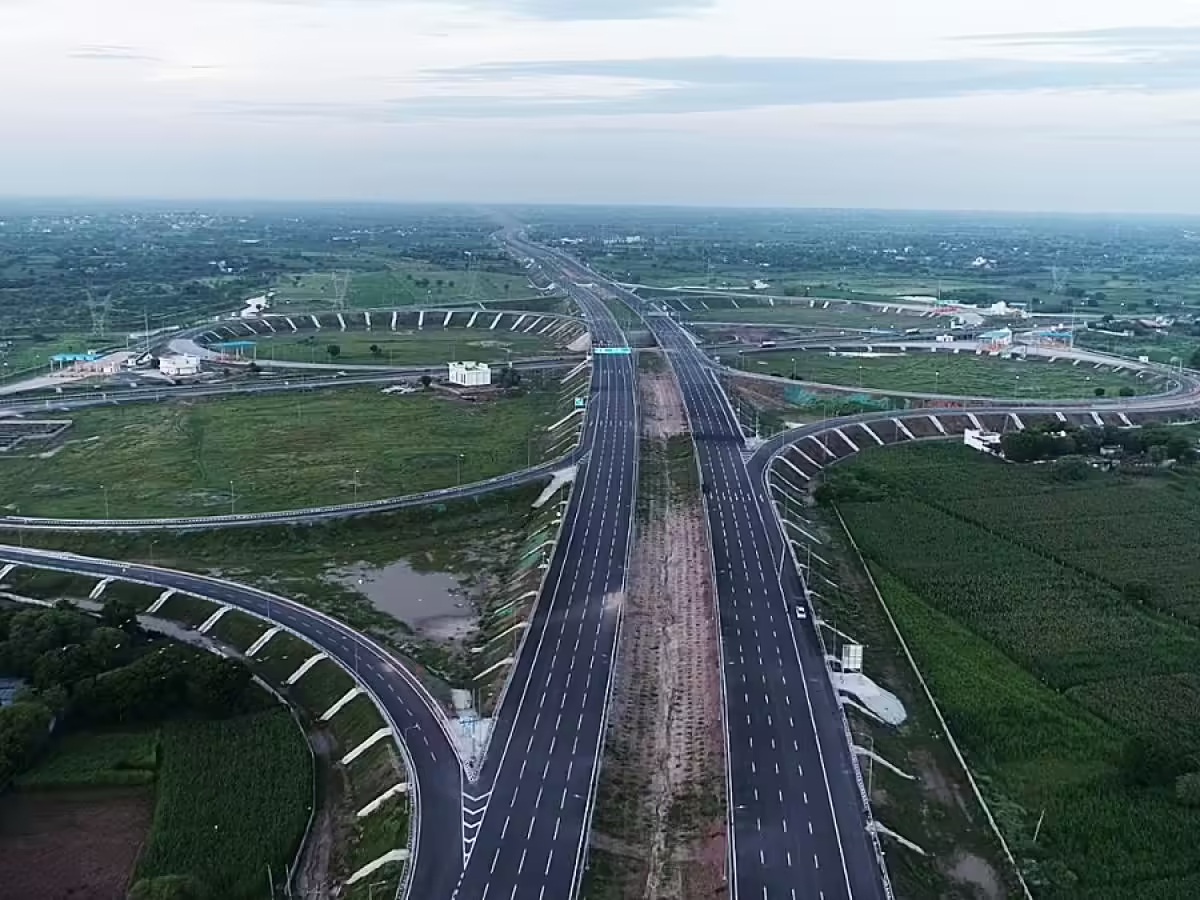
The proposed two-hour drive between Bengaluru and Chennai via the under-construction Bengaluru–Chennai Expressway has sparked fresh debate among transport planners and logistics experts, who say the claim may not fully account for urban realities at either end of the corridor. The greenfield access-controlled highway, spanning roughly 260 km between Hoskote on the outskirts of Bengaluru and Sriperumbudur near Chennai, is being positioned as a transformative link for southern India’s two largest technology and manufacturing hubs. Designed for a top speed of 120 kmph, the corridor is expected to reduce travel time significantly compared with the existing 350 km intercity stretch that can take up to nine hours in peak conditions.
However, industry observers note that the projected two-hour travel time reflects ideal highway speeds rather than real-world, door-to-door journeys. Hoskote falls outside Bengaluru’s municipal limits, while Sriperumbudur lies around 40 km from central Chennai. Reaching the expressway access points from dense urban neighbourhoods could itself take 60–90 minutes, depending on congestion. Transport economists point out that even if motorists maintain high cruising speeds, practical factors such as toll plazas, traffic merging at interchanges, heavy vehicle movement and weather disruptions influence average journey times. Maintaining a sustained 120 kmph across the full alignment is unlikely under mixed traffic conditions. That said, the Bengaluru Chennai Expressway remains strategically significant. By bypassing town centres and freight bottlenecks along the older national highway, the corridor could ease pressure on existing roads, reduce idling emissions, and cut logistics costs for electronics, automotive and industrial clusters along the route.
Freight operators anticipate more predictable delivery windows, which are critical for time-sensitive supply chains. Urban planners also argue that the expressway’s impact should be assessed beyond headline travel times. Faster intercity connectivity can alter real estate dynamics in peripheral districts such as Kolar and Ranipet, potentially accelerating industrial parks, warehousing hubs and residential townships. Without coordinated land-use planning, however, such growth risks encouraging car-dependent sprawl a challenge for cities already grappling with air pollution and infrastructure strain.From a climate perspective, high-speed corridors can reduce fuel burn through smoother traffic flow. Yet induced demand where better roads generate more vehicle trips could offset environmental gains unless supported by parallel investment in rail and public transport.
For daily commuters, a more realistic expectation may be a 5–6 hour city-centre-to-city-centre journey once the full corridor becomes operational. While that still represents a marked improvement, it underscores the difference between expressway design speed and urban mobility outcomes. As southern India expands its industrial base, the Bengaluru Chennai Expressway will likely reshape economic geography. The critical question is whether supporting infrastructure, public transport integration and sustainable planning keep pace with the asphalt.