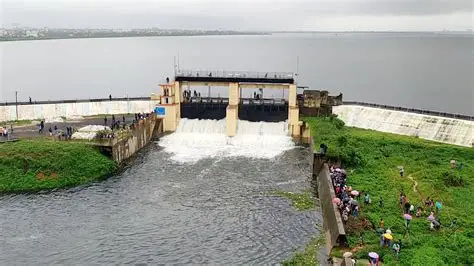
Chennai Balances Reservoir Gates To Protect Suburbs
Chennai’s water managers have adopted a dynamic flood-release strategy this monsoon, regulating reservoir gates based on real-time rainfall and inflow conditions rather than keeping them continuously open. The calibrated approach aims to prevent urban flooding while safeguarding water storage for the dry season a growing imperative for cities grappling with climate variability.
Officials said the Red Hills reservoir alone has undergone six controlled releases since the onset of heavy rains. Instead of allowing uninterrupted discharge, the shutters were opened only when inflows peaked and closed quickly once downstream areas required relief. “The intention was to retain as much water as possible without amplifying local flooding,” a senior department representative said. To ease pressure on vulnerable neighbourhoods downstream, authorities temporarily halted the outflow during heavy spells, allowing urban drainage channels to carry accumulated water first. During dry intervals, inflows from surrounding river systems including Araniyar, Kesavaram and Korattur were directed to Poondi and Chembarambakkam reservoirs to strengthen storage levels. Water was also diverted through the link canal from Poondi on peak inflow days to reduce hydraulic load across the waterways.
Teams on the ground monitored both regulated and unregulated stretches of rivers to assess risks in real time. Officials noted that shutter operations were alternated between Poondi and Red Hills to prevent excess discharge converging simultaneously, which has been known in previous years to exacerbate inundation near industrial clusters and residential settlements. The shift reflects a broader urban-water management conversation across Indian metros balancing flood control during intense weather events while sustaining supply for rapidly expanding populations. Frequent heavy rainfall, driven by climate change, has made both objectives more complex. In a move toward long-term resilience, trial runs are now under way to automate reservoir gate operations through a Supervisory Control and Data Acquisition (SCADA) system. Experts say automation could reduce manual delays, improve forecasting, and enable equitable water distribution without compromising safety. “SCADA will give operators a live dashboard of rainfall, river levels, and consumption patterns. It has the potential to make reservoir management more citizen-centred and climate-responsive,” said an urban hydrology specialist.
Sustainable water governance has become central to Chennai’s urban future. Reservoir releases not only shape immediate flood risk but also determine the reliability of drinking-water supply for millions. As the city aspires to develop in a more inclusive way, stable access to water regardless of season or socio-economic profile remains fundamental. If automated flood management proves successful, planners hope the model could extend to other Indian cities prone to flooding and drought cycles, promoting a shared vision of climate-resilient and equitable water security.
Chennai Balances Reservoir Gates To Protect Suburbs