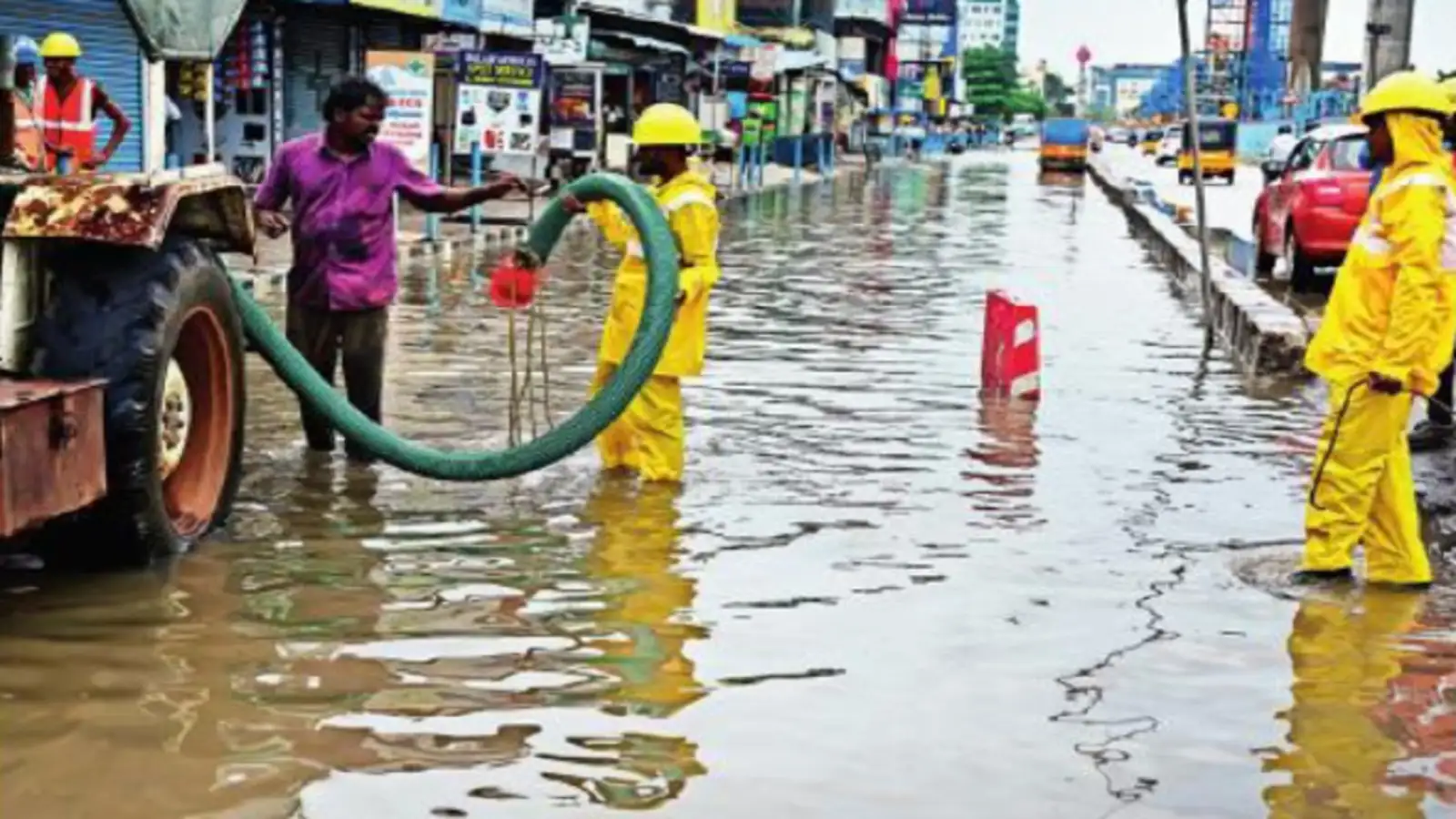
Chennai Authorities Examine Flood-Prone Rainwater Vent Beneath Thiruneermalai Bypass Road
Chennai authorities conducted a joint inspection of a rainwater vent beneath the Thiruneermalai Bypass Road, aimed at addressing persistent flooding concerns. Officials from the National Highways Authority of India, the Water Resources Department, and the Chennai Metropolitan Water Supply and Sewerage Board surveyed the site following requests from local residents. The assessment focused on improving drainage from the Nattukalvai channel, which carries overflow from nearby water bodies into residential areas during heavy rains.
This marks the second collaborative survey of the vent after repeated appeals by the Federation of Welfare Associations and other resident groups. Local activist B. Saravanan explained that runoff from Pachai Malai enters Veeraraghavan Eri and Thiruneermalai Periya Eri before reaching Nattukalvai. “Encroachments along the channel force excess rainwater into nearby homes, creating frequent flooding,” he said, adding that a retaining wall and reopening closed canal sections could help manage flows of 1,000–1,800 cusecs during monsoon periods towards the Adyar River.WRD officials confirmed they had submitted a preliminary project proposal, estimating ₹35 crore for flood mitigation measures. The proposal is awaiting funding approval after presentation at a Tamil Nadu Chief Minister’s Office camp. CMWSSB representatives noted plans to augment the canal with six drinking water pipelines, including the existing Veeranam water supply line. The pipelines will run underground along and across the channel, contingent on WRD authorisation.
NHAI authorities said they are awaiting bed stream level data from WRD to prepare a detailed project plan for submission to the regional office in New Delhi. “Coordination among the three departments is essential to expedite approvals and ensure timely construction,” an official commented. Residents have expressed urgency, hoping the project begins before the 2026 State Assembly Election Code of Conduct restricts new infrastructure initiatives.Urban planning experts say Chennai’s recurring floods underscore the challenges of integrating urban expansion with climate-resilient infrastructure. “Effective urban drainage must combine capacity, encroachment management, and natural water retention strategies to be sustainable,” noted an industry consultant.
For Thiruneermalai, the proposed vent expansion and drainage improvements could substantially reduce flood risks while supporting long-term, equitable urban growth. Beyond immediate relief, the project highlights the need for climate-adaptive city planning, balancing infrastructure development with ecological preservation. As Chennai faces increasing rainfall intensity, timely interventions like these will be critical to protect communities, safeguard water resources, and advance inclusive, sustainable urbanisation.