


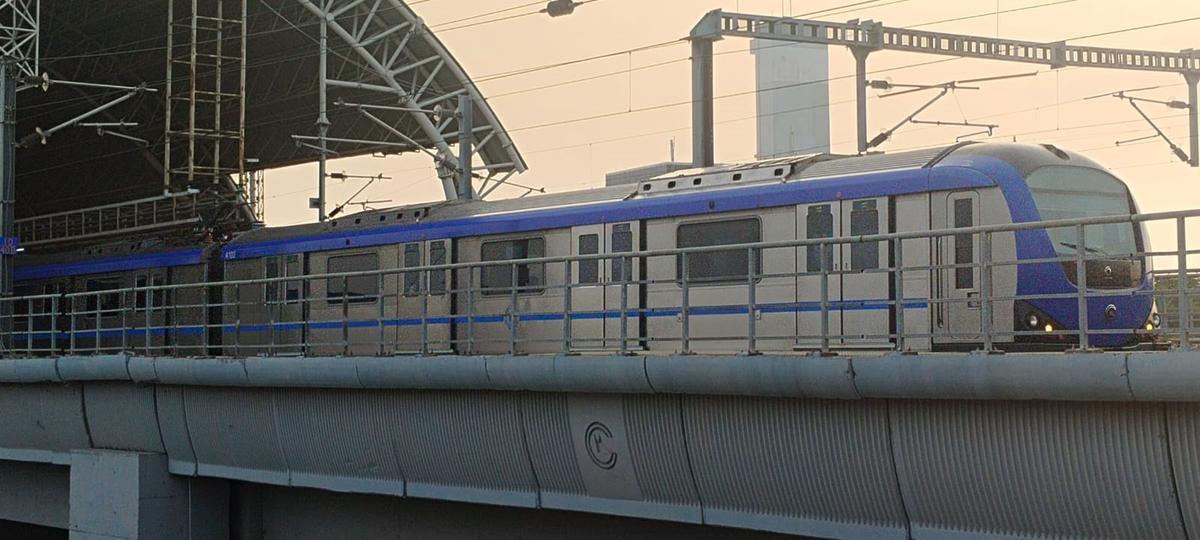
The Tamil Nadu government has given administrative sanction for preparatory work on the Koyambedu Avadi Pattabiram metro corridor, setting in motion one of the city’s most anticipated mobility projects. The approval empowers Chennai Metro Rail Limited (CMRL) to initiate groundwork such as land acquisition, utility shifting and related activities, while awaiting funding clearance from higher authorities. This 21.76-km stretch is expected to be a game-changer for commuters across north-western Chennai.
The project aligns with the state’s ambition of building sustainable and eco-friendly mobility systems, aimed at reducing dependence on fossil-fuel-driven transport. Officials said that the metro extension will improve connectivity between dense residential zones and emerging commercial hubs, while also easing traffic congestion along arterial roads. Urban mobility experts view this as a significant stride towards creating a low-carbon, equitable and accessible transport ecosystem for the metropolis.CMRL is already undertaking large-scale expansions under Phase II of Chennai Metro, which spans 118.9 km. The inclusion of the Avadi–Pattabiram corridor adds depth to the network, integrating areas that were previously underserved by rapid transit. Authorities confirmed that the corridor would feature multiple interchanges with existing and proposed metro lines, enhancing last-mile connectivity and providing seamless travel options for lakhs of passengers.
Also Watch: An Exclusive Interview with Sanjeev Jaiswal (IAS), CEO MHADA
Beyond daily commuting, the corridor is expected to carry long-term economic significance. Improved transport infrastructure often leads to higher land value, faster urban development and better access to education and employment opportunities. According to planning experts, the metro project will also reduce private vehicle dependence, thereby curbing air pollution and noise levels in heavily populated localities.The state’s focus on mass transit also underscores its commitment to gender-neutral and equitable cities. Better public transport facilities have been shown to improve safety, affordability and accessibility for women, the elderly and differently abled commuters. In particular, suburban regions such as Avadi and Pattabiram, which house large sections of the workforce, are expected to benefit from improved mobility and reduced travel times to the city core.
The corridor, once executed, will serve as an alternative to road and suburban rail travel, offering faster, cleaner and more reliable transit. While earlier metro projects faced challenges such as cost escalations and delays, officials expressed confidence that the preparatory sanction would allow smoother execution and timely delivery once central clearances are secured.For a city already grappling with rising vehicular congestion and deteriorating air quality, the approval of this corridor marks a decisive step towards sustainable urban transformation. As groundwork begins, Chennai moves closer to a future where mobility is not just about speed, but also about inclusivity, equity and environmental responsibility.
