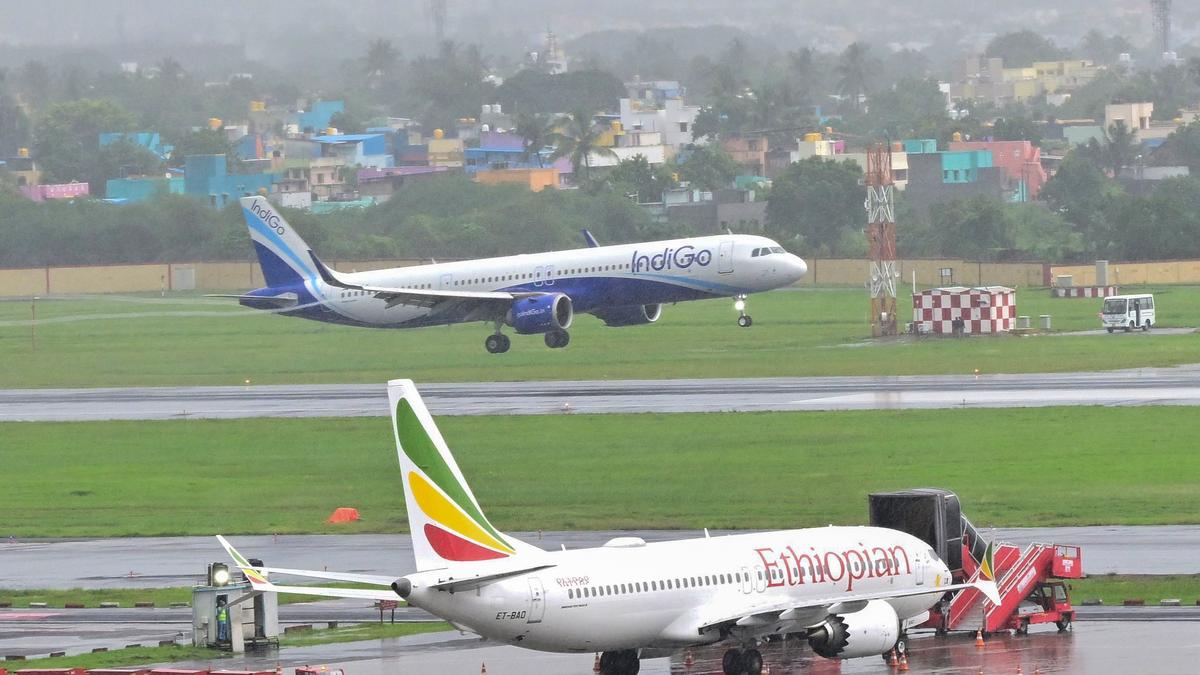
Chennai’s air connectivity with West Asia experienced significant disruption over the weekend, with at least 14 flights to destinations including Dubai, Abu Dhabi, Doha, Muscat, and Sharjah cancelled or diverted. The interruptions follow a sudden escalation in regional tensions, prompting authorities in parts of the Middle East to impose temporary airspace restrictions. The disruptions have affected passengers and cargo movement, highlighting vulnerabilities in international flight operations that connect India’s southern economic hubs to Gulf markets.
The cancellations affected a mix of national and international carriers, with flights scheduled from late Saturday evening through early Sunday morning. Officials cited restrictions in the Muscat flight information region (FIR), which accepted only flights routing towards Jeddah, leading to congestion and subsequent diversions. Several airlines were forced to cancel flights shortly after departure, impacting schedules and stranding passengers who were already in transit.
For Chennai, a city with growing urban and business corridors, West Asia remains a critical economic link. Trade, remittances, and corporate travel depend heavily on seamless air connectivity. A senior industry official noted that even short-term airspace restrictions can ripple across logistics chains, affecting time-sensitive cargo such as electronics, pharmaceuticals, and perishable goods. The economic implications extend beyond airlines, influencing supply chains, airport operations, and ancillary services such as hotels and urban transport. Urban planners and aviation analysts point out that such disruptions also have environmental and operational consequences. Diverted flights increase fuel consumption and emissions, running counter to long-term goals for sustainable and low-carbon urban mobility. In cities like Chennai, where airport expansions and greenfield infrastructure projects are underway, integrating resilience into air traffic management and urban planning is increasingly critical.
Passengers were advised to monitor airline websites and registered communications for real-time updates. Several carriers are rescheduling flights and offering alternatives, but uncertainty persists as the geopolitical situation evolves. Experts emphasise the need for contingency planning in metropolitan hubs, combining climate-conscious infrastructure design with operational flexibility to minimise disruption from both natural and geopolitical shocks. While Chennai’s airport authority and airlines work to restore regular schedules, the episode underscores the fragility of international connectivity in urbanised regions dependent on global trade and migration flows. Strengthening adaptive infrastructure and real-time coordination with regional airspace authorities will be key to building resilient urban transport networks that serve both citizens and the broader economy.