


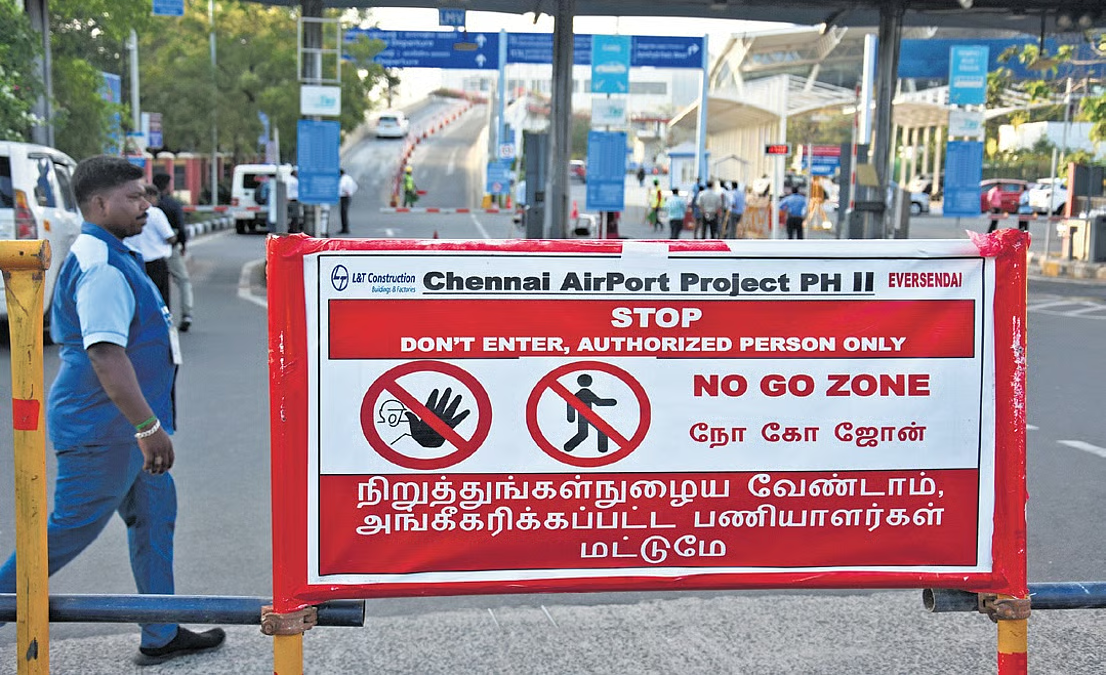
Chennai Airport Implements Strategic Traffic Flow Changes
Chennai’s international airport has introduced a comprehensive set of traffic and vehicle management measures aimed at improving passenger access and reducing congestion in and around the terminal area.
The initiative reflects a growing focus on operational efficiency, urban mobility, and passenger convenience in one of South India’s busiest aviation hubs.Urban transport experts note that airports are critical nodes in city infrastructure, where traffic management directly affects both passenger experience and the surrounding urban environment. By redesigning entry and exit lanes, introducing dedicated pick-up and drop-off zones, and refining signage, Chennai airport seeks to optimise vehicle circulation and reduce bottlenecks during peak travel hours.Officials indicate that these changes are intended to streamline passenger movement while enhancing safety and accessibility. This is particularly important for Chennai, where high volumes of commercial vehicles, taxis, and private cars often converge in the airport vicinity, creating operational and environmental challenges. Efficient traffic management not only shortens travel times but also mitigates emissions from idling vehicles, contributing to the airport’s broader sustainability objectives.A senior urban planner highlighted that the modifications reflect a city-level effort to integrate aviation infrastructure with sustainable urban mobility strategies.
Airports with well-managed traffic flows can reduce congestion spillover into adjacent arterial roads, improving overall city traffic conditions and decreasing the environmental footprint of surface transportation.From an economic standpoint, smoother access to terminals can enhance the attractiveness of Chennai as a business and tourism destination. Airlines and service operators benefit from improved scheduling reliability, while nearby commercial establishments, such as hotels and logistics providers, experience more predictable customer flows. Industry analysts suggest that efficient airport mobility also supports real estate growth in surrounding areas, as improved connectivity makes adjacent commercial and residential developments more viable.The authorities emphasise that these traffic flow updates are part of an incremental approach to modernise airport infrastructure, incorporating technology-driven monitoring, real-time information systems, and responsive urban design. Future enhancements could include integrated public transport links, app-based parking management, and automated wayfinding to further streamline passenger movement and reduce dependence on private vehicles.
As Chennai continues to expand as a regional aviation and commercial hub, these operational adjustments underscore the importance of combining transport planning, environmental responsibility, and urban development. For city residents and travellers alike, the changes promise a more organised, efficient, and sustainable experience, setting a benchmark for other urban airports in India.
Also Read:Bengaluru Airport Introduces Seamless Transfer Connectivity
