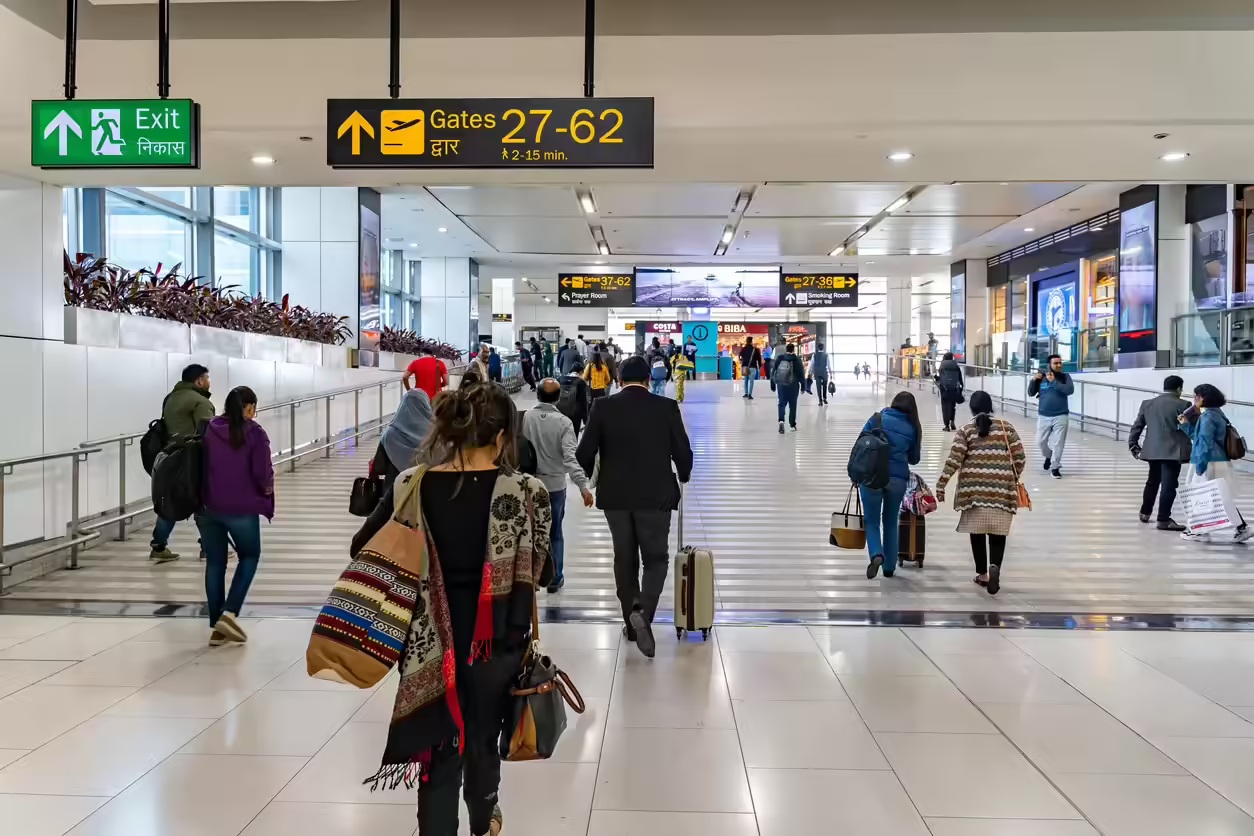
Chennai’s international aviation network faced renewed stress on Monday after 13 inbound services from West Asia were grounded amid escalating military tensions between Iran and Israel. The cancellations, which affected flights scheduled between early morning and noon, disrupted passenger movement at one of south India’s key international gateways and exposed the vulnerability of urban air connectivity to geopolitical shocks. Airport authorities confirmed that arrivals from Dubai, Doha and Abu Dhabi were among those affected. Carriers operating on these routes suspended services following airspace restrictions and operational advisories across parts of the Middle East. The resulting Middle East flight cancellations left hundreds of passengers reworking onward connections, business meetings and family travel plans.
For Chennai, which relies heavily on Gulf routes for labour mobility, trade links and NRI traffic, even short-term disruption carries economic implications. West Asia accounts for a significant share of outbound migrant travel from Tamil Nadu, as well as inbound remittances that underpin household spending and real estate investments across the state. Industry observers say Middle East flight cancellations also strain airport infrastructure planning. When flights are abruptly withdrawn, passenger flow becomes uneven, affecting terminal operations, ground handling schedules and retail footfall. “Airports function on precision logistics. Sudden airspace closures ripple through crew allocation, aircraft rotation and slot management,” said a senior aviation analyst.
The episode underscores a broader challenge for Indian cities aspiring to become global business hubs. As urban economies integrate with international markets, they become more exposed to distant conflicts and climate-linked disruptions. Chennai airport, currently expanding capacity and modernising passenger facilities, must factor geopolitical volatility into resilience planning, experts suggest. Urban planners note that diversified route networks and improved multimodal connectivity can cushion such shocks. Strengthening rail links to other southern metros, improving digital ticketing transparency and enhancing passenger communication systems are viewed as immediate mitigation tools.
Airlines are expected to reassess schedules depending on how long regional tensions persist. While temporary rerouting is possible, prolonged airspace closures can increase fuel burn, raise ticket prices and delay cargo shipments. For a city positioning itself as an automotive, electronics and manufacturing hub, air cargo continuity is equally critical. The present Middle East flight cancellations serve as a reminder that aviation infrastructure is not merely about terminals and runways; it is about resilience in an interconnected world. As Chennai continues to expand its global footprint, integrating contingency planning into airport operations may prove as important as adding new routes. For travellers and businesses alike, clarity on schedule restoration will determine how quickly normalcy returns. Until then, the city’s aviation ecosystem remains closely tied to developments far beyond its coastline.