


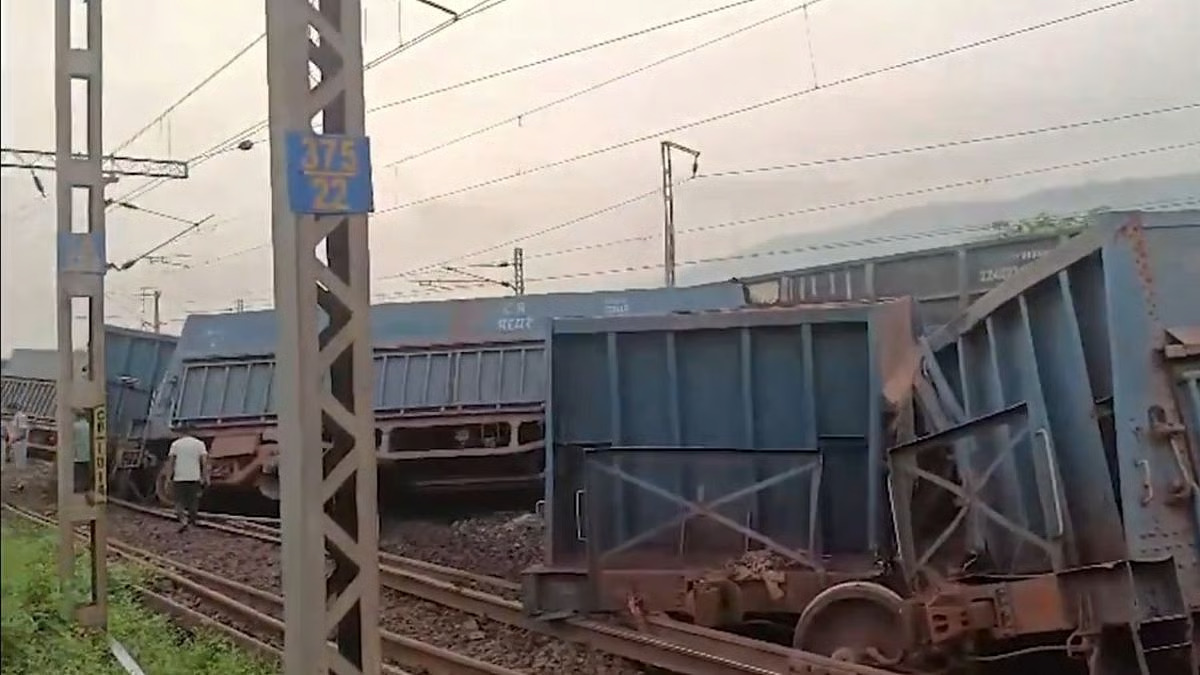
A goods train derailment in Jharkhand has severely impacted a critical railway corridor, disrupting services and halting the movement of both essential cargo and high-speed passenger traffic. The incident, while thankfully causing no injuries, highlights a significant challenge to the nation’s vision for zero-net-carbon, equitable, and sustainable urban centres. The disruption on the Chandil-Tatanagar section of the South Eastern Railway underscores the urgent need for a resilient and robust rail network to ensure the reliability of this eco-friendly mode of transport. The derailment of over 20 wagons, some of which fell onto an adjacent line, points to a potential infrastructure failure that has cascading effects on a complex, interconnected system.
The ripple effect of the derailment was immediately felt by thousands of passengers and freight operators. Multiple express and mail trains, including the premium Patna-Tatanagar Vande Bharat Express, were cancelled, diverted, or short-terminated, leaving travellers stranded and disrupting travel plans. While the South Eastern Railway mobilised restoration efforts, the incident serves as a stark reminder that even a single point of failure can paralyse a large-scale network. This disruption of both passenger and cargo services highlights the delicate balance between the high-volume efficiency of a rail network and its inherent vulnerability to infrastructure-related accidents.
From an analytical and environmental perspective, the incident exposes a crucial paradox. Rail is widely recognised as a far more energy-efficient and zero-carbon mode of transport compared to road haulage. However, the benefits of this green transport model are diminished when the infrastructure is prone to such failures. A reliable and well-maintained rail network is fundamental to a sustainable future, as it reduces the reliance on fossil-fuel-intensive road transport. The derailment, which experts suggest could be due to track or mechanical faults, underscores the need for continuous, proactive investment in track maintenance, signalling systems, and rolling stock. This is not just a matter of safety, but of ensuring that the rail system can truly serve as a dependable, zero-carbon backbone for a modern economy.
Economically, the derailment of a goods train can have wide-ranging and inequitable impacts. While the immediate cost is to the railway for repairs and to affected passengers, the long-term cost is to the supply chain. The halting of freight traffic can delay the supply of raw materials to industries and essential goods to communities, creating economic shocks that can disproportionately affect small businesses and low-income populations. A resilient and dependable rail network is therefore not just a logistical necessity but a foundation for an equitable economy, ensuring that all segments of society have access to a stable and reliable supply chain. The incident near Chandil, while a setback, should serve as a powerful catalyst for prioritising investment in the resilience and sustainability of the entire railway infrastructure.
Also Read :Ganjkhwaja launches 4.5 km Rudra‑Astra freight train trial from UP to Latehar
