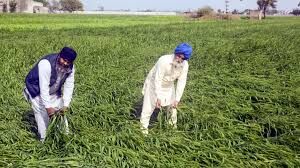
Unseasonal weather disruptions across Punjab and Haryana have triggered fresh demands for financial relief, with a legislator raising concerns in Chandigarh over the mounting impact on farmers just ahead of the harvest season. The call for compensation reflects growing pressure on state administrations to respond swiftly to climate-linked agricultural shocks that are increasingly affecting regional economies.
Recent spells of rain, hailstorms, and strong winds have caused significant damage to standing wheat crops, particularly at a critical stage when harvesting was imminent. Agricultural experts indicate that such untimely weather events can sharply reduce both yield and quality, exposing farmers to immediate income losses and longer-term financial instability. During a public intervention, a senior legislator urged the state government to conduct rapid on-ground assessments of crop damage and ensure timely compensation for affected farmers. The demand includes financial assistance calibrated to per-acre losses, alongside faster disbursal mechanisms to prevent distress from escalating into a wider agrarian crisis. The issue is compounded by unresolved claims from previous weather-related events. Officials and farmer representatives note that compensation for earlier flood damage remains pending in several cases, creating a backlog that has eroded trust in relief systems. This “double shock” effect—where farmers face consecutive climate events without adequate recovery support—has intensified calls for systemic reform in agricultural risk management.
The current episode highlights a broader structural challenge. Northern India’s agricultural belt is increasingly vulnerable to erratic weather patterns, including sudden rainfall, hailstorms, and temperature fluctuations. These disruptions are not only affecting crop cycles but also creating uncertainty in procurement systems, as moisture-damaged grain often fails to meet quality standards for government purchase. Urban and economic observers point out that such agricultural distress has wider ripple effects. Cities like Chandigarh, which serve as administrative and economic hubs for surrounding rural regions, are closely linked to agricultural income flows. Reduced farm earnings can impact demand in urban markets, affecting sectors ranging from retail to logistics.
The crisis also underscores the need for stronger institutional mechanisms such as crop insurance, weather-indexed risk coverage, and real-time data systems for damage assessment. In states where participation in national insurance schemes remains limited, compensation often depends on ad hoc administrative decisions, leading to delays and inconsistencies. From a policy perspective, the demand for compensation is part of a larger conversation around climate resilience in agriculture. Experts suggest that beyond immediate relief, investments in resilient crop varieties, improved drainage systems, and early warning infrastructure will be critical to reducing vulnerability.
As extreme weather events become more frequent, the ability of governments to respond quickly and equitably will play a decisive role in stabilising rural economies. The current situation in Chandigarh and surrounding regions serves as a reminder that climate resilience is no longer a long-term agenda—it is an immediate governance challenge with direct implications for both rural livelihoods and urban economic stability.