Chandigarh Tribune Flyover Tender Comes Below Estimate
A key infrastructure project in Chandigarh has entered a decisive phase after financial bids for the Tribune Chowk flyover revealed a significantly lower-than-expected cost, signalling both competitive market dynamics and potential savings in urban infrastructure delivery.
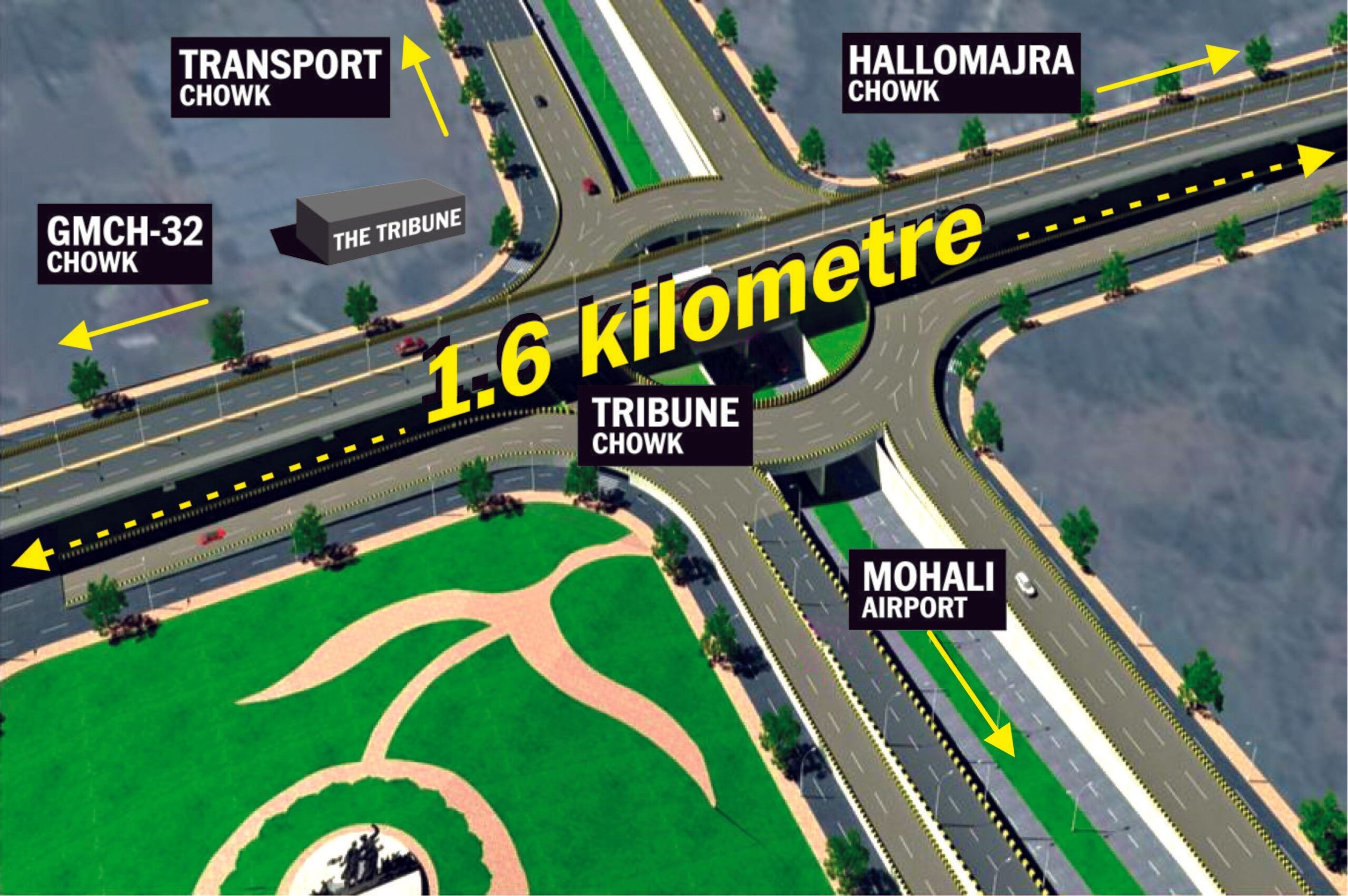
The lowest bid for the proposed flyover-cum-underpass project has been quoted at approximately ₹147.98 crore, nearly 31% below the estimated project cost. The tendering process drew 12 bidders, of which eight qualified for financial evaluation after technical scrutiny, reflecting strong participation from infrastructure firms. The project, located at one of the busiest junctions in the city, aims to address persistent congestion at Tribune Chowk—a critical intersection handling over 1.5 lakh vehicles daily. The intervention includes a six-lane flyover, rotary redesign and an underpass, collectively intended to create a signal-free corridor and improve traffic flow across the NH-05 stretch. The emergence of a substantially lower bid has broader implications for infrastructure procurement in Indian cities. Analysts suggest that aggressive bidding may reflect improved efficiencies among contractors, evolving construction technologies and heightened competition in the sector. However, it also raises questions about execution risks, particularly around quality control and adherence to timelines—issues that have historically affected public works.
The Chandigarh flyover project has a long gestation history. Initially conceptualised nearly a decade ago, it faced prolonged delays due to environmental litigation, including restrictions on tree removal. Following the resolution of these hurdles, the project was revived with revised cost estimates and fresh tenders issued in late 2025. From an urban mobility perspective, the project represents a critical intervention in Chandigarh’s evolving transport landscape. Despite its planned grid layout, the city has experienced rising congestion due to increased vehicle ownership and regional traffic inflows from neighbouring areas such as Mohali and Panchkula. Infrastructure upgrades at high-pressure nodes like Tribune Chowk are therefore essential to maintaining traffic efficiency and reducing commute times.
The Chandigarh flyover project also reflects a broader shift towards integrated road design. By combining elevated and at-grade solutions—such as flyovers and underpasses—the project aims to segregate traffic streams, minimise conflict points and improve safety outcomes. Such designs are increasingly being adopted in urban India to address complex traffic conditions without extensive land acquisition. Officials indicate that the contract award will proceed after formal approvals from central authorities, given that the project is largely funded through national infrastructure programmes. Once awarded, construction is expected to be completed within approximately 30 months, with a focus on minimising disruption in a high-density urban corridor.
For Chandigarh, the project’s progress will serve as a test case for balancing cost efficiency with execution quality. While lower bids can ease fiscal pressure, ensuring durability, safety and long-term performance will be critical. As cities increasingly rely on competitive tendering to accelerate infrastructure delivery, the focus is shifting from awarding contracts to ensuring outcomes. The success of this project will depend not only on its timely completion but also on its ability to deliver sustained improvements in mobility, safety and urban liveability.