Chandigarh Summit Highlights Future City Tech Risks
A growing reliance on digital systems in Indian cities is reshaping urban governance, but also exposing new vulnerabilities, according to discussions at the Elets Urban Innovation Summit 2026. Experts from government and technology sectors highlighted that while advanced tools are improving service delivery, gaps in cybersecurity and infrastructure integration could undermine long-term resilience.
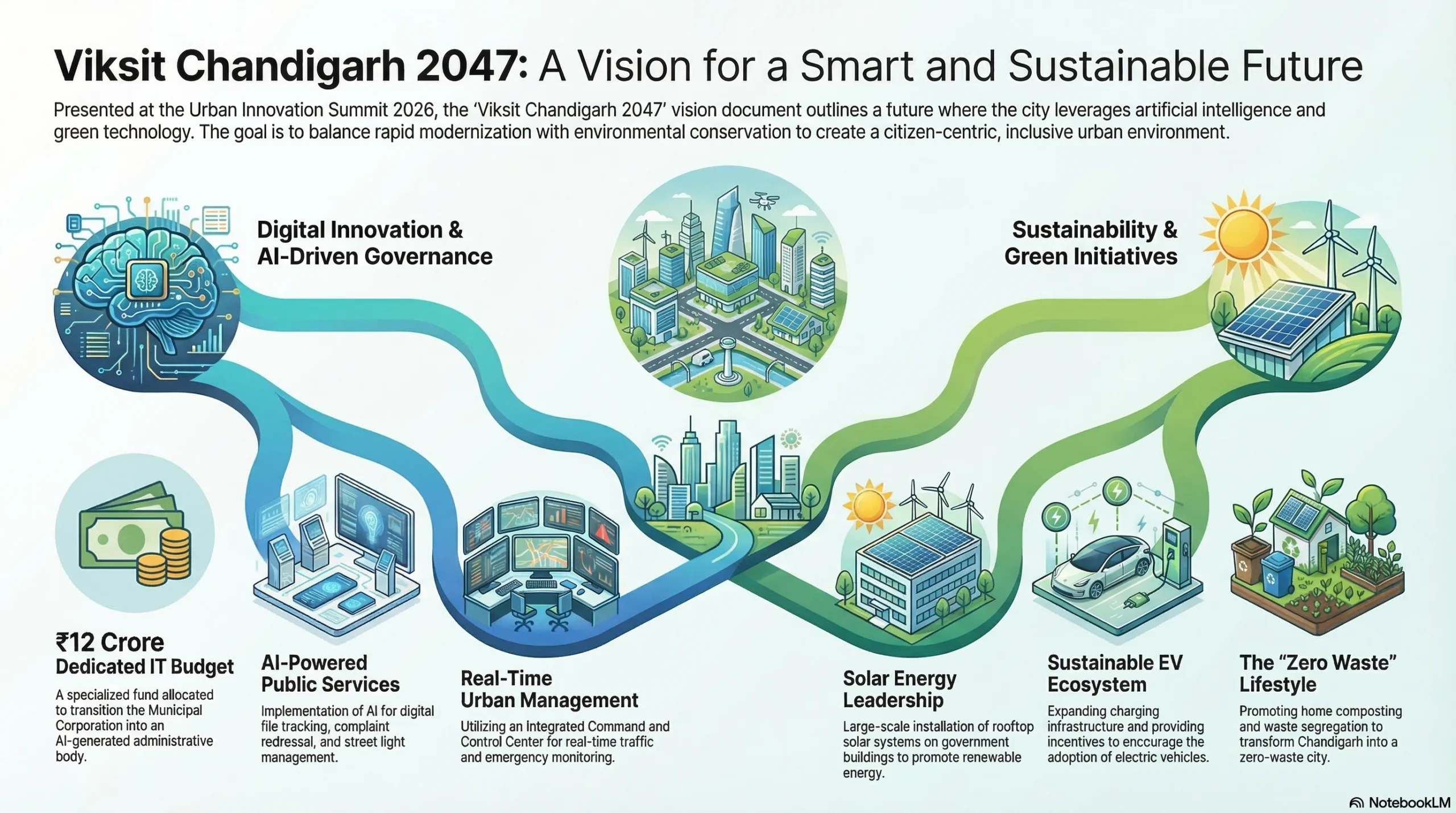
The deliberations, held in Chandigarh, focused on how technologies such as artificial intelligence, Internet of Things (IoT), and data analytics are transforming city management—from water supply monitoring to waste tracking and administrative workflows. These systems are enabling real-time decision-making and predictive governance, allowing cities to anticipate disruptions rather than react to them. However, this transition is not without risks. As urban systems become increasingly interconnected, the potential attack surface for cyber threats expands significantly. Experts noted that infrastructure such as water networks, energy systems, and public service platforms are now digitally linked, making them vulnerable to breaches if not adequately secured.
A key concern emerging from the discussions is the imbalance between rapid technology adoption and the pace of cybersecurity preparedness. While cities are investing in smart command centres, surveillance networks, and digital governance platforms, the underlying security architecture often lags behind. This creates systemic risks where a single vulnerability could disrupt multiple urban services simultaneously. Urban administrators pointed to the use of integrated monitoring tools—such as SCADA systems and GPS-enabled tracking—as examples of how technology is already improving operational efficiency. These tools are helping reduce leakages in water systems, optimise waste collection routes, and enhance transparency in municipal operations.
Yet, technology experts emphasised that such gains must be supported by robust cyber defence frameworks. Approaches such as multi-layered security systems, continuous risk assessments, and dedicated security operations centres are becoming essential components of modern urban infrastructure. Without these, digital transformation could introduce more risks than efficiencies. The conversation also underscored the need for convergence between physical and digital systems. Surveillance technologies—now powered by AI and real-time analytics—are increasingly integrated with broader urban networks, from traffic management to public safety. This convergence demands a unified approach to security, where both physical assets and digital data are protected under a single framework.
Beyond security, the discussions highlighted a broader governance shift. Digital platforms are streamlining administrative processes, reducing delays, and improving access to services—particularly for citizens in remote or underserved areas. However, experts cautioned that technology must remain a tool for inclusive growth rather than a standalone solution. From a planning perspective, the future of cities will depend on how effectively they balance innovation with resilience. Integrating advanced technologies into core infrastructure—while ensuring data protection, ethical surveillance, and system reliability—will be critical to building sustainable and citizen-centric urban ecosystems.
As Indian cities continue their digital transition, the challenge is no longer whether to adopt technology, but how to do so securely and equitably. The next phase of urban development will hinge on aligning technological ambition with institutional capacity—ensuring that smart cities are not only efficient, but also safe and resilient.