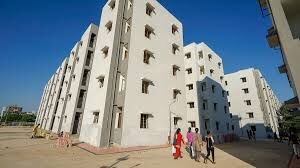
Chandigarh Sector 53 Project Adopts Six Floor Design
Chandigarh’s long-delayed Sector 53 housing project is being recalibrated with a higher-density design, allowing six-storey residential blocks supported by stilt parking—marking a notable shift in the city’s traditionally low-rise planning framework. The move is aimed at improving project viability and addressing affordability concerns that have stalled the scheme for years.
The project, led by the Chandigarh Housing Board (CHB), is being restructured to accommodate more dwelling units within the same land parcel. The revised approach combines vertical expansion with integrated parking solutions, including stilt-level parking to optimise ground utilisation and reduce surface congestion. This redesign aligns with recent policy changes that increased permissible building density across select housing projects in the city. By allowing up to six floors, authorities aim to distribute land costs across a larger number of units—an essential step in a market where rising land prices have pushed housing beyond the reach of many middle-income buyers. The Sector 53 scheme has faced repeated delays since its initial conception, largely due to pricing concerns and regulatory complexities. Demand surveys have consistently shown strong interest from potential buyers, yet escalating costs and limited supply have hindered execution. The updated design attempts to address this imbalance by increasing supply without expanding the project footprint.
Urban planners see the integration of stilt parking as a critical design intervention. In dense residential developments, parking often consumes valuable ground space, limiting green areas and pedestrian movement. By shifting vehicle storage to the stilt level, planners can free up surface areas for landscaping, community spaces, and improved walkability—key elements of people-centric urban design. The Chandigarh housing project also reflects a broader transition in how the city is managing land scarcity. With limited developable land and strict heritage protections in central sectors, growth is increasingly being directed towards peripheral areas like Sector 53. Here, planning norms are being adapted to accommodate moderate densification while retaining the city’s architectural identity. However, experts caution that increasing density must be matched with parallel infrastructure upgrades. Higher population concentration places additional pressure on water supply, sewage systems, and transport networks. Without coordinated planning, such developments risk creating service bottlenecks that undermine long-term liveability. Environmental considerations also remain central to the project’s evolution. Located near eco-sensitive zones, the development must balance density with ecological safeguards, including green buffers and sustainable construction practices. This reflects a growing emphasis on climate-responsive urban planning in Indian cities.
From a real estate perspective, the revised design could revive buyer interest by making units relatively more affordable. By optimising land use and incorporating modern amenities, the project has the potential to reposition itself as a viable housing option within Chandigarh’s constrained market. As the city navigates the twin challenges of affordability and sustainability, the Sector 53 project highlights a critical shift: moving from rigid, low-density planning towards more flexible, efficiency-driven urban development models. The success of this approach will depend on execution quality and the ability to integrate infrastructure, environment, and housing into a cohesive urban framework.