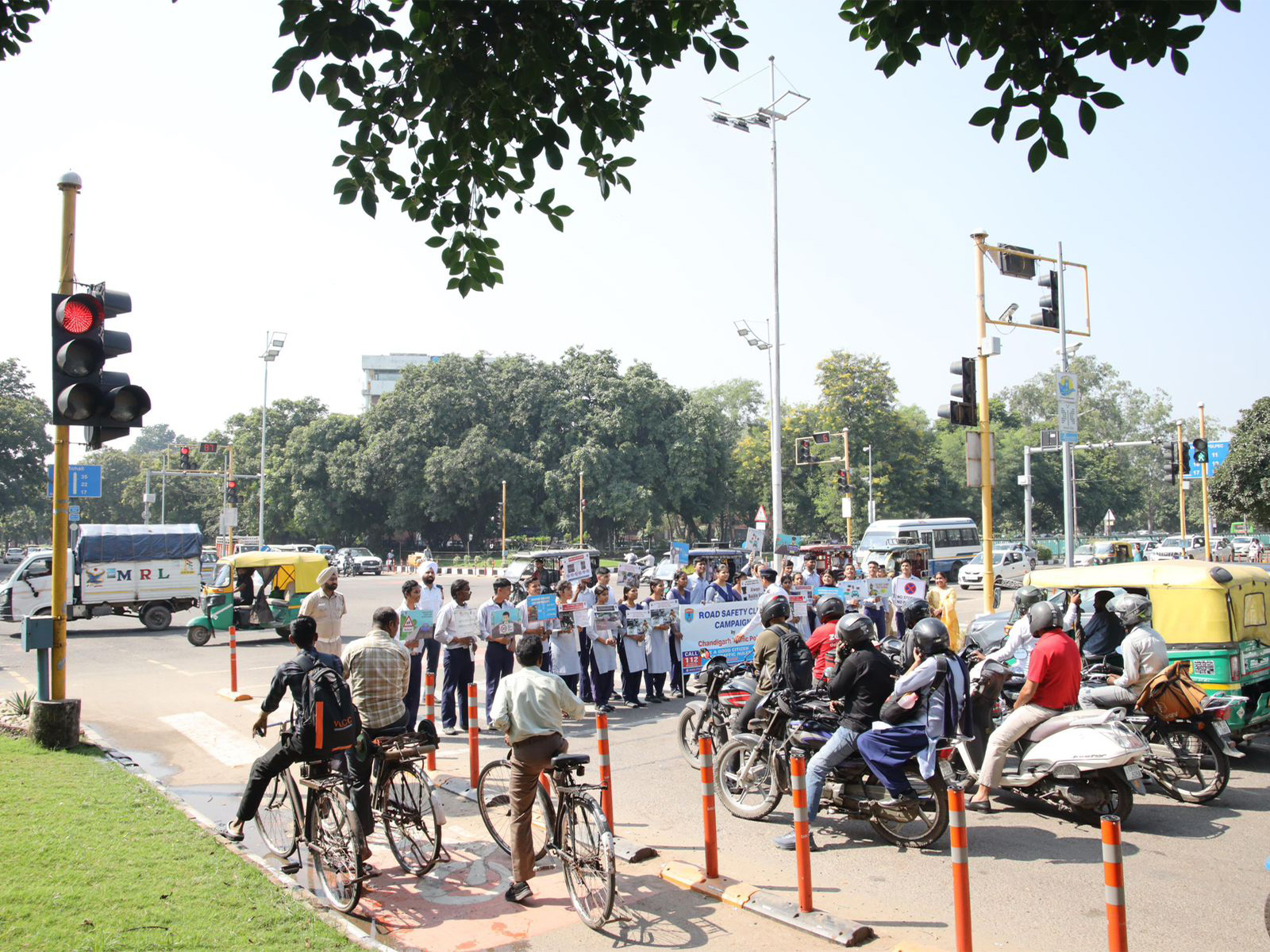
Chandigarh has hosted a national-level road safety symposium bringing together policymakers, traffic officials, transport planners and safety experts at a time when urban mobility risks are becoming a growing concern across Indian cities. The event matters because Chandigarh — often considered one of India’s best-planned cities — is now facing the same safety challenges as larger urban centres, including rising vehicle density, road-user conflicts and pressure on public transport infrastructure.
The symposium comes amid an intensified focus on road safety in the region during 2026. Authorities across Punjab and Chandigarh have already conducted awareness drives, walkathons, training workshops and public campaigns under the National Road Safety Month initiative earlier this year. These programmes aimed to improve compliance with traffic rules, promote safer driving behaviour and reduce accident fatalities through education and enforcement. Experts participating in recent road-safety workshops in Chandigarh have repeatedly highlighted the scale of the challenge. Data presented at a recent safety session in the city pointed out that road accidents continue to claim hundreds of lives every day across India, with a large share of victims belonging to the 18–45 age group. Speakers also stressed that overspeeding, poor lane discipline and lack of pedestrian-friendly infrastructure remain major risk factors in urban areas.
Urban planners say events such as the road safety symposium are increasingly being used as platforms to shift the conversation from awareness campaigns to structural urban reforms. In fast-growing cities like Chandigarh, the focus is gradually moving towards safer street design, better traffic engineering and improved public-transport integration rather than relying only on enforcement measures. Recent initiatives in the city — including large-scale cyclothons, awareness drives and training sessions — reflect an effort to combine sustainable mobility with road-safety goals. The timing of the symposium is also significant because urban transport in Chandigarh is entering a transition phase. The administration is simultaneously working on expanding electric public transport, improving cycling infrastructure and strengthening traffic-management systems. Experts believe that unless safety planning becomes a central part of these projects, the benefits of new infrastructure may remain limited, especially as vehicle ownership continues to grow in the Tricity region.
For residents, the impact of such discussions may not be immediately visible, but they could influence long-term urban planning decisions. Road-safety specialists say the biggest gains often come not from short-term campaigns but from consistent design changes such as safer intersections, improved pedestrian crossings and better public-transport accessibility. As Indian cities continue to expand rapidly, the Chandigarh road safety symposium reflects a broader shift in urban policy — where safety is increasingly being treated not only as a traffic-police issue but as a core component of sustainable and people-centred city planning.