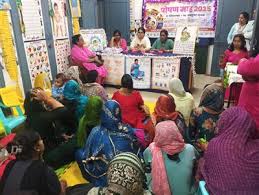
Chandigarh Poshan Campaign Targets Community Health Outcomes
Chandigarh is intensifying its public health outreach under the national nutrition mission, with a renewed focus on behavioural change at both individual and community levels—marking a shift from service delivery to sustained lifestyle transformation. As part of the ongoing Poshan Pakhwada campaign, departments across the Union Territory have committed to scaling awareness initiatives around nutrition, preventive healthcare and early childhood development.
The programme is being implemented under Mission Saksham Anganwadi and POSHAN 2.0, which integrates nutrition, education and health services through the Anganwadi network. Officials indicate that a key component of this phase is citizen engagement. Expert-led sessions are being organised through helpline platforms, enabling direct interaction between residents and specialists in nutrition and wellness. These sessions are designed to bridge information gaps and promote informed health practices at the household level. The strategy reflects a broader evolution in how nutrition programmes are structured. Rather than focusing solely on food distribution, POSHAN 2.0 emphasises behavioural change communication—encouraging better dietary habits, maternal care practices and child feeding norms. This approach is considered critical in addressing persistent challenges such as malnutrition, anaemia and poor early childhood outcomes. In Chandigarh, the implementation framework leverages the existing Anganwadi ecosystem, which acts as the frontline interface between public services and communities. These centres provide a range of integrated services, including supplementary nutrition, pre-school education, health check-ups and referrals—forming a foundational layer of urban social infrastructure.
Urban policy experts note that the emphasis on behavioural change is particularly relevant in city environments, where lifestyle-related health risks are rising alongside traditional nutrition challenges. Rapid urbanisation has altered dietary patterns, reduced physical activity and increased dependence on processed foods, making awareness-led interventions essential. The initiative also aligns with a life-cycle approach to nutrition, targeting children, adolescent girls, pregnant women and lactating mothers. By addressing nutritional needs at multiple stages, the programme aims to break intergenerational cycles of malnutrition and improve long-term human capital outcomes. From a governance perspective, Chandigarh’s approach highlights the importance of convergence across departments. Health, education and women and child development agencies are working in coordination to deliver services and amplify outreach, ensuring that interventions are not fragmented. The focus on behavioural change also has implications for infrastructure planning. As Anganwadi centres are upgraded into “Saksham” facilities, there is an increasing emphasis on creating child-friendly, resource-equipped spaces that support both nutrition delivery and early learning. This dual role strengthens their position as community hubs within urban neighbourhoods.
However, experts caution that sustained impact will depend on consistent engagement and monitoring. Behavioural change, unlike infrastructure rollout, requires long-term reinforcement through community participation, digital tracking tools and regular feedback mechanisms. For Chandigarh, the current campaign represents a shift towards more holistic urban health planning—where awareness, service delivery and infrastructure are integrated. As cities grapple with complex health challenges, such models could play a critical role in building more resilient, inclusive and people-centric urban systems.