


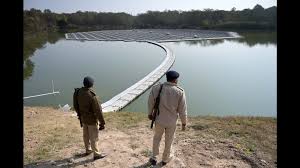
Chandigarh continues to establish itself as a leader in green energy initiatives with plans to install a groundbreaking 4-megawatt (MW) floating solar power plant, marking a significant step towards sustainable urban energy solutions. Scheduled for implementation in the coming financial year, this project will be located at the Sector 39 waterworks and will stand as the largest floating solar power installation in North India. The 4 MW plant, expected to cost around Rs 24 crore, forms part of the city’s ambitious target to deploy 8 MW of floating solar power by 2025-26. The project will be executed by the Chandigarh Renewable Energy and Science & Technology Promotion Society (CREST), which is spearheading the region’s transition to renewable energy sources.
In addition to its clean energy production, floating solar plants offer environmental benefits that extend beyond power generation. They help mitigate water evaporation, an issue that is particularly important for cities that rely on water bodies for sustenance. Currently, Chandigarh boasts three floating solar power plants with a combined capacity of 5 MWp, with an additional 3 MWp plant ready to be energised by the end of the financial year 2025. This will further elevate the city’s renewable energy capabilities, positioning it as a key player in India’s energy transition.
The total installed solar capacity in Chandigarh now stands at 89.689 MWp, covering over 10,000 government and private buildings. A notable achievement in this regard is the city’s unique distinction as the first in India to equip all its government buildings—including both office and residential structures—with rooftop solar panels. These installations alone have a combined capacity of 52.852 kWp, underscoring Chandigarh’s commitment to solar energy adoption.
However, Chandigarh is not stopping there. The city’s administration has now turned its focus towards expanding the solar network across even more diverse spaces, particularly large parks and cycle tracks. The Department of Environment has initiated feasibility studies to assess the viability of solar plants in these areas, taking into account factors like financial feasibility, aesthetic alignment with the surroundings, and ease of maintenance. With approximately 200 km of cycle tracks in the city, officials believe many segments are suitable for solar installations, further bolstering the city’s renewable energy output while aligning with its environmental goals. As the Chandigarh administration continues its aggressive push for solar energy expansion, these projects not only promise to enhance the city’s renewable energy infrastructure but also address broader environmental concerns. The shift towards solar power reflects a larger global trend towards sustainability, with cities increasingly investing in green energy solutions to combat climate change and create more sustainable, eco-friendly urban environments. With these developments, Chandigarh is on track to become a model for other Indian cities aspiring to integrate green energy into their urban fabric. The ongoing commitment to floating solar projects, combined with a robust solar infrastructure on government buildings and public spaces, positions the city as a leader in India’s renewable energy revolution.
