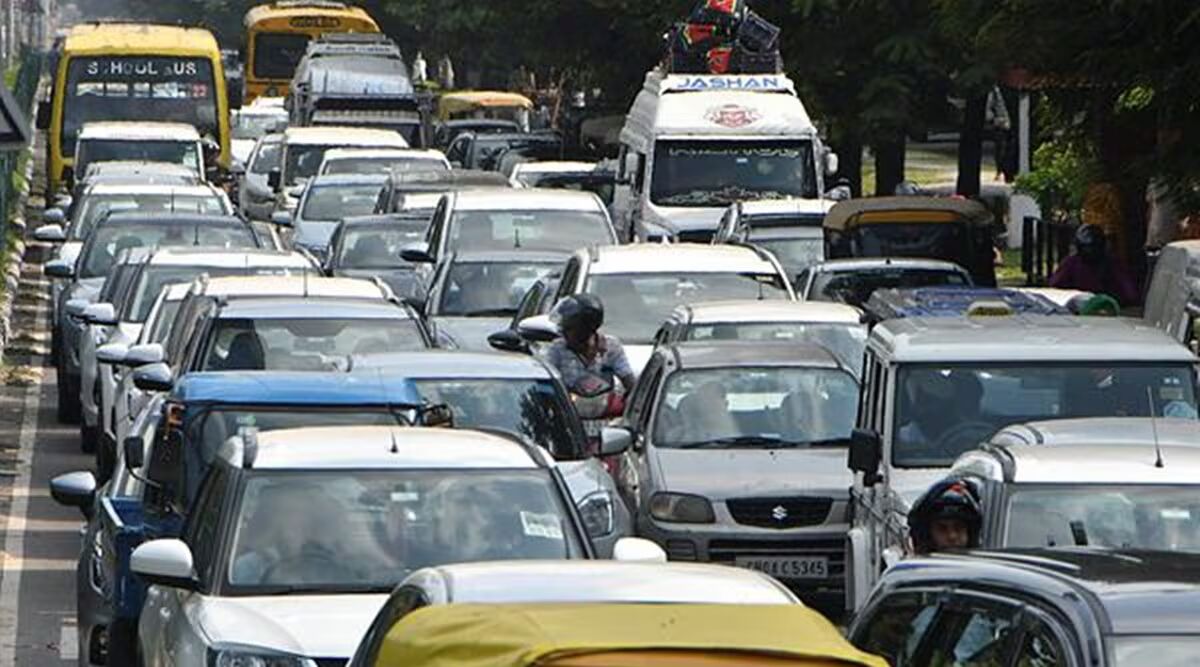
Maharashtra Expressway Congestion Slows Key Transport Corridor
Chandigarh’s transportation future may hinge on the timely delivery of its planned metro rail system, with urban mobility experts warning that unchecked vehicular congestion could undermine the city’s economic and environmental sustainability if mass rapid transit does not keep pace with growth.
As the Union Territory continues to expand, strategic investments in public transport infrastructure are emerging as critical to preserving liveability, reducing emissions and enabling equitable access to jobs and services. A senior urban affairs observer highlighted that Chandigarh’s reliance on private vehicles has surged in recent years, driven by rising incomes, residential expansion into peripheral sectors and a lack of high-capacity transit alternatives. Without the metro project — still awaiting final clearances and funding consolidations — the city’s road network risks approaching saturation, particularly during peak hours when commuter flows spike between residential zones, commercial hubs and employment clusters. Traffic counts indicate that average daily vehicle registrations in the tri-city region (Chandigarh–Mohali–Panchkula) have outpaced proportional infrastructure expansion. Roads originally designed for moderate inter-sector traffic now carry volumes more typical of larger metropolitan markets.
This mismatch, experts say, can lead to chronic congestion, extended travel times, reduced productivity and heightened air pollution if not mitigated through systemic public transport solutions. Chandigarh’s planned metro corridors are intended to serve as that backbone, providing a high-capacity, rapid transit alternative to road travel. Proponents argue that a fully operational metro would not only ease peak-hour passenger loads but also reduce pressure on feeder buses and intermediate public transport services. By drawing commuters away from private cars and two-wheelers, the metro could make more efficient use of limited road space, decrease carbon emissions and improve overall urban mobility. Urban planners also note the broader economic geography implications. Cities with robust mass transit systems tend to attract greater business investment, promote agglomeration economies and support more balanced land use. For Chandigarh, whose economic base includes administration, services and small-medium enterprises, enhancing connectivity with neighbouring districts could unlock additional labour market participation and strengthen regional competitiveness.
The risks associated with delayed metro implementation extend beyond traffic flow. As vehicle volumes grow, so too do accident rates, parking shortages and air quality impacts — contributing to public health and infrastructure stress. Pollution hotspots along major arterials, particularly where road widths narrow, have become more frequent, exacerbating concerns over particulate and NOx emissions. A metro network could shift a portion of these emissions off roads and into electrically powered transit, supporting broader climate resilience goals. However, funding and coordination remain significant hurdles. Integrating the metro project with existing and planned infrastructure — including ring roads, arterial upgrades and bus rapid transit systems — requires alignment between the UT administration, central agencies and neighbouring states. Land acquisition complexities, cost escalations and technical clearances have historically slowed similar urban transport projects across India, underscoring the need for robust governance frameworks to drive execution.
Analysts argue that incremental reforms such as dynamic traffic management, improved cycling and walking infrastructure, and upgraded bus services can provide short-term relief. Yet these measures alone cannot substitute the capacity and permanence of a metro backbone. Empirical evidence from other cities suggests that mass rapid transit systems are most effective when integrated with land use planning, transit-oriented development and last-mile connectivity networks. For residents and daily commuters, the stakes are tangible. Prolonged congestion can inflate travel costs, reduce leisure time and deter inbound investment. Conversely, a reliable metro could redistribute commuter patterns, support equitable access to employment hubs and align Chandigarh with other Indian cities advancing rapid transit solutions.
As Chandigarh’s urban leadership navigates these choices, the emphasis on mass transit reflects a broader narrative: sustainable mobility must be central to the city’s growth strategy if it is to remain economically vibrant and environmentally resilient in the decades ahead.