


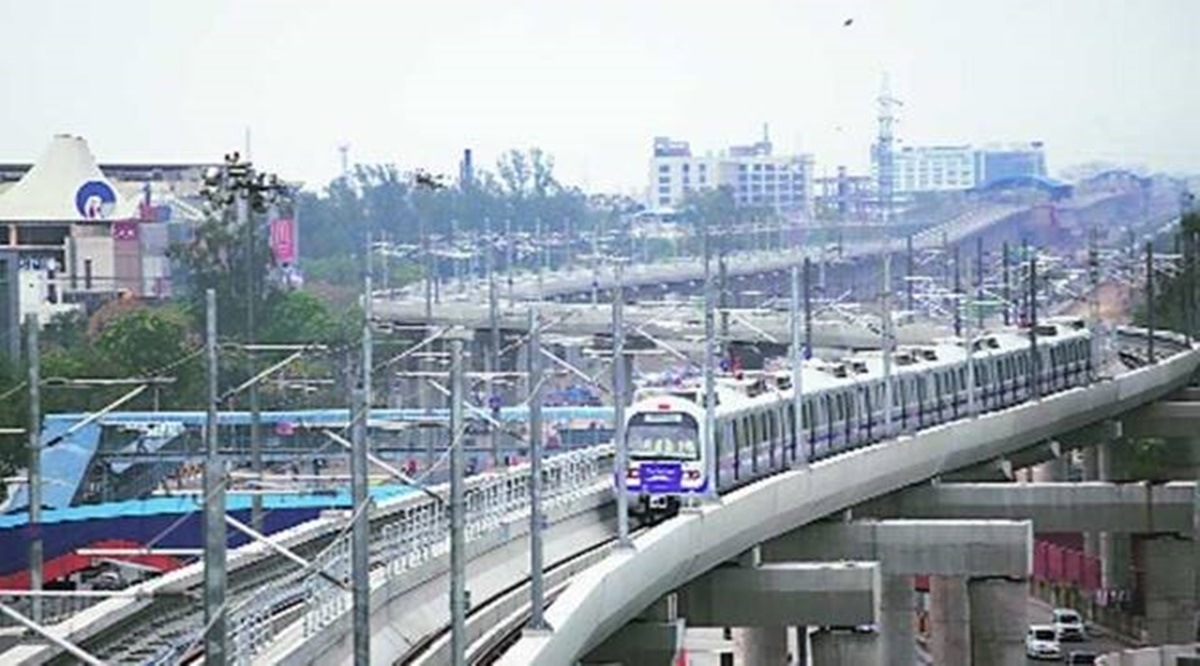
Chandigarh’s long-anticipated metro project has once again come under scrutiny after a federal lawmaker warned that the city, along with its expanding regional suburbs, could face untenable traffic congestion by 2036 if decisive action on mass rapid transit is not taken.
The exchange, which unfolded in the national legislature last week, highlights growing concern among planners and policymakers about the future of urban mobility in one of northern India’s fastest-growing urban clusters. During an address in Parliament, the Member of Parliament for Chandigarh described the metro project’s current status as “heading nowhere”, underscoring stalled planning and administrative delays that have dogged the proposal for years. The lawmaker called on the Union government to designate the metro as a strategic connectivity priority and unlock a special allocation of ₹25,000 crore to propel the project forward. Without such intervention, he warned, unchecked congestion could seriously degrade quality of life and economic productivity in the tricity region of Chandigarh, Mohali and Panchkula.
The Ministry of Housing and Urban Affairs responded by noting that while the Unified Metropolitan Transport Authority (UMTA) for the region was established in April 2023, it has yet to receive a formal metro proposal from the Chandigarh Administration and the neighbouring state governments, delaying any substantive progress on planning or implementation. Urban transport policy remains a jurisdictional responsibility of these local and state bodies, complicating efforts to build consensus on a multimodal system. Urban planners emphasise that the tricity’s transport network increasingly feels the strain of rising vehicle ownership and daily commuter flows. The absence of a high-capacity rapid transit option means existing roads — many originally designed for lower traffic volumes — are stretched beyond capacity, contributing to longer travel times, heavier emissions and increased road safety risks. Reports indicate that commuter volumes continue to outpace infrastructure upgrades, raising the spectre of gridlock if modal alternatives are not urgently integrated.
The debate over the metro project also intersects with broader questions about sustainable mobility. In the absence of rapid public transit, cities often rely on incremental road expansions or traffic management systems, both of which offer limited relief in the long term and can induce additional demand. Traffic modelling experts argue that integrated mass transport systems, when combined with feeder buses, cycle networks and pedestrian-oriented streets, help reduce private vehicle usage and lower carbon emissions — a win-win for mobility and climate goals. Yet critics of the metro proposal caution that technology choices must align with local travel patterns, urban form and fiscal feasibility. Some transport specialists advocate for enhanced bus rapid transit, tighter regional traffic management and demand-responsive solutions that can be deployed more quickly while laying the groundwork for future rail-based systems.
For Chandigarh’s residents and planners alike, the coming weeks will be critical. With the next legislative session approaching and pressure mounting from public and planning stakeholders, city authorities and transport agencies will need to articulate a clear, coordinated vision for the region’s mobility future. Balancing the urgency of congestion relief with practical financing and design choices will be essential to ensure that the tricity does not confront the very scenario its critics have warned about.
Also Read: Chandigarh Region to Benefit from New 6-Lane Road Link
Chandigarh Metro Project Delay Raises Urban Risk
