


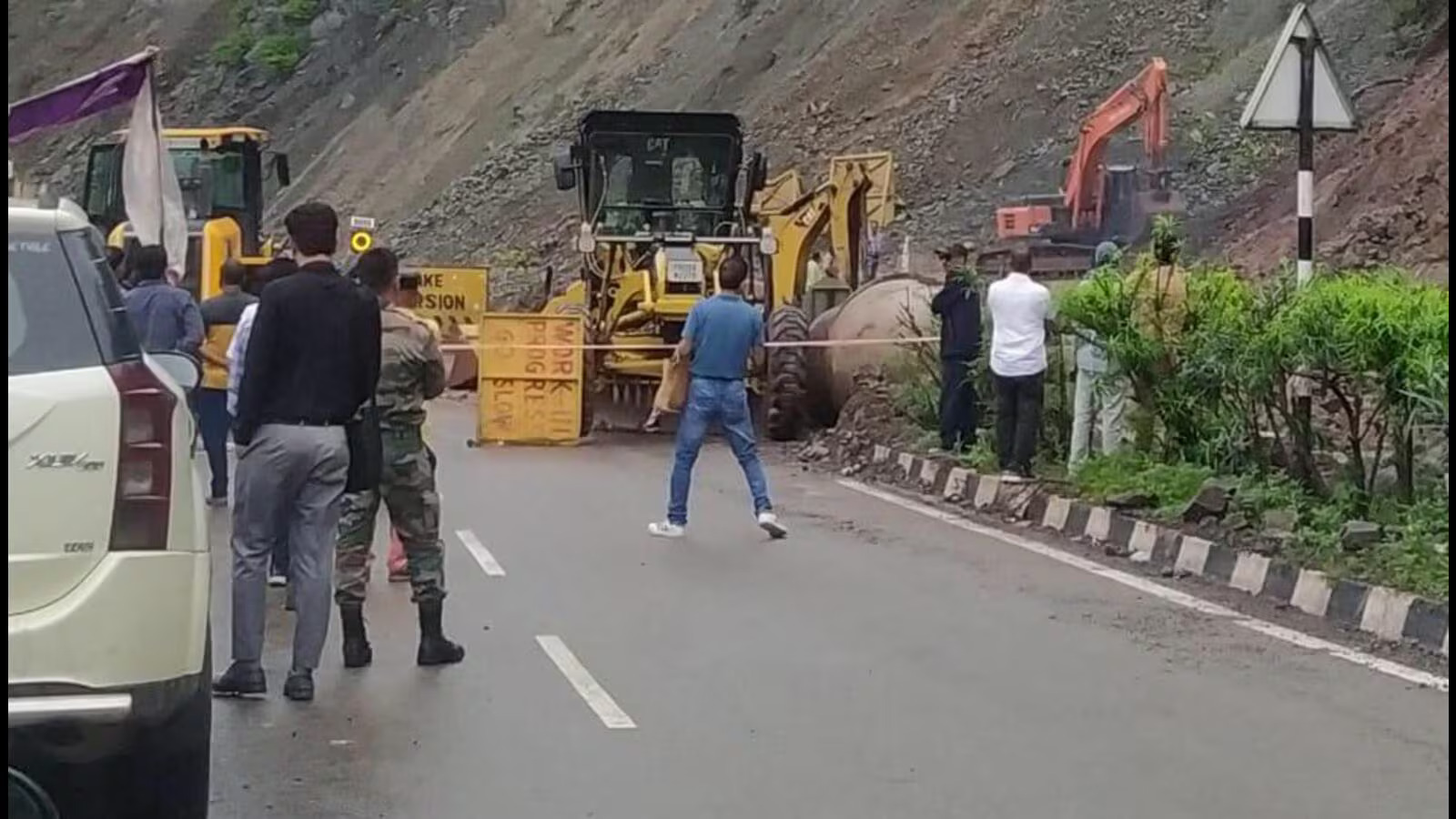
The vital Chandigarh-Kullu highway has been brought to a standstill by a major landslide, trapping hundreds of commercial vehicles and disrupting the supply of essential goods to the national capital region. This abrupt halt in transportation, caused by unrelenting monsoon rains in Himachal Pradesh, has triggered a potential supply crisis in Delhi-NCR, putting a spotlight on the vulnerability of a city’s reliance on external supply chains. The blockage, which spans roughly 50 kilometres, is not just a logistical problem but a significant economic and social challenge, with millions of rupees worth of produce at risk of spoilage.
The sheer scale of the disruption is staggering. An estimated 50 crore rupees worth of apples, along with other fruits and vegetables, are currently trapped in a massive traffic jam. The perishable nature of this cargo means that with each passing day, the financial losses for farmers, transporters, and traders escalate dramatically. Truck drivers, who have been stranded for days, are watching helplessly as their valuable loads begin to decay. This incident underscores the human element of these crises, where livelihoods are directly threatened by natural disasters and inadequate infrastructure resilience. It is a sobering reminder that a modern city’s well-being is intricately linked to the stability of its remote supply routes.
Beyond the immediate financial damage, this event highlights a critical failure in urban planning and risk management. As our cities grow and become more dependent on far-flung regions for food and resources, the need for robust, resilient, and eco-friendly infrastructure becomes paramount. The current situation on the Chandigarh-Kullu highway points to the urgent need for investment in infrastructure that can withstand the increasing severity of monsoon seasons, a direct consequence of climate change. The erosion of roads by fast-flowing rivers and frequent landslides are not isolated incidents but symptoms of a larger systemic vulnerability.
The collateral damage extends beyond the economy. With 584 roads closed across ten districts in Himachal Pradesh, and an official death toll of 158 since June, the human tragedy is immense. The disruption of power supply to over 1,155 transformers and 346 water supply schemes further illustrates the widespread breakdown of essential services. These figures underscore the cascading effects of a single point of failure in a transport network, affecting not just commerce but the daily lives and safety of millions. The cumulative financial loss to the state has already exceeded Rs 2,623 crore, a figure that is expected to rise as the monsoon season continues its relentless assault.
In a world increasingly focused on sustainability, this crisis serves as a harsh lesson. A zero net carbon, eco-friendly city cannot be achieved without a resilient and low-impact supply chain. The reliance on fossil-fuel-guzzling trucks for long-distance transport is a key contributor to carbon emissions. This event presents an opportunity for policymakers to reconsider logistics infrastructure, investing in alternative, more sustainable transport modes and creating a more equitable system that protects the livelihoods of all those involved, from the farmer to the consumer. The ultimate lesson is that our cities are only as strong as their weakest links, and in this case, that link is a mountain highway under assault from climate change.
Also Read :Delhi-based Luxury Train Embarks on Pan-India Char Dham Pilgrimage
