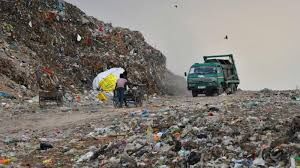
Key entry points into Chandigarh are increasingly turning into informal dumping zones, exposing critical gaps in urban enforcement and inter-city coordination. Open land parcels along city borders—particularly near junctions connecting to Mohali—are being routinely misused for waste disposal, undermining both environmental standards and the city’s planned urban identity.
Residents living near these gateway stretches report recurring dumping of household and garden waste, often during late hours when monitoring is minimal. The issue is compounded by cross-jurisdictional spillovers, with waste being deposited along shared boundaries, creating ambiguity over responsibility and enforcement. Municipal officials acknowledge that while clean-up operations are undertaken periodically, preventing repeated dumping remains a challenge due to limited surveillance and inconsistent deterrence. Enforcement actions, including penalties, have begun in select cases, but officials concede that the episodic nature of monitoring allows violations to persist, particularly at night. Urban governance experts view this as a systemic issue rather than an isolated civic lapse. In planned cities like Chandigarh, peripheral zones often fall into administrative blind spots, where overlapping jurisdictions dilute accountability. Without coordinated enforcement between neighbouring municipal bodies, such edge zones risk becoming chronic waste hotspots.
The Chandigarh dumping crisis also reflects deeper structural issues in waste management systems. While central policies increasingly emphasise segregation, circular economy practices, and accountability, on-ground implementation often struggles to match intent. Recent policy shifts towards stricter waste rules and “polluter pays” frameworks highlight the need for behavioural change alongside enforcement. From an urban design perspective, degraded city gateways have broader implications. Entry corridors shape first impressions, influence land values, and impact mobility patterns. When these spaces become dumping grounds, they not only affect aesthetics but also signal governance inefficiencies, potentially deterring investment and weakening civic trust. Environmental and public health risks further elevate the urgency of the issue. Open dumping contributes to air and soil pollution, attracts stray animals, and increases the likelihood of waste burning—an issue already reported by residents in affected areas. These risks disproportionately affect communities living near such zones, raising concerns around equity and urban liveability.
Experts argue that addressing the problem requires a multi-layered response. This includes continuous surveillance through digital monitoring, coordinated enforcement across municipal boundaries, and decentralised waste processing systems to reduce reliance on dumping. Strengthening last-mile waste collection and integrating informal waste workers into formal systems are also seen as critical interventions. As Chandigarh positions itself as a model for sustainable urban planning, resolving these enforcement gaps will be key. The challenge is not just to clear waste, but to build systems that prevent its return—ensuring that city gateways reflect the standards of a modern, resilient, and people-first urban environment.