


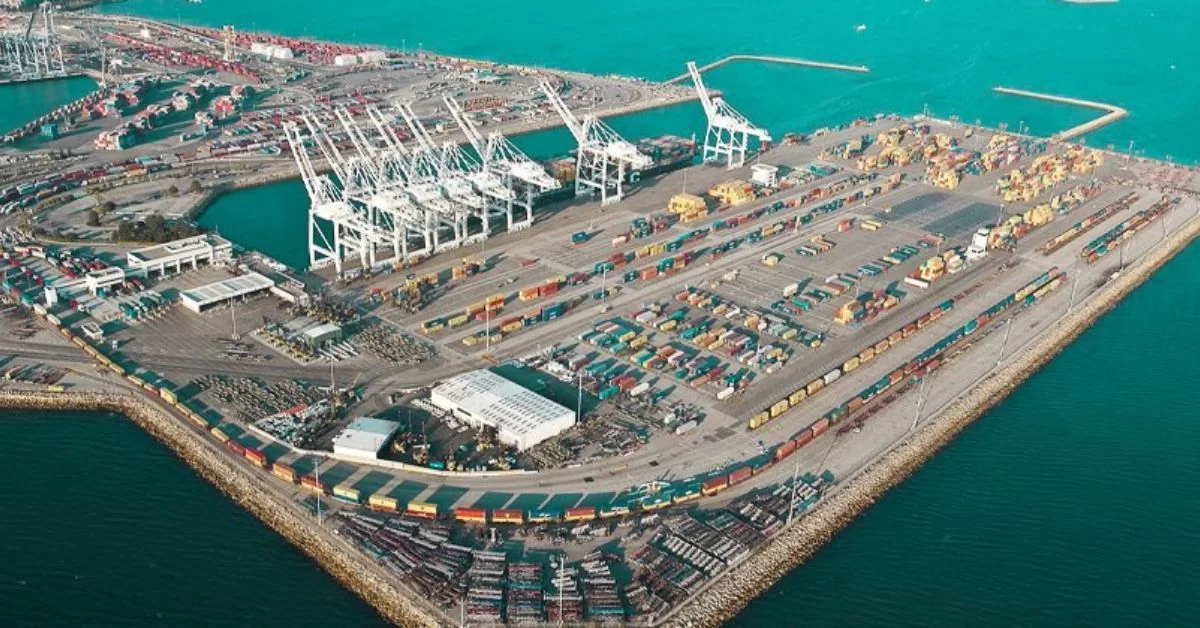
India’s strategic investment in Iran’s Chabahar Port is entering a transformative phase, with work underway to connect the port to Iran’s national railway network by mid-2026.
The upcoming 700-kilometre rail link between Chabahar and Zahedan is expected to enhance the port’s connectivity to Central Asia and Russia, positioning it as a vital node in the International North-South Transport Corridor (INSTC).Alongside the rail project, Chabahar Port’s container handling capacity is being expanded from 100,000 TEUs to 500,000 TEUs. This fivefold increase reflects New Delhi’s commitment to establishing an alternative, sustainable trade route that bypasses traditional chokepoints like the Suez Canal and enhances regional supply chain resilience.
Indian officials confirmed that both the rail and port infrastructure upgrades are scheduled for completion by mid-2026, subject to construction progress and stable diplomatic conditions. “We are not moving as fast as we would prefer, but we are moving in the right direction,” a senior government source said.The Chabahar Port, operated by state-run India Ports Global Limited (IPGL), has been at the centre of India’s broader strategy to build resilient logistics corridors through geopolitically sensitive regions. Since 2018, when IPGL took over operations at the Shahid Beheshti terminal, the port has handled over 450 vessels, 134,000 TEUs of containers, and more than 8.7 million tonnes of bulk and general cargo.
In recent years, cargo throughput at Chabahar has shown consistent growth. Government figures tabled in Parliament indicate an increase from 1.2 million tonnes in FY21 to 2.84 million tonnes in FY24, reinforcing the port’s growing commercial and strategic importance.The upcoming rail link is especially significant for India’s plans to deepen connectivity with Central Asia and Eurasia. It will allow for seamless cargo movement from Indian ports through Chabahar into Iran’s rail network and onwards to markets in Kazakhstan, Turkmenistan, Russia, and beyond—promoting cost-effective, low-emission trade flows in alignment with India’s green logistics goals.
The 10-year bilateral agreement signed in May 2023 to manage the Shahid Beheshti terminal also included an Indian pledge of $120 million for port equipment and a $250 million credit line for surrounding infrastructure. These long-term financial commitments underline India’s resolve to anchor Chabahar as a sustainable maritime and freight hub.Despite potential disruptions from shifting US policy on sanctions against Iran, Indian officials say there has been no adverse action yet. In February 2024, a US memorandum suggested the withdrawal of certain sanction waivers, including those related to Chabahar, but subsequent nuclear negotiations between Washington and Tehran have delayed such measures.
India’s careful but steady approach in developing Chabahar reflects a calculated effort to secure trade autonomy, reduce dependency on volatile shipping lanes, and champion eco-friendly, multimodal connectivity.
As global supply chains undergo rapid realignment and the geopolitical landscape remains fluid, India’s investment in Chabahar stands as a testament to its vision of sustainable, inclusive regional integration rooted in infrastructure and diplomacy. If successful, the 2026 deadline for the rail link will mark a milestone in transforming the port from a diplomatic asset into a fully operational green trade gateway.
Also Read : Indian Railways and Wabtec Launch First Locomotive Export to Africa
