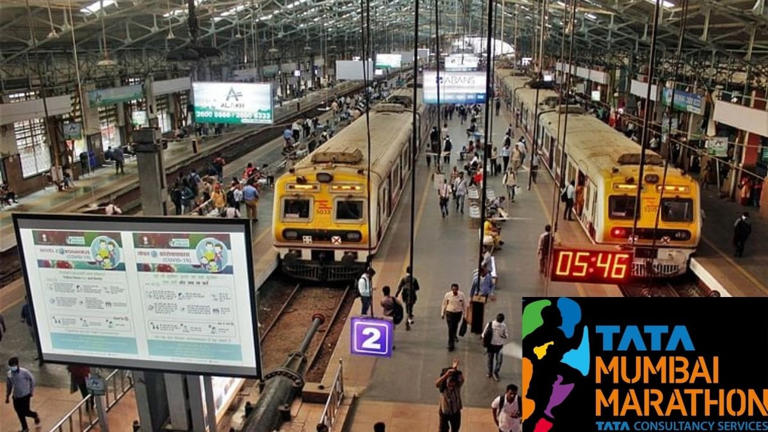
Mumbai’s suburban rail system will undergo a carefully timed operational adjustment in January 2026, as Central Railway prepares special late night services to support the Tata Mumbai Marathon. The additional trains, scheduled during the early hours of January 18, are intended to help thousands of runners reach south Mumbai safely and on time, highlighting how public transport planning increasingly adapts to large civic events in dense metropolitan regions.
The decision reflects a growing recognition that major sporting events place unique demands on urban mobility. With reporting times often falling before regular train services begin, marathon participants typically face limited transport options. By introducing dedicated suburban services on both the Main and Harbour lines, railway authorities aim to reduce dependence on private vehicles and app based transport, easing congestion and lowering the environmental footprint associated with city scale events. According to officials familiar with the arrangements, one special service will operate along the Main Line, connecting eastern suburban nodes to the island city, while another will serve the Harbour corridor, linking Navi Mumbai and adjoining areas with south Mumbai. Both trains will halt at all stations along their routes, ensuring broad accessibility for participants travelling from different residential clusters across the Mumbai Metropolitan Region.
Urban transport planners note that such interventions are more than logistical conveniences. They represent a shift toward people first mobility, where public systems are designed around real time user needs rather than rigid schedules. Early morning rail availability allows runners, volunteers, and event staff to plan predictable journeys, reducing stress and improving safety during low traffic hours. The move also underscores the central role suburban rail continues to play in Mumbai’s economic and social life. Even outside peak commuting hours, the network functions as the city’s most reliable connector, linking peripheral suburbs with employment, recreation, and cultural destinations. By extending services during the night, Central Railway is effectively broadening the functional hours of mass transit without significant additional infrastructure, an approach often cited as both cost efficient and climate responsive.
From a sustainability perspective, experts point out that facilitating rail based access to major events aligns with broader goals of reducing emissions from short distance road travel. Encouraging participants to use trains rather than cars helps limit traffic bottlenecks around event zones, improves air quality, and supports smoother crowd management in dense urban cores. Looking ahead, transport analysts suggest that such event specific scheduling could become more routine as cities host larger public gatherings and promote active lifestyles. The challenge will lie in coordinating rail operations with local authorities, pedestrian management, and last mile connectivity. For Mumbai, the marathon services may serve as a template for how legacy infrastructure can flexibly support inclusive, low carbon urban life without large scale expansion.
Central Railway Schedules Overnight Trains For Marathon Runners