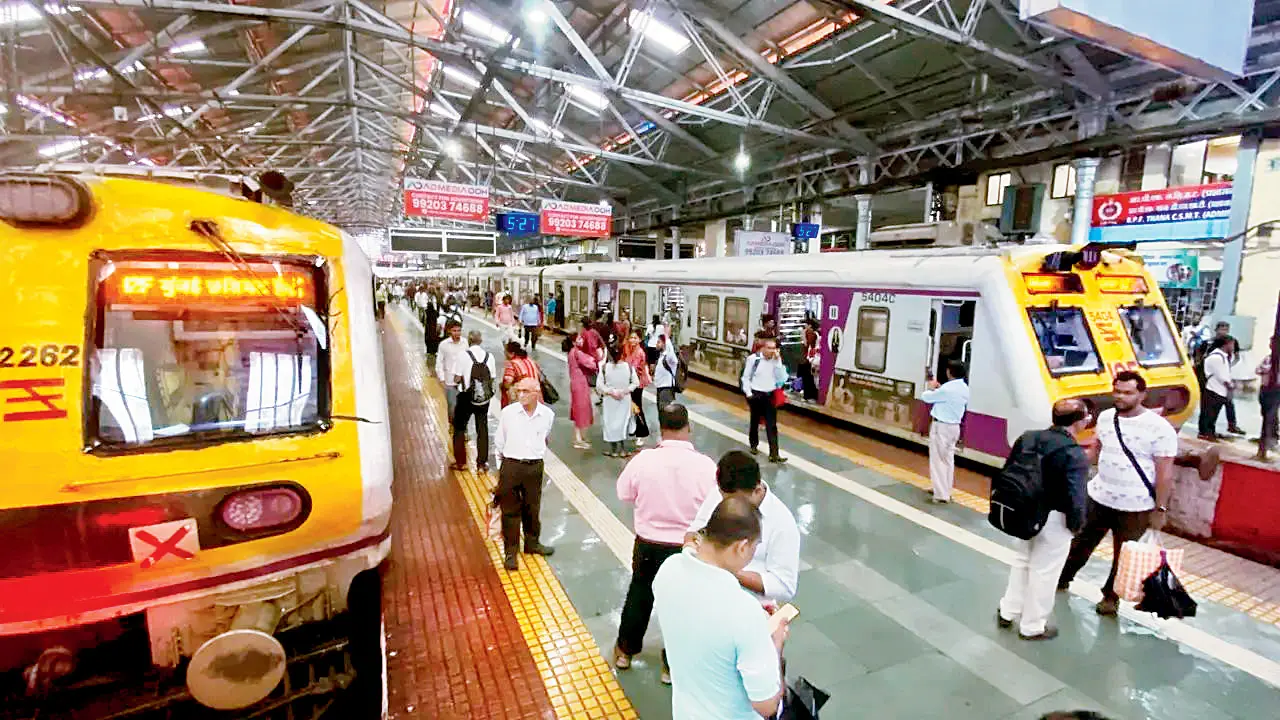
Commuter experience across Mumbai’s suburban rail network is undergoing a quiet but consequential upgrade as the Central Railway rolls out a broad package of station-level improvements aimed at accessibility, energy efficiency, and passenger information. Implemented across the Mumbai division in early 2026, the upgrades reflect a shift in focus from capacity alone to comfort, inclusion, and long-term sustainability.
At several stations on the Central Railway Mumbai network, new vertical mobility infrastructure has been commissioned to ease movement across platforms. Escalators have been added at outer suburban stations, while lifts are now operational at select locations, improving access for senior citizens, pregnant commuters, persons with disabilities, and travellers carrying luggage. Transport planners say such interventions are essential in a system where foot overbridges often act as physical barriers for vulnerable users. Beyond accessibility, the division has undertaken a large-scale replacement of ageing station fixtures. Hundreds of energy-efficient brushless direct current fans have been installed or upgraded across platforms and concourses. These fans consume significantly less electricity than conventional units while offering quieter operation—an operational saving that becomes meaningful at the scale of Mumbai’s rail network. High-volume low-speed fans have also been introduced at high-footfall stations to improve air circulation in expansive platform areas.
Lighting upgrades form another pillar of the station modernisation drive. Older fixtures have been replaced with new-generation LED systems that provide better illumination and lower maintenance requirements. Urban infrastructure experts note that improved lighting is not merely an aesthetic upgrade; it directly affects commuter safety, especially during early morning and late evening hours, and supports gender-neutral access by making public spaces feel more secure. Passenger information systems have also been refreshed, with new digital display boards commissioned at major terminals and suburban stations. Enhanced train indicators and clearer visual displays are expected to reduce confusion during peak hours and service disruptions—an everyday challenge in one of the world’s busiest rail corridors.
These station upgrades run parallel to larger capacity projects underway on the Central Railway Mumbai network. On the Panvel–Karjat corridor, the Mumbai Railway Vikas Corporation is executing a major double-line expansion that includes the newly completed Wavarle Tunnel, now the longest tunnel on the Mumbai suburban system. The tunnel is a critical link for improving connectivity between Mumbai, Navi Mumbai, and the Raigad region, particularly in the context of emerging economic nodes and the upcoming airport. Urban economists point out that while megaprojects attract attention, incremental station upgrades often deliver the most immediate benefits to daily commuters. Better accessibility, clearer information, and energy-efficient systems collectively reduce friction in everyday travel, supporting public transport as a viable alternative to private vehicles.
As Mumbai’s rail network continues to modernise, the challenge ahead will be maintaining consistency across stations while integrating new technologies. For now, the latest round of upgrades signals a people-first approach—one that recognises that resilient, low-carbon urban mobility depends as much on everyday comfort as on headline infrastructure.
Central Railway Mumbai Modernises Suburban Stations