


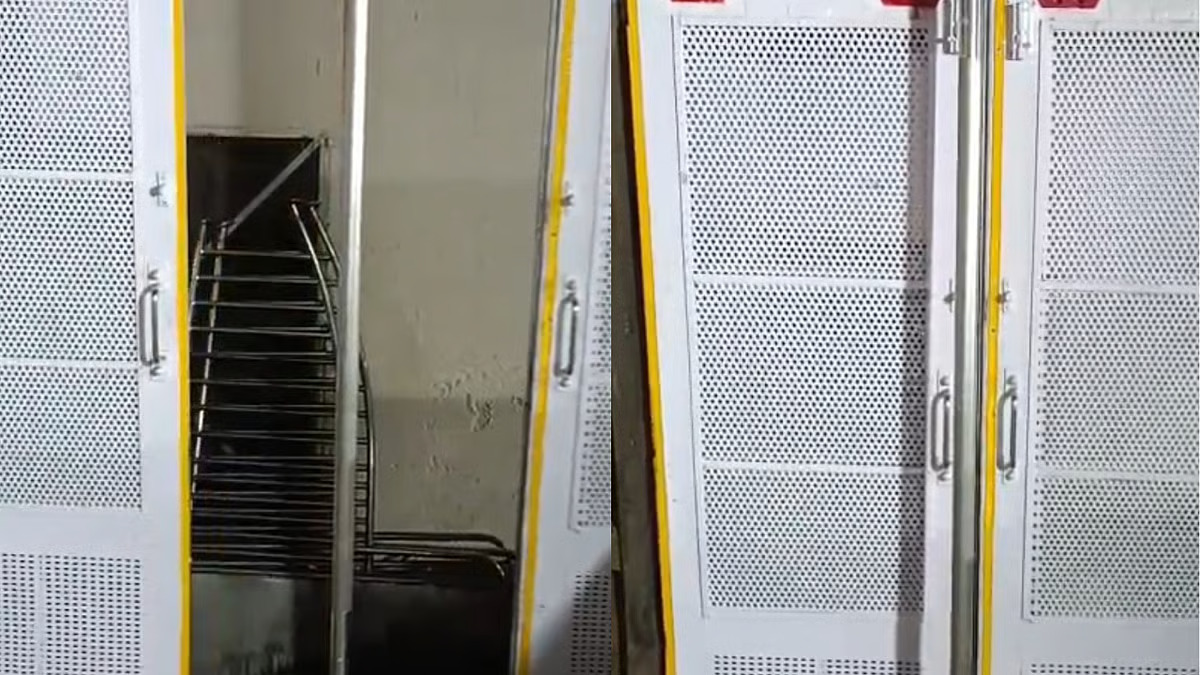
Central Railway (CR) has unveiled a prototype of a closed-door coach designed specifically for non-air-conditioned local trains. The initiative follows mounting concerns over commuter safety after a tragic accident in June that left four people dead and several injured due to overcrowding and open-door falls.
The new coach—developed at CR’s Kurla car shed using a Siemens-manufactured rake—is fitted with mesh-type ventilated doors aimed at reducing fall-related mishaps without compromising on ventilation. This prototype will be presented for inspection by top Railway Board officials during a scheduled visit to the city. Unlike the air-conditioned rakes that already feature automatic doors, this is Central Railway’s first attempt at applying closed-door technology to the far more heavily used non-AC suburban trains. Officials said the doors on the new prototype can be remotely operated by either the train manager or motorman, and will include design variations like louvered panels to further enhance air circulation.
The development is part of a broader safety revamp initiated by Indian Railways following the June accident at Mumbra, which exposed critical vulnerabilities in Mumbai’s packed local services. In response, the Railway Board had directed a complete overhaul in the design of future non-AC electric multiple units (EMUs), including the integration of safety-first elements such as wider vestibules, roof-mounted ventilation units, and redesigned doors. While a similar experiment was conducted in 2019 by Western Railway, it was discontinued due to ventilation and operational issues. Central Railway’s current attempt seeks to overcome those setbacks with improved materials and a more commuter-centric design philosophy.
The Integral Coach Factory (ICF) in Chennai is concurrently working on additional design iterations that could eventually be rolled out across India’s busiest suburban corridors. These developments aim to complement the 238 new AC EMU rakes being procured for Mumbai’s future transit ecosystem, which serves over 65 lakh commuters daily. A senior official confirmed that the closed-door prototype is still under trial and has not yet received final safety certification. However, the effort signals Indian Railways’ evolving approach to prioritise passenger well-being without compromising on affordability or utility for the vast working-class population that depends on local trains.
As Mumbai grapples with balancing rapid urbanisation and transport safety, the successful adoption of such innovations could serve as a blueprint for similar upgrades across other Indian metro rail systems.
Also Read : Bengaluru Water Crisis Deepens With Repeated Sewage Contamination Reports
