


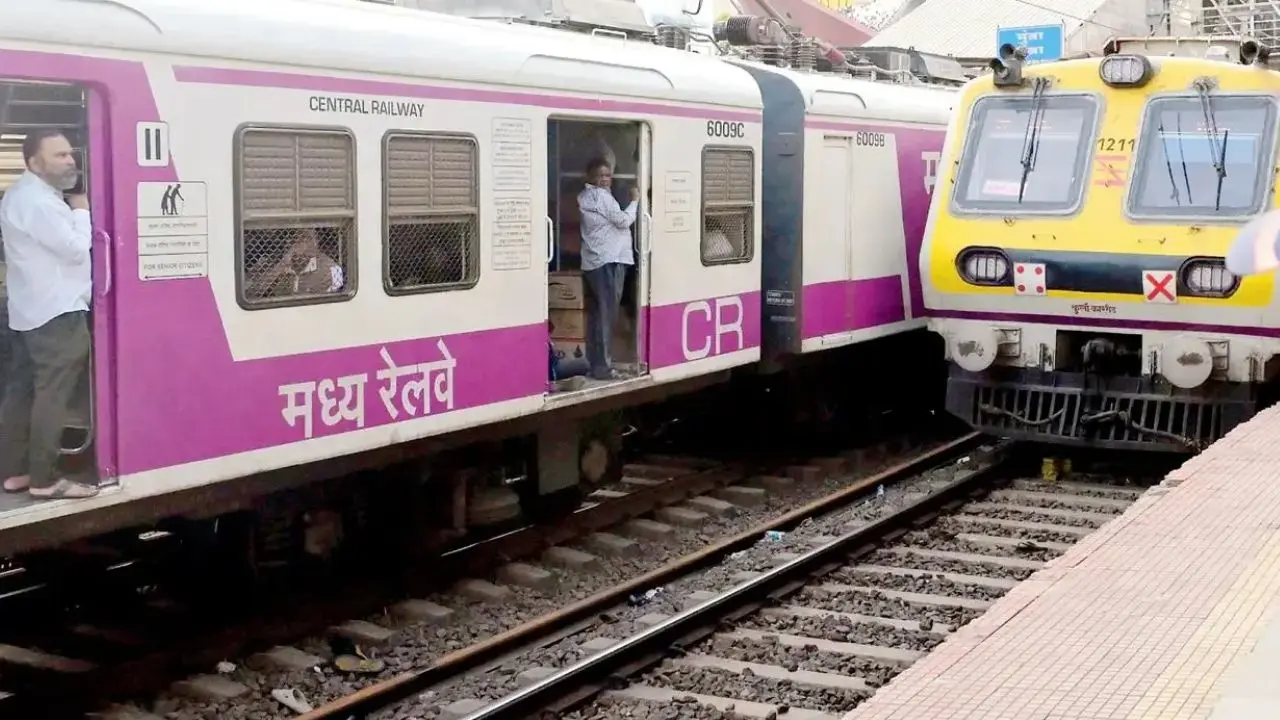
Central Railway has announced a series of planned traffic and power blocks in Mumbai between 27 and 30 September as part of a large-scale infrastructure upgrade programme. The works include the installation of new foot over bridge girders at Byculla and Sion stations as well as pre-non-interlocking activities at Karjat station. While essential for long-term passenger safety and capacity enhancement, the measures are expected to cause short-term disruptions to suburban and long-distance services.
The first block will be carried out at Byculla station, where rail traffic will be halted between 12.30 am and 4.30 am on 28 September. This will affect both slow and fast lines in the Byculla–Parel section. Simultaneously, a second block will take place at Sion station from 1.10 am to 4.10 am, impacting the busy Dadar–Kurla corridor. Railway officials stated that these works are critical for accelerating modernisation of suburban stations that serve lakhs of passengers daily. Long-distance trains will also be impacted. The Bhubaneswar–CSMT Konark Express will be regulated at Kurla before being short terminated at Dadar, while the Howrah–CSMT Express will be held at Thane and end its journey at Dadar. Officials confirmed that diversions and rescheduling may be introduced for other services depending on operational requirements, with announcements to be made closer to departure times.
Suburban commuters too will face temporary inconvenience. Among the affected services are Dadar–Kurla and Kalyan–CSMT locals late on 27 September, as well as early-morning CSMT–Thane and Kasara–CSMT trains. Adjustments include cancellations, short terminations, and altered origin points, particularly at Thane, to manage the passenger load during block hours. Authorities emphasised that the short-term sacrifices are aimed at achieving long-term benefits. The installation of new bridges at Byculla and Sion will significantly improve commuter safety and pedestrian flow, while works at Karjat are designed to prepare for track upgrades that will enable more efficient train operations in the future. Railway experts pointed out that such blocks, though disruptive, are inevitable for building safer, faster, and more sustainable infrastructure in a high-density corridor like Mumbai.
For Mumbai’s 75-lakh daily suburban passengers, the announcement underscores both the challenges of maintaining uninterrupted services and the pressing need for continuous upgrades. With the city’s railways already under immense pressure, infrastructure modernisation is being treated as a priority to meet future mobility demands while also ensuring resilience against disruptions. As the blocks approach, railway officials have urged passengers to plan travel accordingly and stay updated through official channels. The focus, they said, remains on minimising inconvenience while ensuring Mumbai’s rail backbone is strengthened for decades to come.
Also Read: Navi Mumbai To Deploy Over 50 Electric Buses For Airport City Transport
