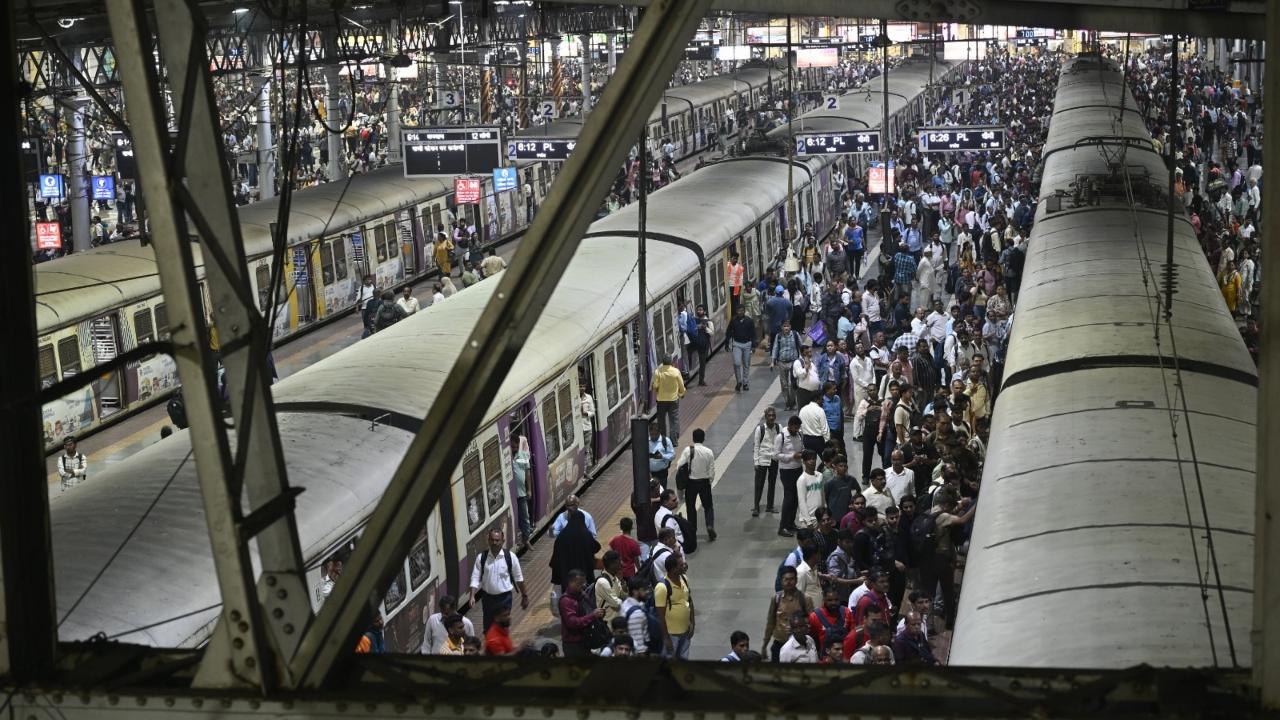
Mumbai’s suburban rail network, one of the busiest urban transport systems in the world, will undergo a major scheduled shutdown on 16 November as the Central Railway carries out essential maintenance across its Main, Harbour, and Trans-Harbour corridors. The operational block, which spans several hours, is part of routine infrastructure upgrades intended to improve long-term service reliability, commuter safety, and climate-resilient mobility for the region.
According to officials from the Mumbai Division, the block will affect slow services on the Main Line where both up and down operations between CSMT and Vidyavihar will remain suspended from late morning to mid-afternoon. During the period, slow trains from CSMT will be rerouted via the fast line, halting at major stations such as Byculla, Parel, Dadar, Matunga, Sion, and Kurla before shifting back to the slow corridor at Vidyavihar. Similarly, services heading towards CSMT from Ghatkopar will divert to the fast track until they rejoin the regular path closer to the terminus. Harbour Line passengers will face wider disruptions, with services between Panvel and Vashi completely cancelled during the maintenance window. Trains from CSMT towards Belapur and Panvel will also remain suspended. Officials noted that special services will run between CSMT and Vashi to ease commuter challenges, although travel options on the southern stretch will remain restricted.
The Trans-Harbour Line will see multiple cancellations between Panvel and Thane, while limited connectivity will continue between Thane and Vashi or Nerul. Port Line services, however, will operate as usual, offering a crucial alternative for commuters navigating the complex transport grid. Railway engineers explained that these blocks are necessary for track renewal, signalling upgrades, and overhead equipment inspections. Such work is central to managing Mumbai’s rising daily ridership and the city’s transition towards more sustainable mass mobility. Industry experts also underline that well-maintained public transport infrastructure supports lower carbon emissions by reducing reliance on private vehicles and improving overall efficiency of urban travel.
For thousands of daily commuters, the temporary disruption may result in delays and longer travel routes. However, civic groups advocating safer and more inclusive transport systems argue that periodic shutdowns are essential investments in long-term resilience. They emphasise that as cities expand and climate-related stresses intensify, robust maintenance must be prioritised to ensure equitable access to dependable mobility. The Central Railway has urged passengers to plan their travel accordingly and is encouraging commuters to use digital timetable updates to avoid last-minute inconvenience. While the block may test the patience of regular travellers, the broader objective remains strengthening Mumbai’s suburban network—an indispensable lifeline supporting economic productivity, connectivity, and more sustainable urban living.
Central Railway Announces Major Mega Block On 16 November Affecting Multiple Services