


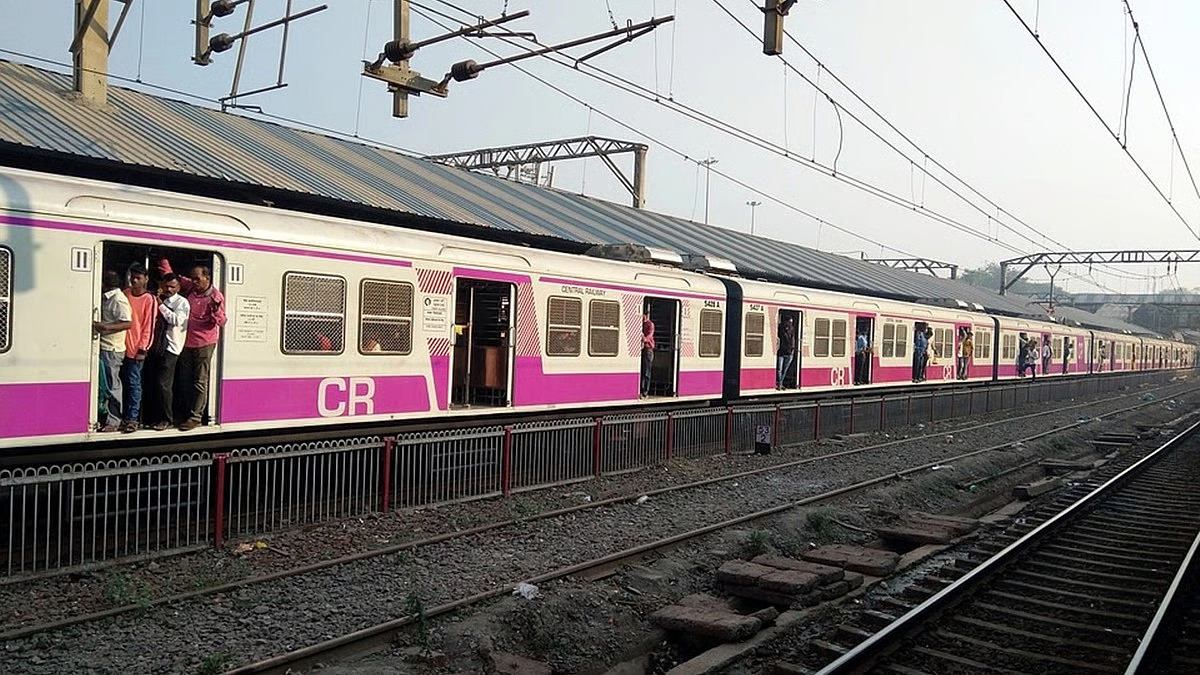
Mumbai commuters continue to voice frustration over delayed trains even as Central Railway (CR) claims measurable improvements in operational punctuality. The Mumbai Division reports that between April and July 2025, Mail and Express trains achieved 57% punctuality, up from 51% last year, while suburban services saw a modest rise to 93% from 92% year-on-year.
CR officials highlight that these improvements were achieved despite a surge in services and heavy monsoon conditions that frequently disrupt operations. In July 2025, the division operated 5,983 Mail and Express trains — a 7% increase from July 2024 — including 213 special trains, marking a 35% rise from the previous year. On average, 193 long-distance trains ran daily, compared with 185 last year, reflecting efforts to accommodate growing travel demand. While officials maintain that operational efficiency has improved, commuters express a different reality. Frequent travellers note that the late running of long-distance services often disrupts suburban train schedules, creating cascading delays in Mumbai’s congested rail network. Residents point out that punctuality improvements in official statistics do not always translate to a reliable daily commute.
A CR official explained that the division is focused on balancing suburban and long-distance services while identifying infrastructure and scheduling solutions to further minimise delays. Efforts include optimising train sequencing, improving turnaround times, and monitoring traffic patterns during peak hours. Experts suggest that sustainable and equitable rail operations require integrating real-time commuter feedback with data-driven scheduling improvements. Monsoon rains continue to exacerbate challenges, with waterlogging, signal disruptions, and track maintenance frequently affecting service reliability. Urban transport analysts note that addressing these challenges is critical for maintaining Mumbai’s role as a high-capacity transit hub. Officials stress that combining infrastructure upgrades with operational efficiencies can ensure safer, more reliable, and environmentally responsible rail services.
For commuters, the struggle between sustaining suburban lifelines and expanding long-distance connectivity remains tangible. While CR’s performance data indicates progress, residents emphasise that tangible improvements in day-to-day reliability are essential. Experts conclude that long-term solutions should prioritise commuter experience alongside operational benchmarks, ensuring Mumbai’s rail network remains a sustainable and equitable mode of urban mobility.
Also Read : Mumbai Civic Body Receives Three Applications For Controlled Pigeon Feeding Proposal
