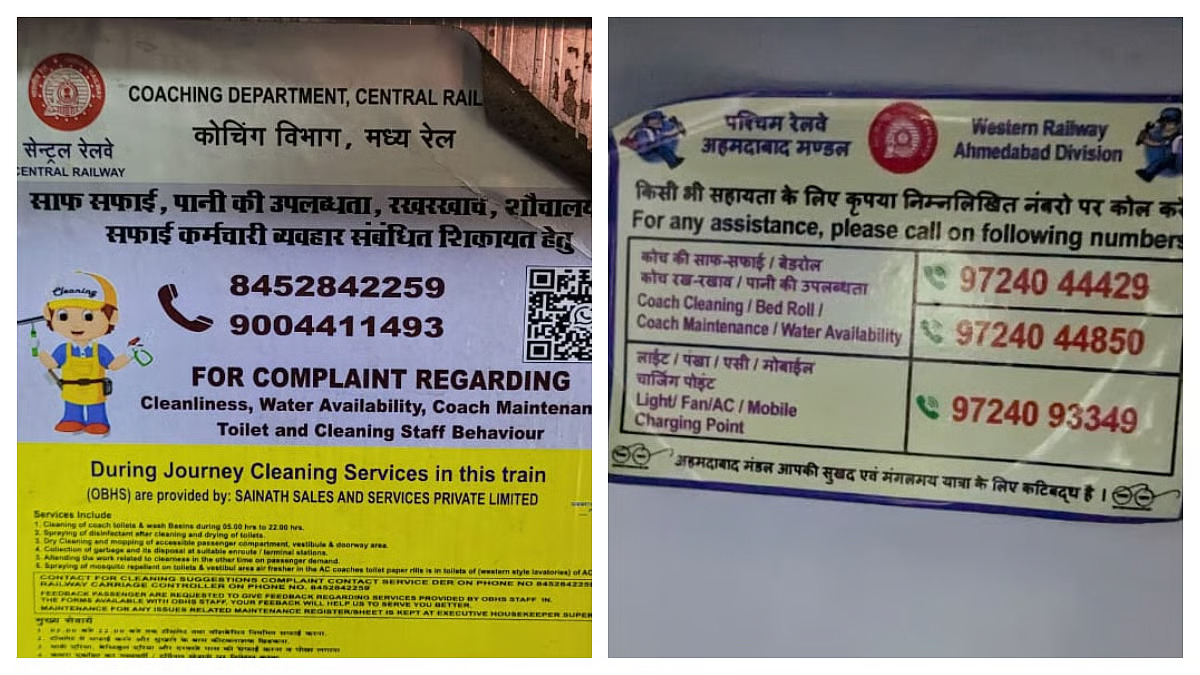
A shift in how passenger grievances are being handled across Mumbai’s railway network is raising concerns about transparency and institutional accountability. Commuters on Central and Western Railway routes are increasingly being directed towards informal communication channels, including WhatsApp numbers and personal contacts, instead of the official complaint systems designed to track service quality.
The development has sparked debate among transport observers, as it potentially undermines the integrity of centralised grievance redressal mechanisms. The railway complaint system, anchored by a national helpline and digital platforms, is structured to log, monitor, and evaluate passenger issues in real time. By contrast, complaints routed through informal channels may not be systematically recorded, creating gaps in performance data. The rise of WhatsApp complaints in railway services appears to be reshaping how feedback is captured, but not necessarily how it is analysed. Industry observers suggest that while such channels may offer quicker responses in some cases, they risk bypassing formal documentation processes. This, in turn, can affect how service quality is assessed and improved over time.
Data trends indicate a reported decline in complaints through official channels in recent months. However, railway insiders and independent analysts point out that this may not reflect an actual improvement in passenger experience. Instead, it could be linked to the diversion of complaints away from systems where they are formally counted and audited. For passengers, the coexistence of multiple complaint options has created confusion. With both official helplines and informal contact numbers displayed in train coaches, travellers are often uncertain about which platform ensures effective resolution. Experts argue that clarity in communication is essential, particularly in a high-volume public transport system that serves millions daily.
From a governance perspective, the implications are significant. Formal complaint systems not only enable real-time resolution but also generate datasets used to evaluate departmental efficiency, allocate resources, and plan infrastructure improvements. If complaints are increasingly handled outside these systems, the resulting data gaps could weaken evidence-based decision-making. Urban mobility specialists emphasise that accountability frameworks are as critical as physical infrastructure in maintaining public transport reliability. “A robust feedback loop is essential for any mass transit system. Without accurate data, it becomes difficult to identify systemic issues or prioritise interventions,” said a transport policy expert.
Railway authorities maintain that official platforms remain active and are being strengthened through ongoing monitoring and technological upgrades. However, the growing reliance on alternative channels highlights the need for a more integrated approach, where convenience does not come at the cost of transparency. As Mumbai continues to depend heavily on its suburban rail network, ensuring a clear, accessible, and accountable grievance redressal system will be crucial. The way passenger feedback is captured today will shape not only service delivery but also the long-term evolution of urban transport systems in the region.
Central And Western Railways Shift Complaints To WhatsApp Channels