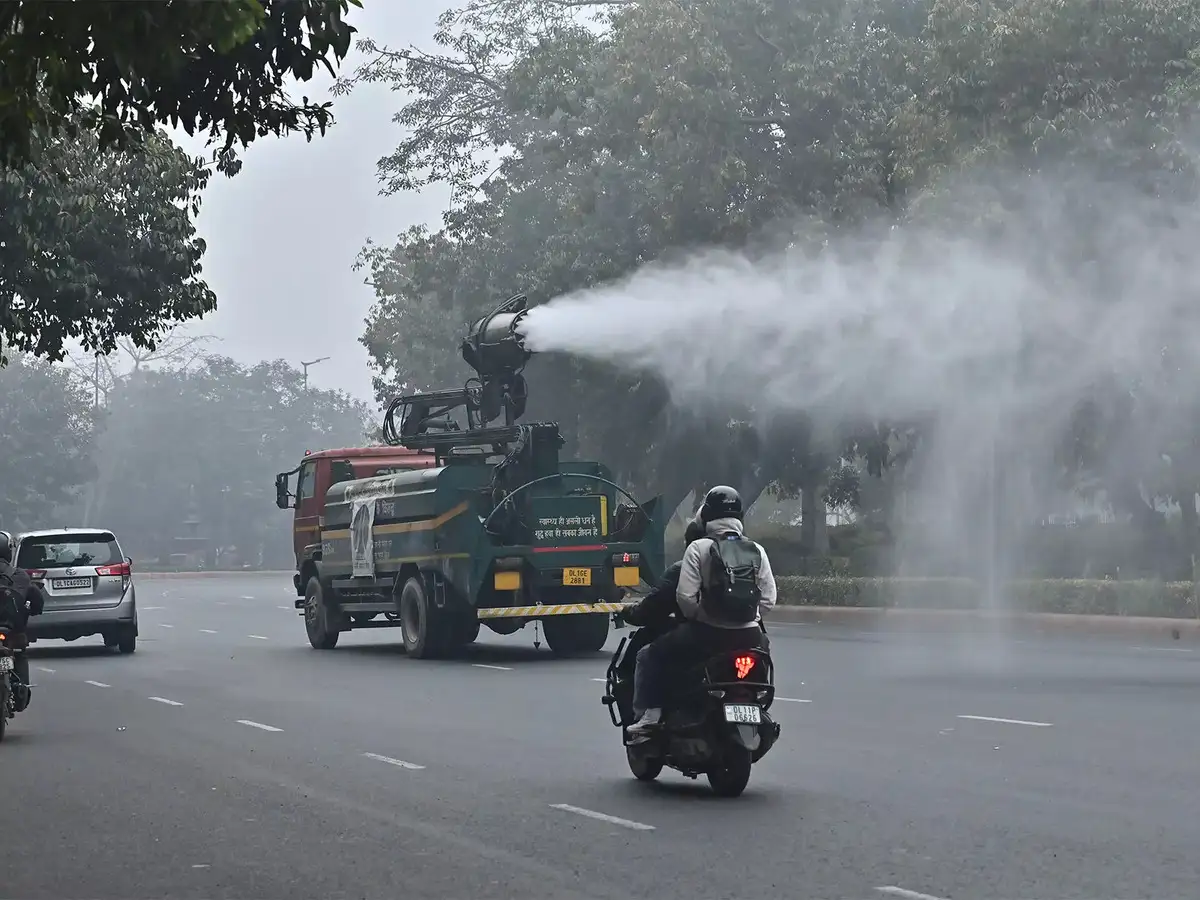
The Commission for Air Quality Management (CAQM) has undertaken a comprehensive review of pollution-control enforcement across the National Capital Region, signalling a sharper regulatory focus on compliance gaps as the region prepares for another high-risk air quality season. The exercise, covering multiple NCR districts, reflects growing concern over uneven implementation of environmental norms and the persistence of high-emission urban practices.
According to officials familiar with the review process, the assessment examined enforcement actions related to construction dust control, industrial emissions, waste burning, vehicle pollution and the operation of polluting diesel generators. The NCR, which includes Delhi and key urban centres in Haryana, Uttar Pradesh and Rajasthan, continues to face structural air quality challenges driven by rapid urbanisation, dense traffic volumes and fragmented governance.
A senior regulatory official said the review was aimed at identifying why enforcement outcomes remain inconsistent despite a steady tightening of environmental rules over the past three years. “The regulatory framework has improved, but compliance on the ground still varies widely between districts and agencies,” the official noted, adding that coordination failures often weaken the impact of otherwise well-designed policies. Urban planners say the NCR’s pollution problem is increasingly linked to land-use intensity and infrastructure strain. Large-scale construction activity, poorly regulated transport corridors and unplanned industrial clusters have compounded air quality risks, particularly in fast-growing peripheral zones. Analysts point out that enforcement reviews are critical not only for immediate pollution control but also for shaping long-term urban resilience strategies.
The CAQM review also evaluated how local bodies are deploying technology-driven monitoring tools, such as real-time air sensors and digital inspection platforms. Environmental policy experts say data-backed enforcement is essential for restoring regulatory credibility. “Without transparent, evidence-based action, public trust in air governance erodes,” said an environmental governance researcher. From a market perspective, the review carries implications for real estate, logistics and industrial development across the NCR. Stricter enforcement of dust mitigation norms and emission standards could raise compliance costs in the short term but is expected to improve project sustainability and long-term asset value. Developers are increasingly being pushed to integrate green construction practices, including covered material transport, on-site dust suppression and low-emission machinery.
Transport economists note that vehicle emissions remain a major pressure point, particularly along high-density freight routes and commuter corridors. The enforcement review has reportedly flagged gaps in checks on older diesel vehicles and non-compliant commercial fleets. Strengthening public transport integration and accelerating the transition to electric mobility are seen as necessary complements to regulatory action. The NCR’s air quality crisis has wide-ranging social consequences, affecting public health, workforce productivity and urban liveability. Health policy analysts warn that regulatory fatigue and weak inter-state coordination risk undermining incremental gains achieved in recent years.
The CAQM is expected to issue updated enforcement directives based on the review findings, with sharper accountability mechanisms for state pollution control boards and municipal agencies. For NCR residents, the effectiveness of this exercise will be measured not by administrative announcements, but by whether daily exposure to toxic air finally begins to decline. As the region confronts another winter pollution cycle, sustained enforcement, transparent reporting and people-first urban planning will determine whether regulatory oversight translates into lasting improvements in NCR’s environmental trajectory.
CAQM Steps Up NCR Air Action