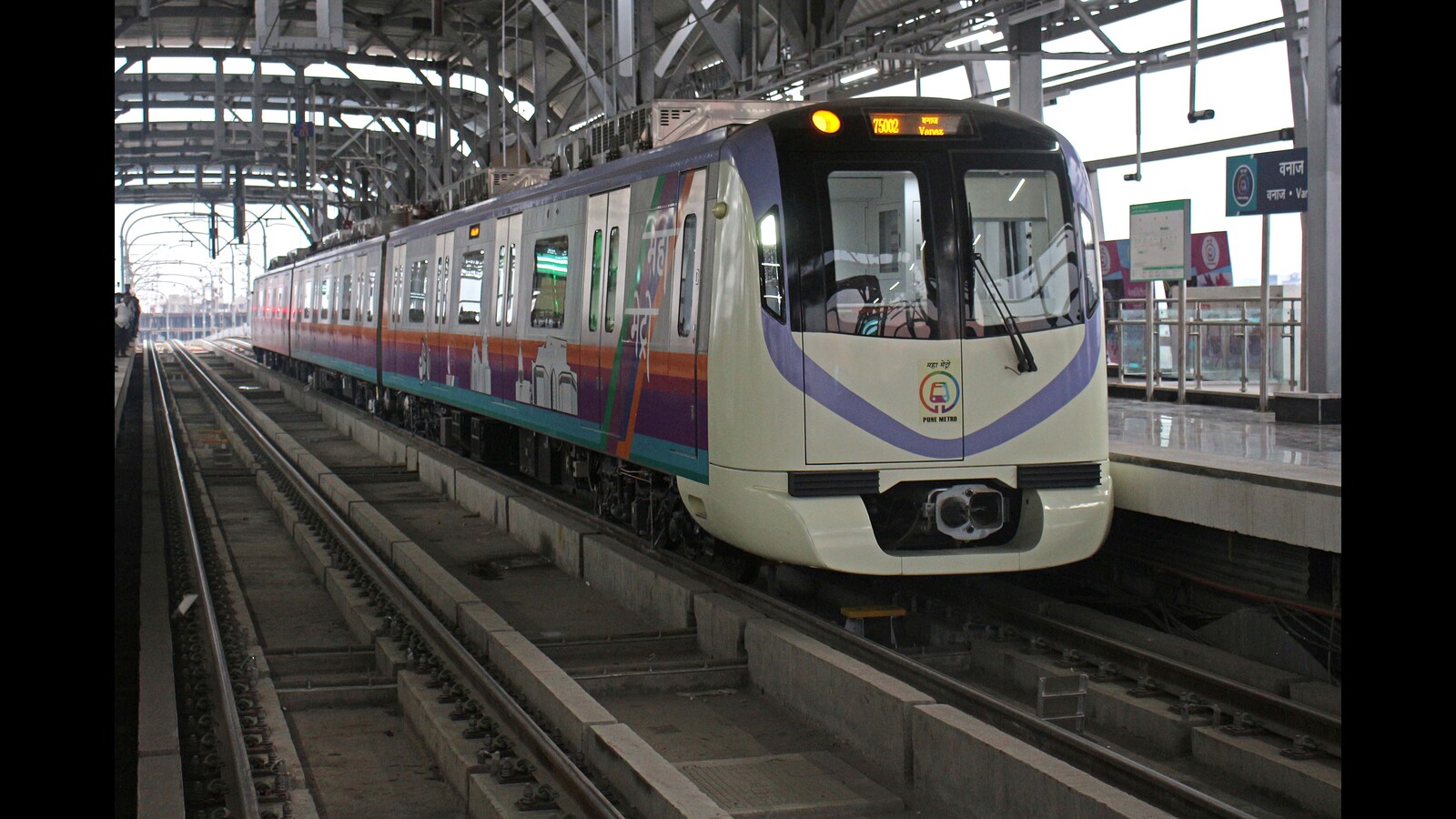
Pune has taken a decisive step towards modernising its urban transit system, with the Union Cabinet approving the expansion of the Pune Metro network under Phase-2 at an estimated cost of ₹9,858 crore. The approval, announced by an official from the Ministry of Information and Broadcasting, covers Line 4 (Kharadi-Hadapsar-Swargate-Khadakwasla) and Line 4A (Nal Stop-Warje-Manik Baug), marking the second major sanction after Phase-2 Line 2A and 2B approvals. The extension is projected to exceed 100 km, reinforcing Pune’s commitment to an integrated, sustainable urban mobility framework.
Spanning 31.6 km with 28 elevated stations, the newly approved lines aim to interconnect key commercial zones, IT hubs, educational institutions, and residential clusters across East, South, and West Pune. Industry experts highlight that this network integration will improve accessibility, reduce commute times, and foster a seamless connection with existing and future metro corridors, railway stations, and bus networks, aligning with Pune’s Comprehensive Mobility Plan (CMP). According to planning projections, combined ridership on Lines 4 and 4A is expected to reach 4.09 lakh by 2028, rising steadily to 7 lakh in 2038 and over 11.7 lakh by 2058. The Kharadi-Khadakwasla corridor is projected to handle 3.23 lakh passengers in 2028, scaling up to 9.33 lakh by 2058, while the Nal Stop-Warje-Manik Baug line will grow from 85,555 to 2.41 lakh passengers over the same period. A senior transportation planner noted that such ridership growth underscores the necessity of robust multimodal connectivity to balance urban density and mobility demand.
The project will be implemented by Maharashtra Metro Rail Corporation Limited (Maha-Metro), overseeing all civil, electrical, mechanical, and systems works. Pre-construction activities, including topographical surveys and detailed design consultancy, are already in progress. Officials emphasised that phased construction and strategic planning will ensure timely delivery while adhering to international standards of safety, efficiency, and sustainability. Beyond transit, the expansion reflects Pune’s commitment to environmentally responsible urban growth. Reduced dependency on road-based vehicles is expected to lower emissions, contributing to the city’s zero-carbon objectives. Urban development experts note that such infrastructure investment can also stimulate economic activity, enhance property accessibility, and support equitable urban development across the metropolitan region.
As Pune continues its rapid urbanisation, Phase-2 Metro expansion represents a forward-looking approach to creating a connected, inclusive, and sustainable city, capable of meeting mobility and environmental needs for decades to come.
Cabinet Nod For Pune Metro Expansion At Cost Nine Thousand Eight Hundred Crore