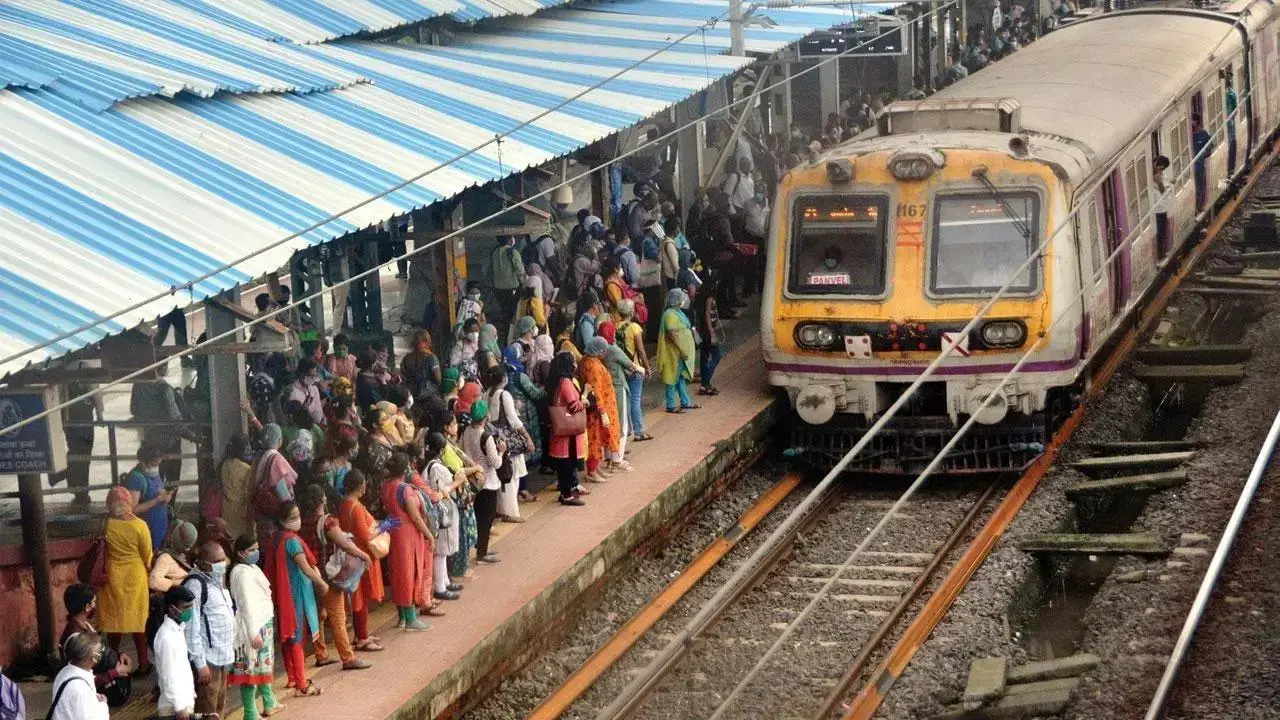
Mumbai’s heavily used western suburban rail corridor between Borivali and Virar is poised for a major infrastructure expansion aimed at easing congestion, improving punctuality, and future-proofing commuter movement in the Mumbai Metropolitan Region. Following the commissioning of additional lines up to Borivali, rail planners are now advancing work northwards on one of the city’s most strained suburban stretches.
The Borivali–Virar rail expansion project focuses on adding two new railway lines on the western side of the existing corridor. The primary objective is to separate long-distance and express train movement from suburban local services, a change transport planners consider critical for improving operational efficiency. Once implemented, the segregation is expected to allow higher suburban train frequencies and reduce delays caused by mixed traffic on the same tracks. The project is being executed under the Mumbai Urban Transport Project (MUTP) framework with an estimated investment of over ₹2,000 crore. Construction has been planned largely within existing railway land to minimise displacement and land acquisition challenges in densely populated areas.
Several stations along the route will undergo structural modifications to accommodate the new alignment. Platform adjustments are planned at Dahisar, Mira Road, Bhayandar, Vasai, Naigaon, Nalasopara, and Virar. At Bhayandar and Vasai, stations will see extensive remodelling, including new platforms and track realignments, while Virar will witness reconfiguration at the southern end to integrate the additional lines. A key component of the project involves bridge infrastructure. Three major bridges, multiple minor bridges, and a new road underpass are planned, including crucial creek crossings near Bhayandar. Foundation work has already commenced for one of the major creek bridges, and an ageing rail bridge in the same zone is being dismantled to make way for a modern structure designed to handle increased traffic loads and monsoon conditions.
To maintain operational flexibility, additional stabling lines are proposed between Naigaon and Vasai. These will compensate for the conversion of existing tracks elsewhere along the corridor and ensure smoother train management during peak hours. Rail planners note that construction has progressed faster in sections where environmental and forest clearances were secured earlier. In ecologically sensitive and logistically constrained areas, including near creek zones and islands, alternative methods such as water-based transport of materials are being used to limit disruption to local settlements.
Urban mobility experts view the Borivali–Virar expansion as a necessary investment in sustainable mass transit. By strengthening rail capacity, the project is expected to reduce dependence on private vehicles, lower emissions, and support more equitable access to employment hubs across the region. Once completed, the upgrade could significantly reshape daily commuting patterns on Mumbai’s western suburban line.
Borivali–Virar Section To Undergo Major Rail Infrastructure Push