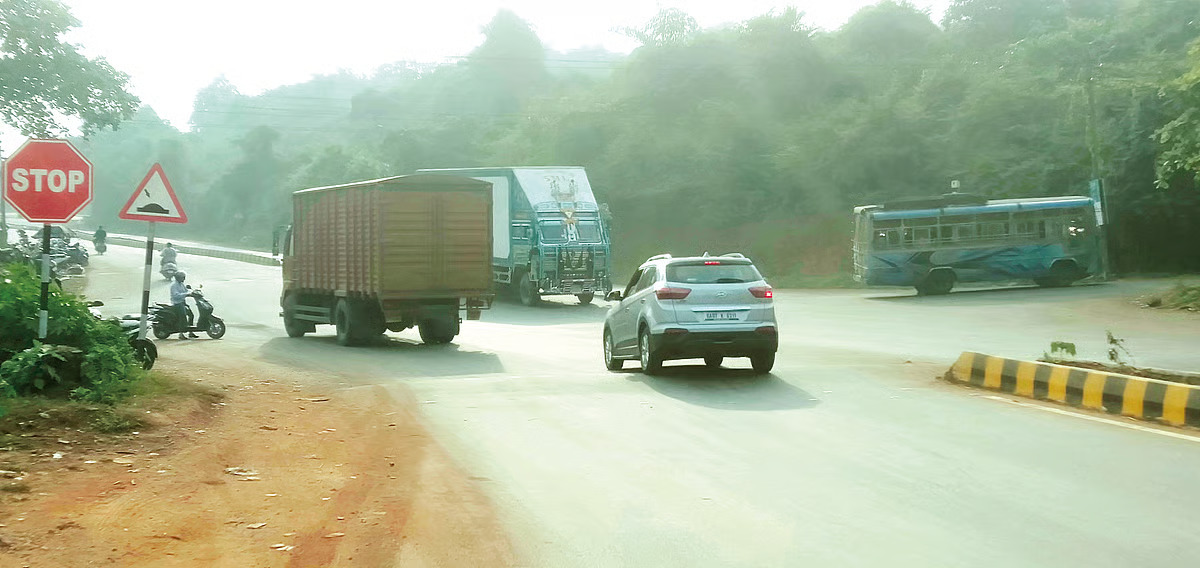
Borim Road Expansion Begins To Ease Years Of Daily Traffic Chaos
After over a decade of relentless traffic congestion, Borim village is witnessing a long-overdue road upgrade that promises long-term relief for commuters and residents alike. The Public Works Department (PWD) has commenced widening a crucial one-kilometre stretch from Bythokhol Circle to Pedakade Sakhwar by six metres. This upgrade aims to ease gridlock along the 2.5-kilometre stretch of national highway that cuts through the village and is scheduled for completion before the upcoming Ganesh Chaturthi festival. Officials expect this move to reduce bottlenecks and improve inter-district vehicular flow significantly.
The narrow corridor has long been a choke point for vehicles travelling from key towns such as Ponda, Belgaum, Margao, Karwar, and Shiroda. Every day, especially during peak hours, Borim’s streets become a maze of honking horns and inching traffic, forcing pedestrians and schoolchildren to navigate between bumper-to-bumper lanes. Minor mishaps and vehicle breakdowns often turn brief halts into hours-long delays. The pressure has only mounted with the increasing number of industrial workers and interstate travellers depending on this passage. The situation intensifies further during festive seasons, particularly around the Sai Baba Temple located centrally within the village. Religious celebrations attract large crowds, turning the already cramped stretch into a traffic nightmare.
Queues of vehicles often stretch from Bythokhol Circle to the Borim Bridge, leaving residents stranded and public transport systems paralysed. The PWD’s intervention is expected to relieve this pressure by providing dedicated space for vehicular movement and pedestrian safety. Locals have consistently voiced concerns over road safety and connectivity, pointing to how the village often feels split in two by the constant traffic flow. The road, while vital for regional connectivity, has become a daily hazard. Long overdue, this infrastructure upgrade is seen by residents as more than just a civil project — it’s a return to normalcy, safety, and dignity in everyday travel. For schoolchildren, elderly pedestrians, and local business operators, the change is expected to bring a noticeable improvement in quality of life.
While the immediate goal is to facilitate smoother traffic before Ganesh Chaturthi, the broader implication is a step towards more sustainable and inclusive mobility in Goa’s hinterland. The project aligns with the need for climate-resilient infrastructure by potentially reducing idling emissions and improving commuter efficiency. As Goa continues to urbanise, equitable infrastructure that supports both economic activity and social well-being becomes crucial. If implemented with adequate safety measures and proper traffic management, this modest yet essential upgrade could serve as a model for similar bottleneck zones across the state.