


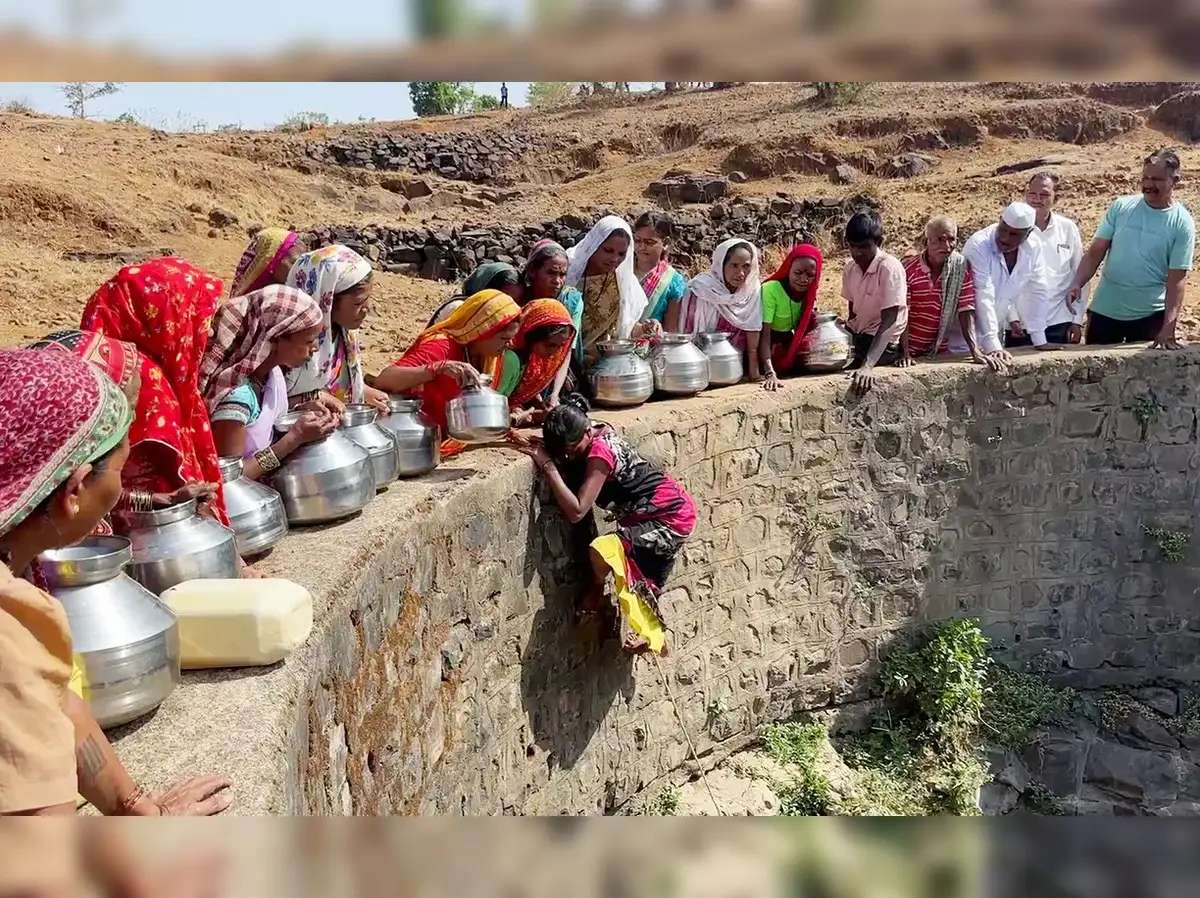
Borichivari, a cluster of 99 homes nestled precariously on the Maharashtra-Gujarat border within Nashik’s Peth taluka, epitomises the harsh reality of India’s persistent water crisis.
Despite a nationwide push for equitable resource distribution and sustainable urban development, this and five other neighbouring villages remain tethered to a daily struggle for potable water, their hopes often evaporating amidst a litany of unfulfilled promises. While bottled water is a commonplace commodity in urban centres, the women of Borichivari endure a gruelling two-kilometre trek to fetch water from a well that, ironically, belongs to the adjacent village of Kumbhale, laying bare the stark inequities in basic amenity access across the region. This poignant narrative underscores the critical need for a more human-centric and environmentally conscious approach to water management, especially in rural areas, to ensure zero-net carbon and truly equitable communities.
The villagers’ plight is exacerbated by the seasonal drying up of their three local wells, typically by January each year. Bharti Gavit, a resident, recounts a telling incident where, following a viral video depicting women perilously descending into a dry well, the local panchayat belatedly dumped two tankers of water into one of the wells under the cover of night. This desperate, reactive measure proved futile, as the water quickly became contaminated by decaying fish, leaving the villagers with unusable supply. Gavit’s poignant statement, “Our whole day is spent thinking about how to get water,” encapsulates the all-consuming nature of this daily struggle, highlighting how fundamental needs dictate the very rhythm of life. The burden of fetching water disproportionately falls upon the women of these communities, a daily pilgrimage that often begins before dawn. Armed with pots, barrels, and buckets, hordes of women from all neighbouring villages jostle for every precious drop. Sadi Busaare, a 62-year-old villager, bears the physical scars of this arduous routine, having broken two teeth after slipping at the well during a nocturnal attempt to collect water. While villagers may engage in light-hearted banter about who endures the most hardship, the underlying reality is grim, transforming thirst from an emergency into a normalised routine. Even in times of illness, as Savita Barda softly conveys, the journey cannot be paused; “Thoda dard hota hai, par aur kya karein, bas shuru ke do din nahi jaate?” she whispers, revealing the stoic resilience born of desperation.
The emotional toll extends beyond physical hardship. Paari Manbhav from Mohachapada reflects on the profound societal impact of water scarcity, lamenting, “No one wants to give their daughters to this village. Who will marry into thirst?” Her fear, as her son prepares for marriage, encapsulates the intergenerational despair induced by this persistent lack. The memory of her brother’s wedding being called off last year due to water scarcity serves as a stark reminder of how a basic necessity dictates fundamental life events and perpetuates social disadvantage. This human-centric perspective reveals the deep societal implications of such a crisis, affecting everything from personal dignity to the very fabric of community life. Despite the pervasive hardship, the spirit of solidarity within these villages remains unbroken. During Manbhav’s son’s wedding, the entire village collectively contributed a single bucket of water each, ensuring guests could partake in the rituals with dignity. This act of communal support, where women carried extra pots for Manbhav, exemplifies the extraordinary human capacity for resilience and mutual aid in the face of systemic neglect. Yet, such individual efforts cannot mask the systemic failures. Walls painted in blue and white, bearing the insignia of the Jal Jeevan Mission, stand as hollow reminders of promises unfulfilled. Launched in 2019, the mission’s implementation in Borichivari only began in 2023, only to fade almost as quickly as it appeared, leaving the promise of tap water to every household a distant, cruel dream.
The broader context across Maharashtra paints an equally concerning picture. All divisions have reported dam water levels significantly below 50 per cent: Konkan (44.37%), Nagpur (37.55%), Amravati (45.99%), Marathwada (35.82%), Nashik (40%), and Pune—the lowest—at just 30%. Consequently, cities across the state are receiving piped water only once every 10 days or more, with Ausa (Latur) receiving supply once every 12 days and Manmad (Nashik) once every 13 days. Even rapidly urbanising areas like Pimpri-Chinchwad face six-day gaps. Field data from the Water Supply Department reveals a worsening situation, with over 200 tankers already deployed across Marathwada by April 20, and projections suggesting nearly 700 villages would need tanker supply by May 5. In Konkan, around 600 villages are already reliant on tankers. Local leadership, exemplified by Sarpanch Mohan Kamdi, appears largely disengaged, casually dismissing the crisis as ‘dharti ka dikkat’ (an issue of the land), deflecting responsibility from systemic neglect. While a tanker system, costing Rs 60 for a 200-litre barrel, offers some relief, it remains unaffordable for most, forcing villagers back to distant wells. Attempts to lay pipelines, despite three successive efforts by various entities, have failed due to the absence of water at the source. The poignant observation by Giridhar Manbhav, a government teacher, that the Naar River flows nearby and a dam could solve the issue but “no one is interested in the well-being of Adivasis,” underscores the socio-economic inequities embedded within this water crisis.
The promise of the Survehan Dam, surveyed nearly a decade ago, remains a concept without execution. Tushar Immamdar of Swadesh Foundation notes a current initiative to install a zinc water tank in Kumbhale for rainwater harvesting, a small but hopeful intervention. However, a senior director from the foundation highlights the challenge of rocky terrain preventing long-term groundwater storage, making alternative approaches urgently necessary. While models like Hiware Bazar in Ahmednagar district demonstrate the success of watershed management with strong local leadership, Kumbhale suffers from a leadership vacuum, battling broken systems and apathy. The tragic irony lies in Maharashtra being declared the top-performing state in water conservation in the 2023 Census of Water Bodies, a stark contrast to the reality faced by villages like Borichivari. As Ramu Dhodia stoically reflects on his mother’s fall into a well and a Rs 8 crore promise that dried up with the well itself, the pervasive sentiment is one of weary resignation: “Life teaches you not to trust,” as Sadu Motiram Manbhav yawns, epitomising the human cost of persistent neglect in the face of a fundamental human right.
Also Read: Panvel Dam Full Early Water Crisis Ends Now
