Bombay High Court Orders Action On Powai Road Encroachments
In a ruling that sharpens judicial scrutiny on street‑level encroachments in India’s financial capital, the Bombay High Court has directed senior municipal and police officers to appear in person before the court over an ongoing dispute concerning unauthorised structures impeding traffic on a key Powai thoroughfare. The order signals growing concern about the urban governance gap that allows informal economic activities to expand into public rights‑of‑way, affecting mobility, safety and civic amenity in one of the city’s busiest sub‑centres.
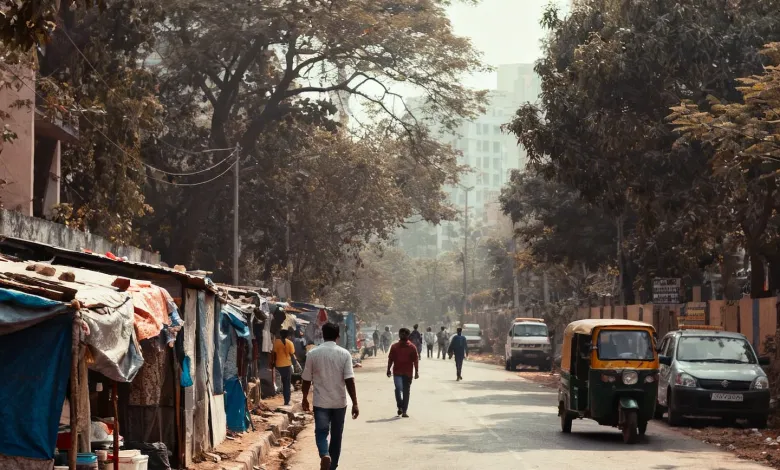
The court’s intervention follows a petition highlighting chronic encroachments along Powai Road, where traders and small enterprises have increasingly occupied footpaths, service lanes and carriageways — constricting vehicle movement and creating friction between businesses, pedestrians and residents. Urban planners and transport experts say that such encroachments do more than disrupt movement: they erode the functionality of arterial roads, diminish public safety, and shift the burden of civic regulation onto vulnerable road users.In its order, the bench summoned both municipal commissioners and senior police officials, emphasising that piecemeal responses would no longer suffice. Judicial observers interpret this as a clear expectation that civic enforcement agencies must craft a coordinated strategy rather than resort to ad‑hoc removals. “Footpath and roadway encroachments are not merely local nuisances — they are symptomatic of deeper institutional weaknesses in city management,” a legal analyst said, describing the court’s tone as assertive.
Powai Road is a critical urban connector between residential, commercial and tech‑park precincts in north‑east Mumbai. With increasing mixed‑use development in the area, traffic volumes have surged over the past decade. Encroachments by roadside vendors, informal retail stalls and parked vehicles have throttled peak‑hour flow, raising safety concerns for commuters and emergency services. Traffic planners note that even small reductions in effective road width can disproportionately worsen congestion on already strained road networks.City officials have historically grappled with how to balance enforcement with livelihoods. Street vendors and small traders often lack formal space within urban markets, compelling them to occupy public edges. While municipal bylaws permit regulated hawking zones, enforcement has oscillated between periodic crackdowns and informal tolerance — a cycle that has encouraged recurring disputes. The High Court’s directive underscores that urban space management requires calibrated policy and sustained execution, not intermittent action.
Experts assert that sustainable solutions should integrate formalisation of street commerce, infrastructure adaptation and enforcement protocols. Well‑designed street vendor zones, clear demarcation of footpaths and robust licensing systems — backed by geo‑mapped databases — can help reconcile economic activity with public space integrity. Cities such as Ahmedabad and Bengaluru have piloted models where designated vending zones and improved pedestrian infrastructure coexist with mobility corridors, achieving higher compliance and reduced friction.For residents and businesses along Powai Road, the court order is likely to accelerate administrative action. However, lasting improvement depends on consistent enforcement and participatory planning that fairly addresses the needs of informal workers. Urban rights advocates argue that enforcement must be paired with social safeguards, alternative trading options and transparent grievance redressal.
The High Court’s assertive stance reflects a broader urban governance challenge across Indian cities: defining and maintaining the boundaries of public space while accommodating dynamic economic activity. How Mumbai’s civic agencies respond to this latest directive will be a key test of institutional coordination and citizen‑centred urban planning.