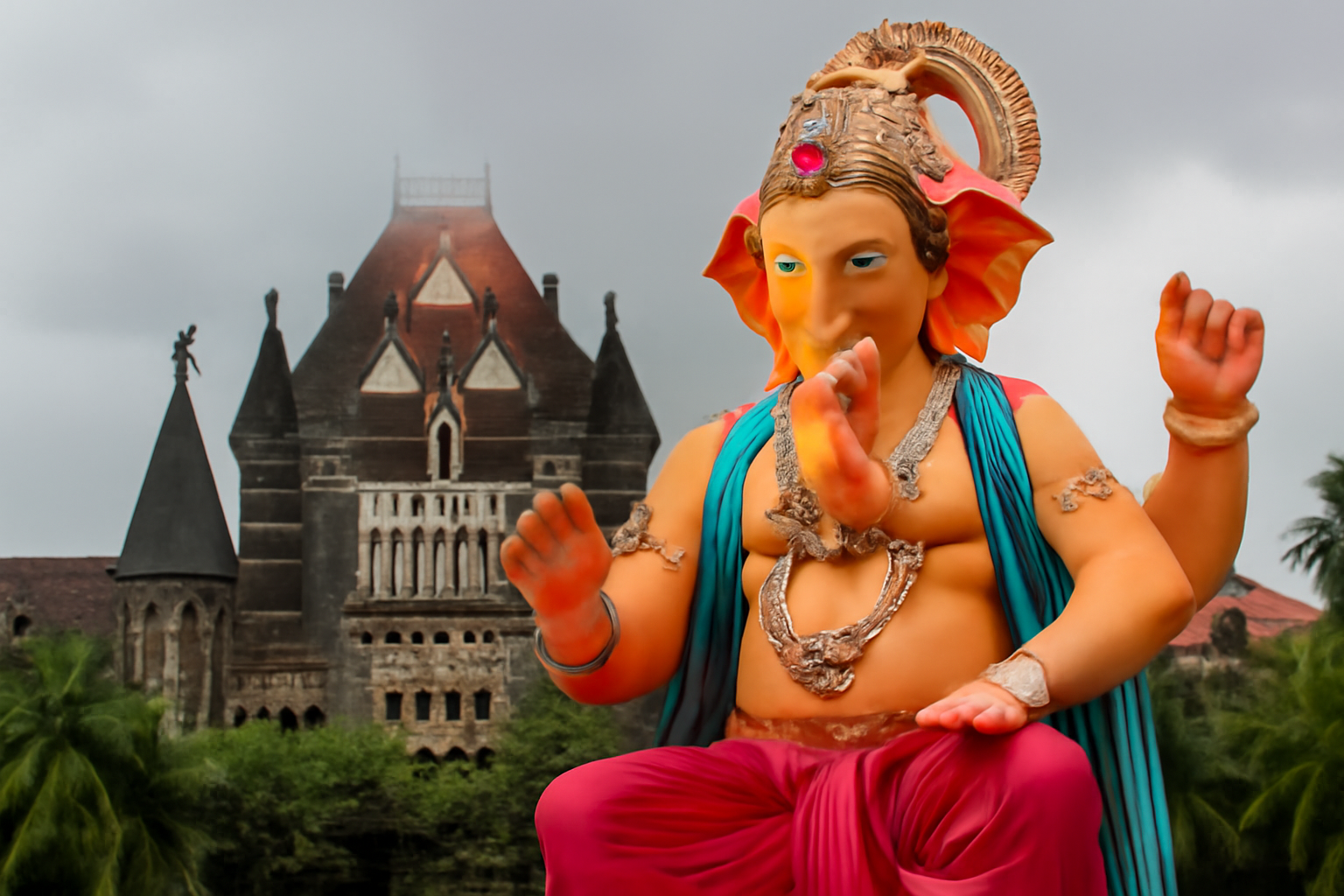
Bombay HC Permits Immersion of PoP Idols Over 6 Feet
The Bombay High Court has set interim guidelines allowing the immersion of Plaster of Paris (PoP) idols larger than six feet in natural water bodies. However, it has mandated that idols up to six feet must be immersed in artificial water tanks. This decision, set to remain in effect until March 2026, seeks to balance cultural practices with environmental protection, particularly during major festivals like Ganeshotsav.
The court’s ruling, issued on Thursday, has come after several petitions challenging the Central Pollution Control Board’s (CPCB) 2020 guidelines that prohibited both the manufacture and immersion of PoP idols in natural water bodies. The guidelines, introduced to curb the damage caused to water quality, have been met with strong resistance from devotees and local communities, particularly those involved in the annual Ganesh festival. Initially, the Maharashtra government had devised a policy allowing the immersion of PoP idols up to five feet in height in natural water bodies. However, this was seen as insufficient to mitigate the ecological concerns surrounding larger idols. The court’s decision to raise this limit to six feet acknowledges the need to reduce the ecological footprint of idol immersion while also accommodating religious practices that are integral to the cultural fabric of the state.
As the Ganesh festival approaches, which will be celebrated from August 26 to September 6, 2025, the court’s interim guidelines have granted permission for the immersion of large PoP idols this year, but with specific provisions to ensure environmental safeguards. The guidelines specify that idols above six feet must be immersed in artificial water bodies, while idols up to six feet should be placed in designated artificial tanks to prevent harm to natural ecosystems. This ruling has far-reaching implications, not just for the Ganesh festival but for other religious and cultural festivals involving idol immersion. The court’s directions will apply universally to all festivals until March 2026, with a review scheduled to assess the effectiveness of these measures in reducing environmental damage.
The court’s intervention came after a public interest litigation (PIL) was filed by environmentalist Rohit Joshi, who raised concerns about the detrimental effects of PoP idols on aquatic ecosystems and water quality. Through advocate Ronita Bhattacharya, Joshi’s petition urged the strict enforcement of CPCB guidelines, seeking to prevent further pollution of natural water bodies during the immersion process. During the proceedings, the court rejected the state’s earlier policy of allowing immersion of idols up to five feet, finding it inadequate in addressing the broader environmental impact. The state government was subsequently directed to amend its policy to raise the threshold for natural water immersion to six feet, marking a significant step towards stricter environmental governance.
Advocate General Birendra Saraf assured the court that the state would enforce the amended policy through local bodies, ensuring compliance across municipalities. He further revealed that the government was in the process of forming an expert committee to explore sustainable methods for reusing and recycling PoP materials, and dissolving the idols in an environmentally-friendly manner post-immersion. The Brihanmumbai Municipal Corporation (BMC) reported a substantial increase in the number of idols being immersed in artificial tanks. Last year, approximately 85,000 smaller idols were immersed in these tanks, a number expected to rise significantly in 2025, with nearly 1.95 lakh idols forecasted to be immersed in artificial tanks. This spike in numbers is due to the expanded infrastructure and increased public awareness about the environmental consequences of immersing larger idols in natural water bodies. The court also encouraged the promotion of smaller, reusable idols, calling for initiatives to reduce the production of large, single-use statues. This aligns with the broader push towards sustainable urban practices and zero waste policies. With the revised guidelines in place, local authorities will be tasked with enforcing the new rules and ensuring the success of this policy in the coming festivals. The matter is set to be reviewed again in eight weeks, with the court keen to assess the impact of the changes on both the environment and public adherence to the guidelines.
Through this ruling, the Bombay High Court has sought to strike a balance between preserving cultural traditions and ensuring the long-term sustainability of Mumbai’s natural resources. It highlights the need for cities to embrace eco-friendly alternatives while maintaining respect for community customs, especially as festivals like Ganeshotsav continue to grow in scale and significance.