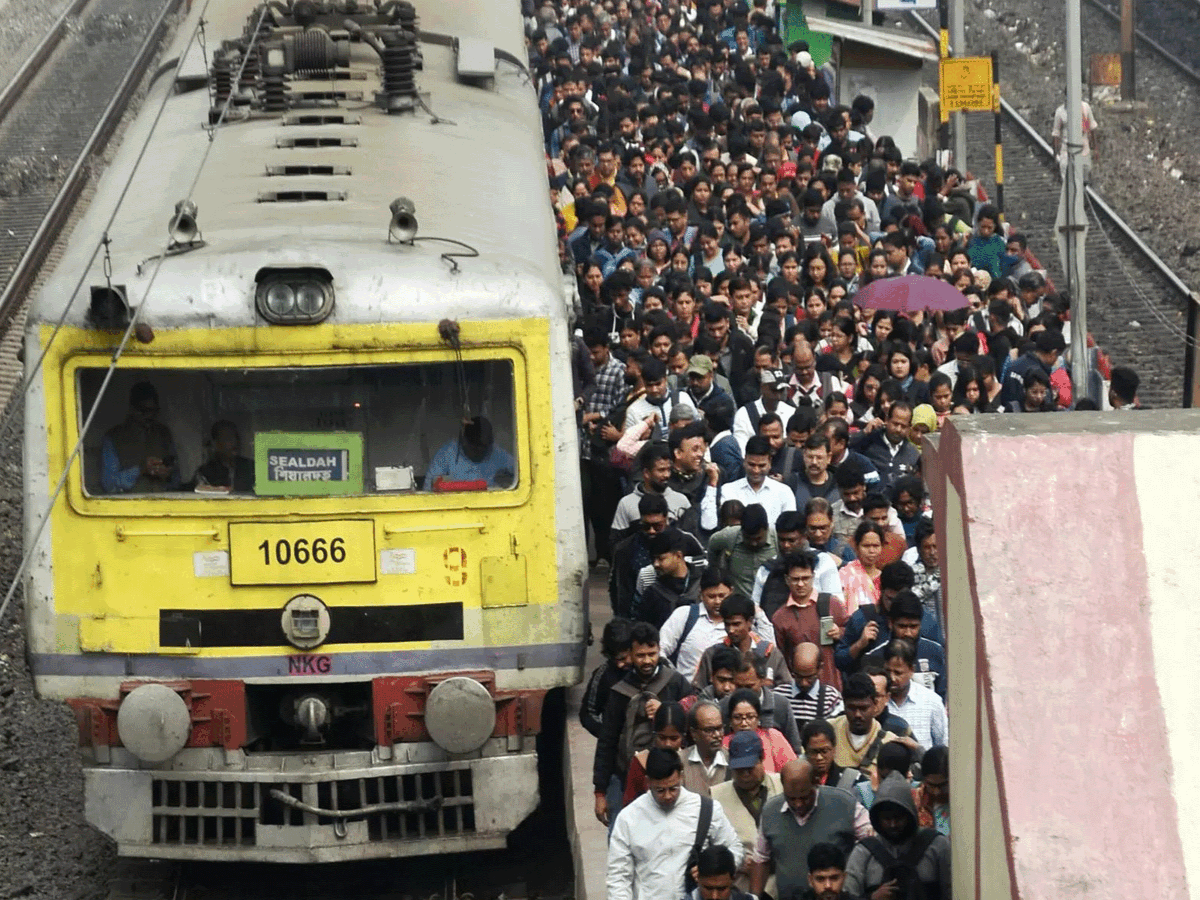
The Bombay High Court has raised serious concerns over the alarming rise in commuter deaths on Mumbai’s local train network, following a recent fatal fall in Mumbra. The court has directed Central Railway to submit concrete recommendations, along with a timeline for their implementation, and proposed preventive measures such as automated door-closure systems to address the ongoing crisis.
During a hearing on Friday, the Bombay High Court called the high number of fatalities on Mumbai’s suburban railway “disturbing” and “alarming.” Referring to a Central Railway affidavit, the Bench noted that over 3,500 commuters lost their lives in 2024 alone—averaging around 10 deaths a day—despite a reported 49% drop in fatality rates. The court said this data demands urgent systemic intervention.
The Bench, led by Chief Justice and a fellow judge, suggested that one way to curb the rising deaths could be the introduction of automatic door-closure systems in non-air-conditioned local trains. While the Railways has considered such solutions, the court directed them to present feasible plans with implementation timelines. Authorities were also instructed to act immediately and avoid more preventable tragedies.
A public interest litigation filed by a suburban commuter in 2024 served as the backdrop for the court’s observations. The PIL had urged railway authorities to adopt strong safety mechanisms, citing the increasing number of accidental deaths due to overcrowding and falls from open doors. The court asked the Central Railway to take into account the petitioner’s recommendations while framing its safety roadmap.
The Additional Solicitor General, representing the State, informed the court that a high-level committee and a multi-disciplinary team have been formed to review fatalities, including the Mumbra case. A “zero-death mission” policy is reportedly in place, with measures such as fencing and construction of railway overbridges already underway. The court has asked for transparency in the committee’s composition and its findings.
The Bombay High Court has scheduled the next hearing for July 14 and expects railway authorities to table a clear set of recommendations before then. As Mumbai’s local train network continues to serve millions daily, the court’s proactive stance highlights the urgent need for structural changes to protect commuter lives. The spotlight is now firmly on the Railways to prioritise safety in India’s financial capital.