


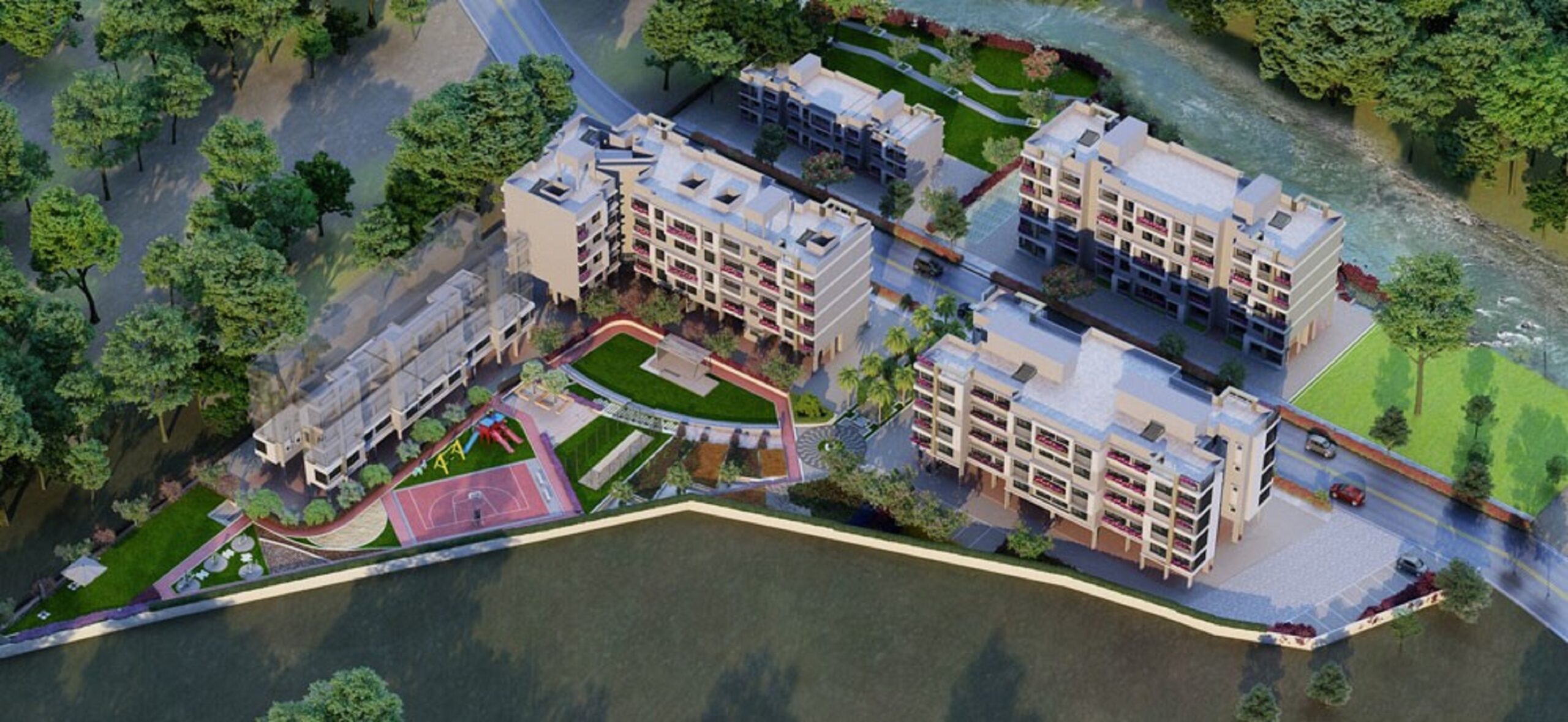
Affordable housing in India is often discussed in terms of volume rather than quality. A recent industry recognition in Maharashtra suggests that this narrative may be beginning to shift. At the inaugural CREDAI Real Estate Excellence Awards held in December 2025, a residential development in Boisar was named Best Residential Project in the Affordable Segment Tier III, drawing attention to how design, sustainability and dignity are increasingly shaping lower-cost housing.
Selected from more than 800 entries across 26 categories, the award signals growing industry acknowledgement that affordability and long-term urban resilience are not mutually exclusive. Industry observers say the recognition reflects a broader recalibration within real estate, where developers are being assessed not only on delivery speed and pricing, but also on environmental performance and liveability. The award-winning project occupies a compact two-acre site in Boisar, a fast-growing industrial and residential node on the Mumbai Metropolitan Region’s periphery. The development comprises 1 and 2 BHK homes planned with efficiency in mind, balancing unit density with open spaces and pedestrian-friendly layouts. Urban planners note that such peripheral towns will play a critical role in absorbing future housing demand, provided development does not replicate the congestion challenges of larger metros. What distinguishes the project is the inclusion of features typically associated with mid-income or premium housing. Shared amenities such as landscaped community zones, wellness-oriented open spaces and vehicle-free internal areas have been integrated to encourage social interaction and safety. According to housing experts, these elements contribute to social equity by ensuring that affordable housing does not translate into compromised living standards.
Environmental considerations form a central component of the planning approach. The project incorporates solar water heating, rainwater harvesting, heat-resistant waterproofing systems and efficient drainage infrastructure. These measures are intended to lower resource consumption over the building’s lifecycle while reducing long-term maintenance costs for residents an increasingly important factor as energy and water stress intensify across Indian cities. A senior executive from the developer said the recognition validates a long-term view of housing, where durability and operational efficiency are prioritised from the design stage rather than treated as add-ons. Industry analysts say this approach aligns with emerging urban policy goals that emphasise climate resilience, inclusive growth and reduced carbon intensity in residential development. The company’s future pipeline includes projects across different price segments, including an upcoming high-end residential development in Mumbai’s eastern suburbs. Observers note that applying similar sustainability principles across income categories could help normalise responsible building practices across the market.
As India’s housing needs continue to evolve, such projects indicate a gradual but meaningful shift. Affordable housing, when thoughtfully planned, can support compact growth, reduce environmental strain and contribute to more equitable urban expansion outcomes that cities increasingly cannot afford to ignore.
Also Read: CREDAI Nashik Metro Honours Real Estate Excellence At Annual Industry Awards Ceremony
Boisar Affordable Housing Project Agami Sapphire Wins Top Honour At CREDAI Awards 2025
