


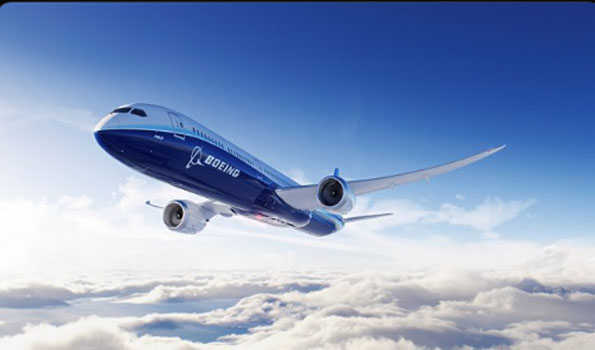
Boeing Forecasts 7% Annual Growth in India and South Asia’s Aviation Market, Requiring 2,835 New Planes by 2043
New Delhi, February 6, 2025 – The commercial aviation market in India and South Asia is on track to become one of the world’s fastest-growing sectors, with Boeing projecting the market to quadruple in size by 2043. According to a recent report from Boeing, the region will experience a robust annual growth rate of over 7% for the next two decades, fuelled by steady economic progress and increasing demand for air travel.
Boeing’s Commercial Market Outlook points to several key factors driving this impressive expansion, including strong economic and trade growth, rising household incomes, and significant investments in aviation infrastructure. The increase in domestic travel, combined with a growing middle class, will keep India at the forefront of global aviation development. According to Ashwin Naidu, Managing Director of Commercial Marketing for India and South Asia at Boeing, “India and South Asia are poised to remain the world’s fastest-growing commercial aviation market over the next two decades.” As the region experiences ongoing economic growth, there will be a rising demand for air travel, not only within India but across the broader South Asia region. The increase in disposable incomes, coupled with enhanced connectivity, will further fuel this trend, allowing India to maintain its position as a key player in global aviation. To meet the growing demand for air travel, Boeing has forecast that Indian carriers will need 2,835 new aircraft by 2043. This fleet expansion will be essential for airlines to service the increasing number of passengers, particularly with India’s domestic air traffic expected to remain the largest and fastest-growing segment of the market. The demand for more efficient and larger fleets will become particularly evident in both short- and medium-haul routes, where growth is set to be most substantial.
Boeing projects that nearly 90% of the commercial jets delivered over the next 20 years will be fuel-efficient single-aisle aircraft, such as the 737 MAX. These aircraft are better suited for the types of routes most in demand in India and South Asia, offering lower operational costs and greater flexibility for airlines. The 737 MAX will play a significant role in improving operating economics, which is essential as the region continues its rapid growth. In line with the projected expansion of India’s aviation market, Boeing also anticipates a significant rise in the demand for aviation personnel. The number of pilots, cabin crew, and technicians will need to double in the coming years to keep pace with the increased fleet size. Boeing estimates that by 2043, the demand for aviation professionals will rise to approximately 129,000, highlighting a growing need for skilled workers in the aviation sector. This presents both challenges and opportunities for the aviation workforce in India, as new training programmes and recruitment drives will be necessary to meet the demands of the expanding industry.
As Boeing predicts massive growth in India’s aviation market, infrastructure development is also expected to accelerate. Airports will need to be upgraded or newly constructed to accommodate the influx of passengers, while air traffic management systems must be enhanced to maintain safety and efficiency. This rapid growth also means that investment in both public and private sector infrastructure will be critical to ensuring that India’s aviation market can operate at full capacity. The next two decades hold exciting prospects for India and South Asia’s aviation sectors. With ongoing investments in aircraft fleets, aviation professionals, and infrastructure, India is poised to become a global leader in air travel. The projected demand for 2,835 new aircraft and the doubling of aviation jobs reflect the immense potential that lies ahead. Boeing’s projection of the Indian and South Asian aviation market quadrupling by 2043 presents a hopeful and expansive vision for the region. Driven by economic growth, increased consumer demand, and significant investments in both infrastructure and human resources, the aviation market in this part of the world is set to soar.
