


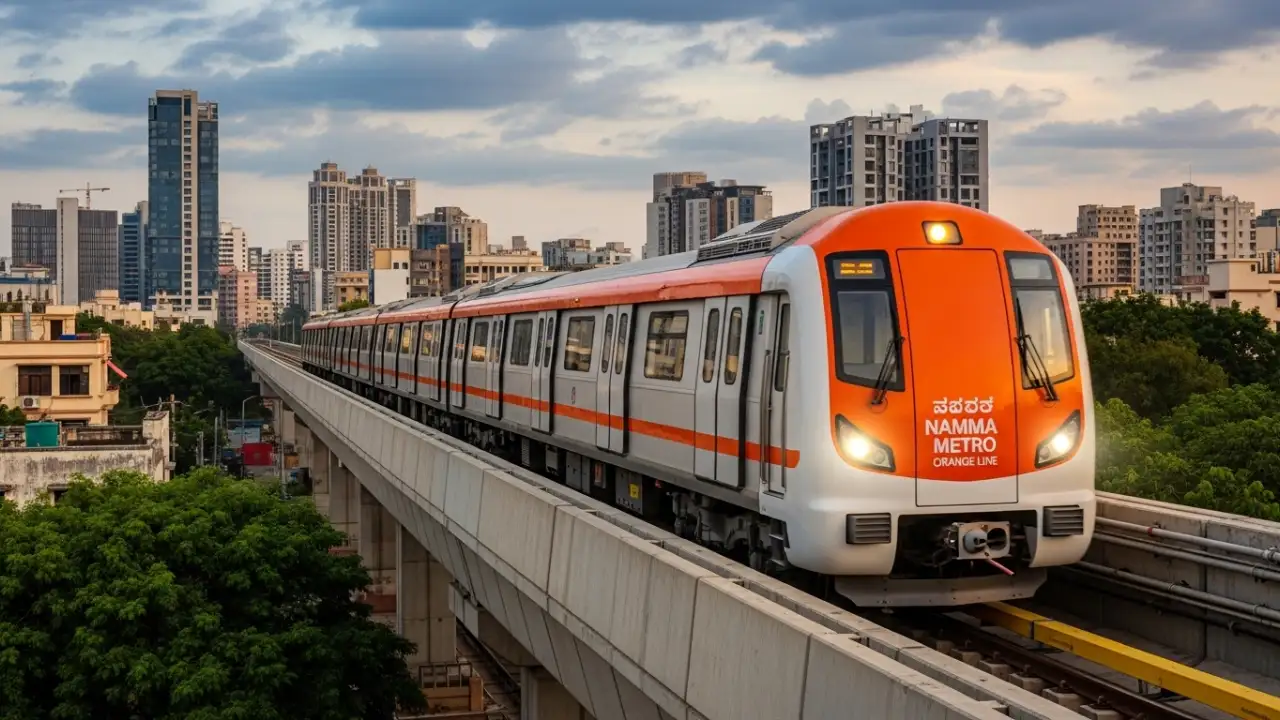
The Bengaluru Metro Rail Corporation Limited (BMRCL) has announced a substantial reduction in the projected tree loss for its ambitious Phase 3 construction. Initial estimates had indicated that approximately 11,000 trees would be impacted; however, following a detailed internal review, this figure has been scaled down to around 6,800. This development signals a critical pivot towards integrating environmental considerations more deeply into the city’s rapid urban expansion, aiming for a more eco-friendly and sustainable future for Bengaluru.
The re-evaluation comes amidst heightened scrutiny and sustained pressure from local environmental groups, who have consistently voiced concerns over the ecological toll of the city’s infrastructure development. BMRCL officials, during a recent public consultation, clarified that the revised figure of 6,800 affected trees does not imply outright felling for every single one. Instead, it encompasses a nuanced approach where some trees will be removed, others transplanted to new locations, and a significant number potentially retained, depending on site-specific conditions encountered during construction. This flexible strategy is crucial for minimising irreversible damage to Bengaluru’s precious green canopy.
Also Watch: “Mumbai will rock, shine and always be India’s best city to live.” In an exclusive, MHADA CEO Sanjeev Jaiswal (IAS) talks about Mumbai’s enduring charm, livability, and the government’s focus on making it affordable for all
Environmental campaigners, however, continue to demand greater transparency and granular data. During the public forum, activists stressed the need for precise figures on how many trees would be preserved, pruned, or relocated, along with specific details on species, age, and the exact transplantation sites. This demand for empirical data reflects a broader societal push for accountability from urban development agencies, ensuring that commitments to environmental preservation translate into verifiable actions rather than broad assurances.
While metro development is acknowledged to contribute to urban challenges such as air and noise pollution during construction, BMRCL officials contend that these impacts are not uniformly high and are part of a larger, multifaceted urban pollution landscape. Crucially, BMRCL has reiterated its commitment to compensatory afforestation, pledging to plant ten saplings for every tree removed. These new trees are promised to be planted within city limits and meticulously maintained for a minimum period of three years, an essential measure to offset ecological losses and foster a zero-net-carbon urban environment.
Nevertheless, activists remain sceptical, highlighting past challenges with compensatory planting initiatives and demanding concrete updates on the survival rates of previously transplanted trees. This ongoing dialogue underscores the critical importance of robust monitoring and public verification in achieving true environmental sustainability within urban projects. As BMRCL’s Environmental Impact Assessment (EIA) for Phase 3 nears completion, with public and non-governmental organisation input actively being integrated, the publication of the full report by October will be a pivotal moment. It will reveal the comprehensive strategy to balance the undeniable need for enhanced urban mobility through mass transit with the equally vital imperative of preserving Bengaluru’s unique ecological identity, ensuring a greener and more liveable city for all its inhabitants.
Also Read: Air India Flight AI 2744 Skids Off Mumbai Runway Amid Rain Today
