


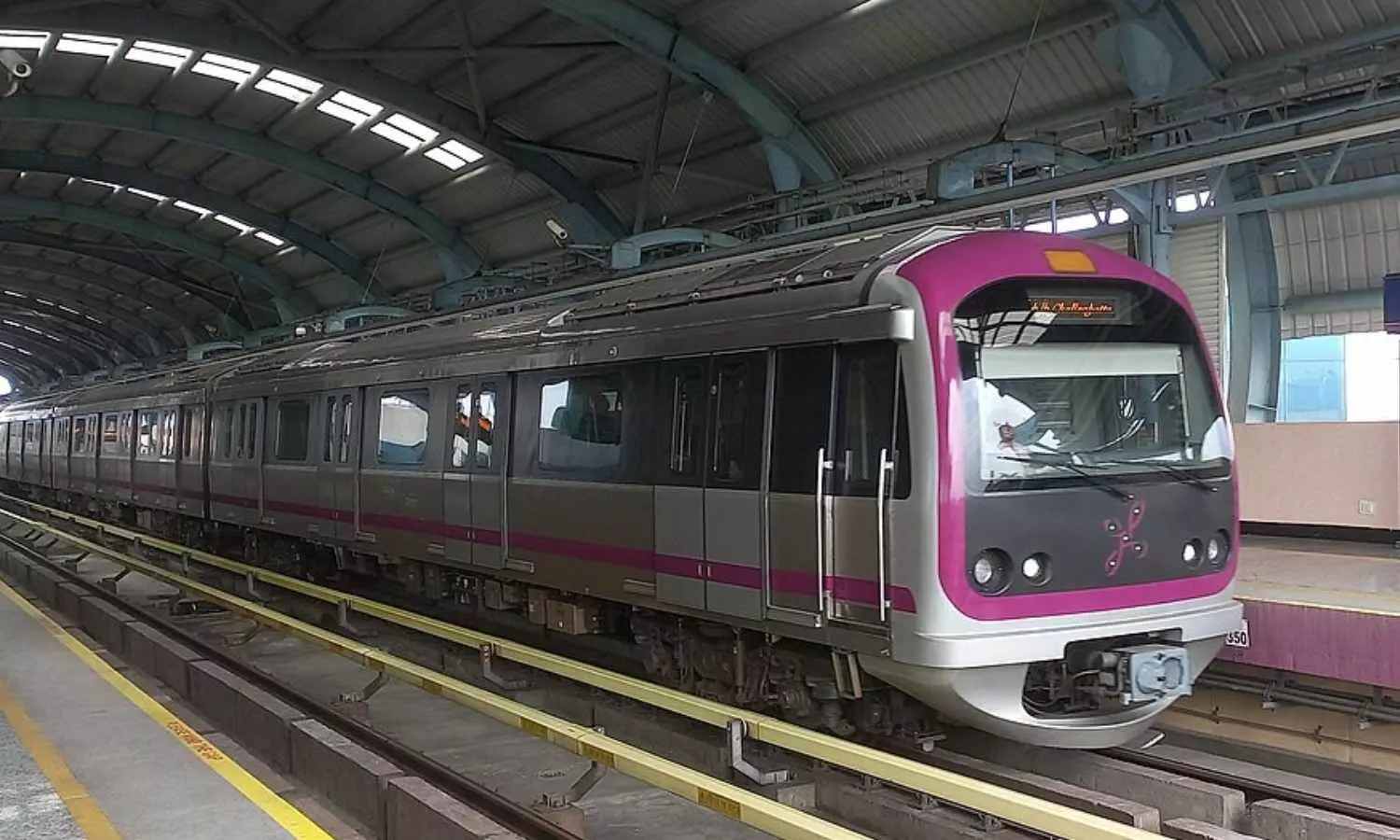
Bengaluru’s metro commuters are adjusting to a recalibrated fare structure, following the recent revision implemented by the Bengaluru Metro Rail Corporation Limited (BMRCL). Officials have clarified that the average increase across the Phase-1 network stands at 51.55 percent, after rationalising fare slabs, dispelling misconceptions that the hike exceeded 100 percent. The revision, conducted through a transparent, formula-driven methodology using audited data from FY 2016-17 to FY 2023-24, was designed to balance operational sustainability with commuter affordability.
BMRCL Managing Director emphasised that the statutory Fare Fixation Committee (FFC) guided the fare revision. While some media reports suggested a 105.15 percent increase, officials clarified this figure reflected cumulative operational cost increases—including staff, energy, and maintenance—over several years, not the actual fare hike. The real adjustment ranges from 0 percent to 81.82 percent before smart-card or off-peak discounts. The revision coincided with a simplification of the fare system, reducing 29 slabs to 10. According to officials, of the 4,624 station-to-station fare combinations, over 70 percent saw hikes within the 30–60 percent range, while 3 percent experienced reductions. This rationalisation aims to make fare calculations more transparent, predictable, and user-friendly for daily commuters.
Officials highlighted that calculations were based on the full 42.3 km Phase-1 network, including the extended sections commissioned in June 2017, rather than the earlier 30.3 km length. Periodic adjustments were deemed necessary to ensure financial sustainability, maintain service quality, and safeguard commuter safety, as non-fare revenue sources remain limited. Urban transport analysts note that rational fare revisions are a global norm, helping maintain service frequency, station maintenance, and safety standards. They stress that BMRCL’s approach balances operational viability with affordability, especially critical as public transit seeks to reduce reliance on private vehicles and support Bengaluru’s ambitions as a sustainable, zero-net-carbon city.
In addition, the structured fare rationalisation is expected to incentivise off-peak travel, easing congestion during peak hours and enhancing commuter experience. Experts suggest that smart-card discounts and digital fare mechanisms further mitigate cost increases for frequent travellers. With the Phase-2 expansion on the horizon, ensuring a financially sustainable fare structure is crucial for scaling operations without compromising environmental or commuter-focused objectives. The latest fare revision reflects a strategic step toward long-term resilience of Bengaluru’s metro network while maintaining alignment with eco-friendly urban mobility goals.
Also Read : Indian Railways Introduces Efficient Door To Door Parcel Service Mumbai Kolkata
