


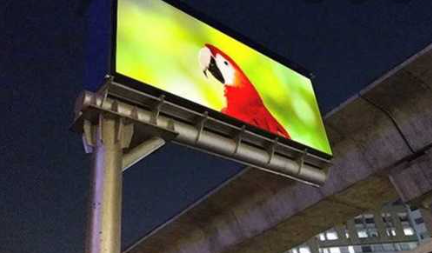
Mumbai: The Brihanmumbai Municipal Corporation (BMC) is undertaking a comprehensive review of digital hoarding policies from various states and countries to formulate new guidelines for the city. A six-member committee, established to develop these guidelines, held a detailed meeting at the BMC headquarters on Tuesday. During the session, traffic police raised significant concerns about the safety implications of digital hoardings at traffic signals and footpaths, citing them as potential distractions for motorists.
The urgency to expedite the hoarding policy was prompted by a tragic incident in Ghatkopar, where a billboard collapse resulted in 17 fatalities. With a surge in applications for digital hoardings, the BMC is now focused on creating distinct regulations for such advertising structures. The committee’s second meeting was chaired by Additional Municipal Commissioner Dr. Ashwini Joshi and attended by experts from the Indian Institute of Technology – Bombay (IIT-B), traffic police, an ex-employee of the National Environmental Engineering Research Institute (NEERI), and officials from the environment and licenses departments.
A senior civic official explained, “Digital hoardings present unique safety concerns, leading to diverse opinions on their suitability within the city. We are currently examining digital hoarding policies from various Indian cities and international examples from the UK, USA, and Australia. Additionally, we are exploring the possibility of designating special zones for digital hoardings, similar to Delhi. To address this comprehensively, we have formed three sub-committees focusing on technical aspects, environmental impact, and road safety.”
The sub-committees will assess various factors including the brightness, colour, and content of digital hoardings, as well as the feasibility of allowing moving clips and the necessity of shutting them down post-11 pm. Traffic police have highlighted issues with digital hoardings obstructing views and distracting drivers, particularly at signals and on footpaths. Furthermore, the brightness of these hoardings has been identified as a hazard for drivers.
Other concerns raised include the prohibition of digital hoardings on religious sites and heritage structures. The permissible size of hoardings, currently set at 40 ft x 40 ft, is also under review. Presently, there are 1,025 authorised hoardings in Mumbai, 67 of which are digital. Following the Ghatkopar incident, no new hoardings have been approved. The BMC plans to invite public suggestions and objections to the proposed guidelines after July 5, with the final policy expected to be released in August. This initiative is poised to ensure safer and more regulated deployment of digital hoardings across Mumbai, balancing technological advancement with public safety and aesthetic considerations.
