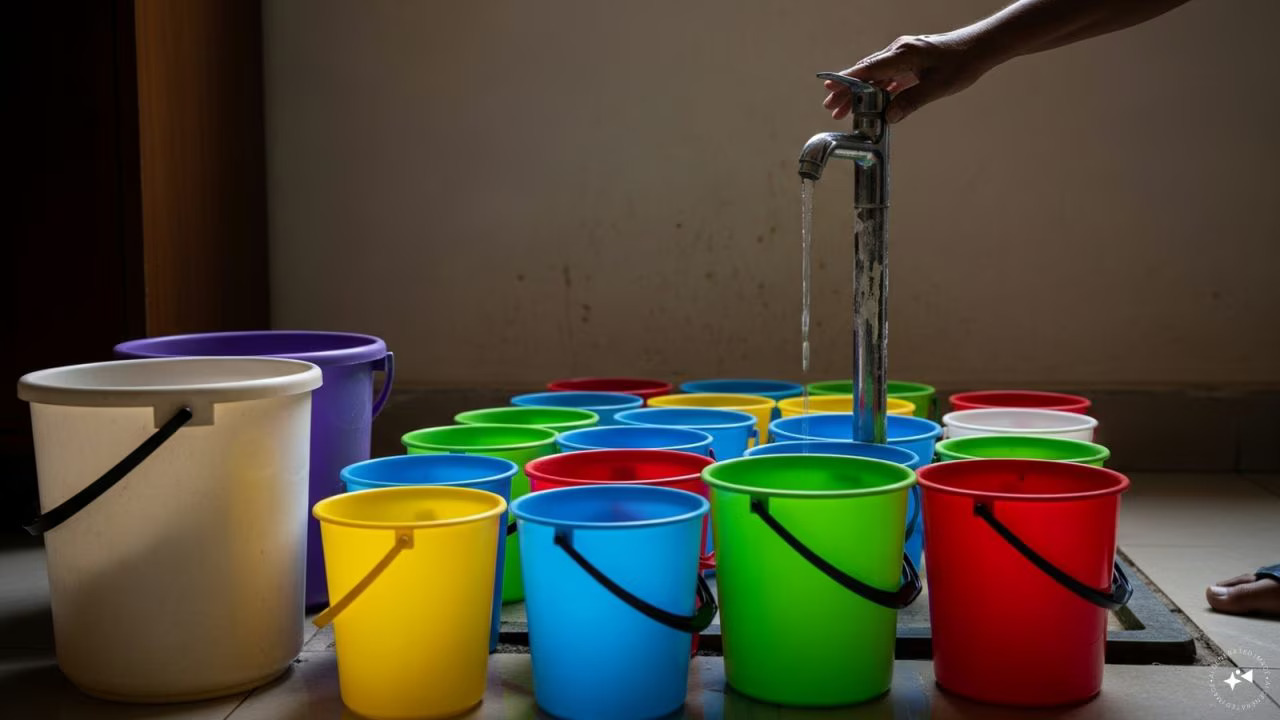
Mumbai’s western suburbs are set to experience a temporary disruption in water supply as civic authorities undertake a critical infrastructure upgrade aimed at strengthening long-term distribution efficiency. The planned shutdown, scheduled between late March 28 and the evening of March 29, will impact several neighbourhoods across Bandra, Khar, and Santacruz, highlighting the trade-offs cities face while modernising essential utilities.
The interruption is part of a broader Mumbai water cut linked to the commissioning of a newly laid trunk pipeline designed to improve supply to a key reservoir serving elevated residential zones. Urban infrastructure experts note that such upgrades are essential in a city where ageing pipelines and uneven distribution continue to strain water availability, particularly in high-density and premium coastal areas. Officials indicate that the work involves integrating a large-diameter pipeline into the existing network at a major junction in Bandra West. This connection is expected to enhance water flow and stabilise supply to surrounding localities once operational. However, the process requires a complete halt in supply for several hours to safely test and activate the system.
During the shutdown window, multiple pockets across Bandra West, Khar West, and Santacruz West will face either a complete absence of water or restricted supply at scheduled intervals. In addition, areas located at the tail end of the distribution network are likely to experience low pressure even after services resume, as the system gradually stabilises. Urban planners point out that while a Mumbai water cut can disrupt daily routines, these short-term inconveniences are often necessary to prevent larger systemic failures. In older cities like Mumbai, incremental upgrades—rather than full network overhauls—are typically adopted to maintain continuity while improving infrastructure resilience.
The civic body has also issued advisories urging residents to store adequate water in advance and exercise caution with drinking water quality in the days following the restoration. Experts highlight that temporary disturbances in pipelines can increase the risk of contamination, making precautionary treatment measures essential at the household level. From a broader urban development perspective, the project reflects a shift towards more proactive water management in Mumbai. With climate variability, population growth, and rising real estate densities placing additional pressure on civic utilities, strengthening last-mile distribution systems has become critical to ensuring equitable access.
However, the episode also underscores the importance of transparent communication and digital planning tools. Real-time updates, predictive supply mapping, and better coordination with local communities can help reduce the impact of such disruptions, particularly for vulnerable populations and small businesses that rely heavily on uninterrupted water access. As Mumbai continues to invest in upgrading its ageing infrastructure, the success of projects like this will depend not only on engineering outcomes but also on how effectively they balance service continuity with long-term sustainability goals.
BMC Water Shutdown On March 28 29 Across Bandra, Khar, Santacruz