


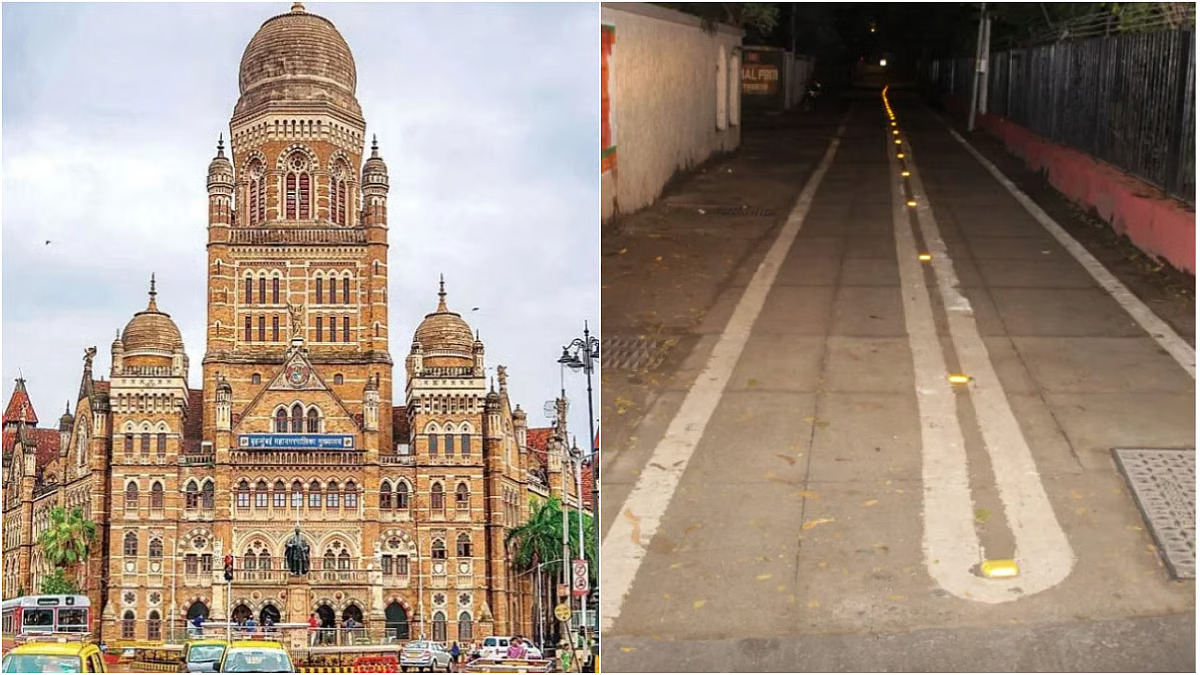
Mumbai’s long-delayed road concretisation project is set to restart this October, with the Brihanmumbai Municipal Corporation (BMC) focusing on 360 stretches across South Mumbai and an equal number of unfinished works in the suburbs. Stalled for nearly two years, the programme is central to the city’s long-term mobility and sustainability goals, and is now targeted for completion by May 2027.
The city’s road concretisation initiative has been described by officials as one of the most ambitious urban infrastructure upgrades in recent years. In January 2023, the BMC sanctioned contracts worth ₹17,000 crore for 2,121 roads stretching over 698 kilometres. However, the project faced significant hurdles when the contractor failed to begin work for months, forcing the civic body to terminate the agreement in November 2023. A fresh contract worth ₹1,300 crore was finalised in September 2024, breathing new life into the stalled effort. Despite the setbacks, progress has been steady since mid-2024. According to civic data, concretisation of 67 roads has been completed, while 76 remain partially finished. In many cases, these stretches were stabilised ahead of the monsoon to ensure safe passage for commuters. Officials say that the renewed push beginning in October will prioritise pending stretches across South Mumbai, with works scheduled on Geeta Nagar approach road, Capt Prakash Pethe Road in Cuffe Parade, Marine Lines First Cross Lane, VN Road linking Kilachand Chowk to Hutatma Chowk, and Free Press Journal Marg.
Parallel efforts are planned in the suburbs where 156 kilometres of roads were only partially concretised in the earlier phase. The BMC aims to complete these stretches on priority to relieve daily commuter woes and reduce maintenance costs from repeated patchwork repairs. Officials emphasise that concrete roads, while expensive upfront, ensure a lifespan of nearly 30 years compared with asphalt surfaces that deteriorate rapidly in Mumbai’s heavy monsoon. To address persistent criticism over delays and lack of accountability, the civic body has rolled out a digital dashboard to provide real-time updates on progress. Experts view this move as crucial for building public trust in large-scale infrastructure projects, particularly after years of scepticism about the efficiency and transparency of civic works.
As of now, work has already begun on 771 roads covering 186 kilometres across the city, with another 776 roads spanning 208 kilometres in the pipeline. The western suburbs account for 64 kilometres across 216 roads, while the eastern suburbs cover 52 kilometres across 200 roads. Officials insist that the phased plan is designed to minimise disruption while ensuring that critical corridors are prioritised. For Mumbai, the restart of road concretisation is more than just an infrastructure upgrade. It is a chance to align city development with sustainable practices by reducing long-term repair cycles, improving commuter safety, and cutting down emissions from traffic congestion caused by poor road conditions. If executed as planned, the project could reshape urban mobility and contribute to creating a greener, more resilient city for the future.
Also Read : Bengaluru Drain Network Exceeds Roads By Forty Five Percent
