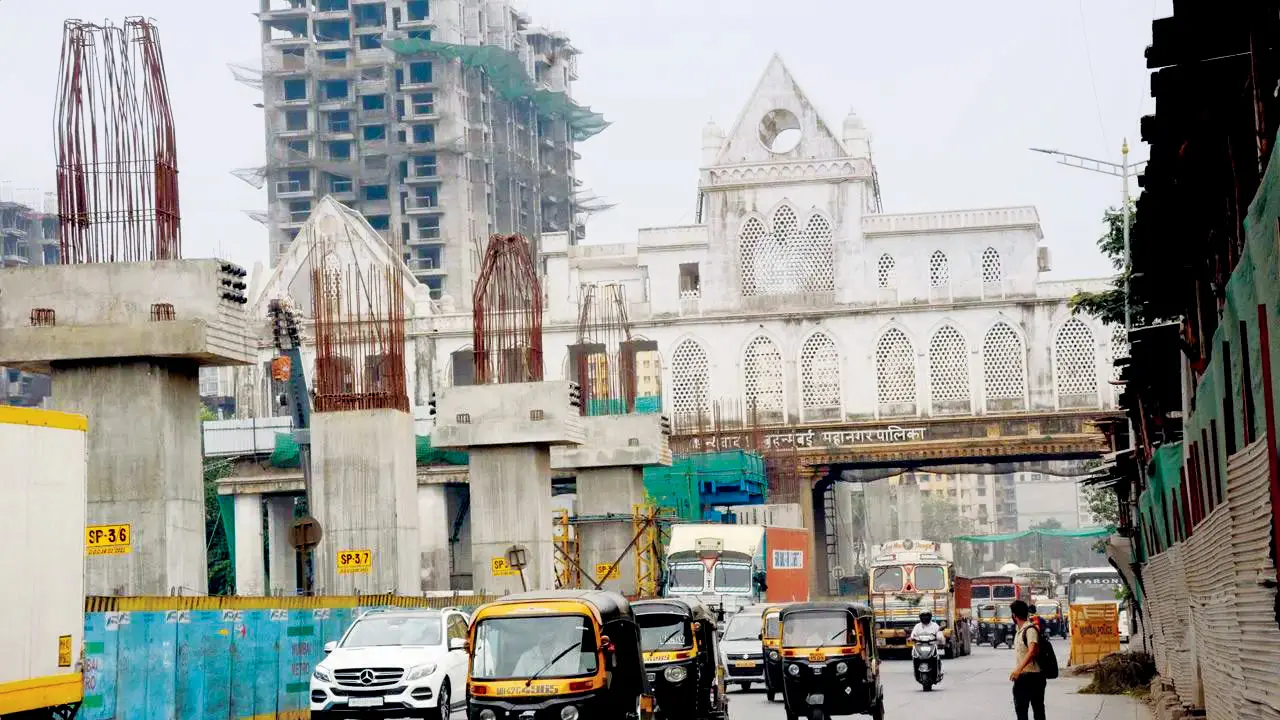
Mumbai’s civic administration is advancing plans to redesign key entry corridors into the city, proposing landmark structures and urban upgrades aimed at reshaping how the metropolis presents itself at its borders. The initiative, part of the Mumbai Gateway project outlined in the 2025–26 budget, signals a shift towards combining infrastructure with place-making at major transit thresholds.
The proposal centres on constructing prominent clock towers and redesigning approach zones at critical entry locations such as Dahisar, Vashi, Airoli and Mulund. These nodes serve as high-traffic gateways for daily commuters entering Mumbai from neighbouring regions, making them strategic points for both mobility management and urban identity. Officials familiar with the plan indicated that one of the eastern entry checkpoints has been selected for early execution, with preparatory work underway. This pilot phase is expected to establish design benchmarks and operational frameworks before the concept is replicated across other locations.
Beyond architectural elements, the Mumbai Gateway project is being positioned as a broader urban improvement exercise. Plans include upgrading surrounding public spaces, enhancing landscaping, and integrating green buffers to soften the visual impact of dense transport corridors. Urban planners suggest that such interventions, if executed thoughtfully, can improve not only aesthetics but also environmental performance by increasing permeable surfaces and urban greenery. The project is expected to be implemented through a public-private partnership model, with funding support drawn from corporate social responsibility contributions. This financing approach reflects a growing trend in Indian cities to leverage private sector participation for civic infrastructure that extends beyond core utilities.
A notable component of the plan involves repurposing land parcels that became underutilised following the removal of toll collection systems after the rollout of the Goods and Services Tax. These sites, often located at city peripheries, present opportunities for adaptive reuse, potentially unlocking economic value while improving urban design outcomes. Experts note that while gateway projects can enhance city branding and tourism appeal, their long-term success depends on integration with transport planning and pedestrian accessibility. Entry points are not merely symbolic—they function as transition zones where traffic flow, public transport interchange, and local community interactions converge.
There are also questions around maintenance and lifecycle costs, particularly for landmark structures such as clock towers. Ensuring that these installations remain functional and relevant over time will require clear governance frameworks and sustained funding commitments. From a sustainability perspective, the project offers an opportunity to embed climate-responsive design features, including energy-efficient lighting, native landscaping, and materials suited to coastal conditions. Such measures could align the initiative with broader goals of creating resilient and low-impact urban infrastructure.
As Mumbai continues to expand outward, the way it defines and manages its edges is becoming increasingly important. The Mumbai Gateway project, if implemented with a focus on inclusivity, environmental sensitivity, and design quality, could redefine these entry points from congested transit zones into more coherent and welcoming urban spaces.
BMC To Develop Iconic Clock Towers Across Major Mumbai Entry Corridors Soon