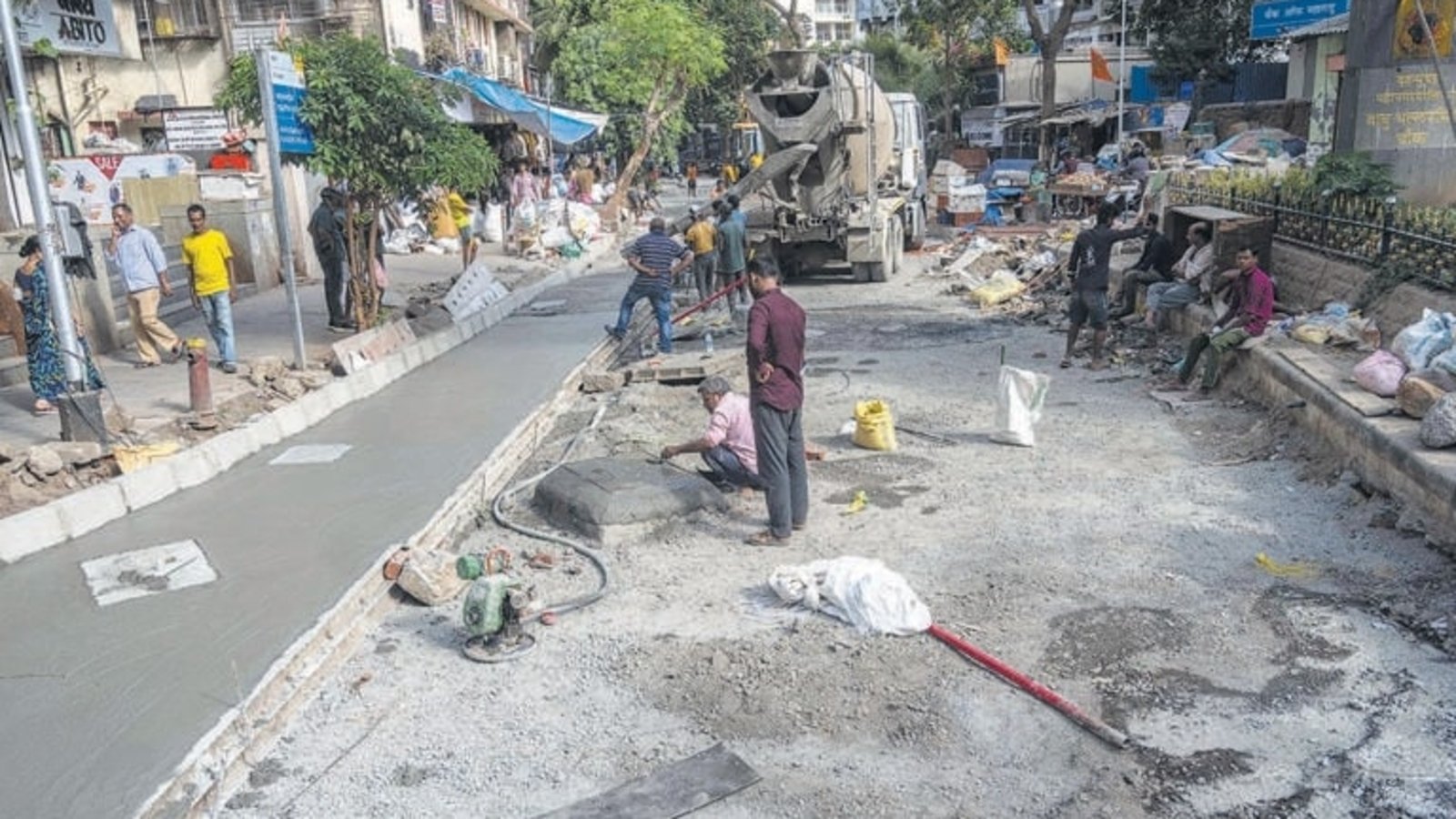
The Brihanmumbai Municipal Corporation (BMC) has significantly ramped up its road construction initiatives across the city.
With the monsoon season just weeks away, the civic body has made it a priority to overhaul Mumbai’s road network to ensure that its residents are not burdened with the usual disruption caused by damaged infrastructure. The BMC has set an aggressive deadline of May 31, 2025, to complete the majority of its cement concrete (CC) roadworks, well before the onset of the rains. From April 17 to April 23, 2025, the BMC deployed a massive fleet of 2,650 Ready-Mix Concrete (RMC) mixer trucks, averaging 378 trucks per day, to accelerate the construction process. This marks an unprecedented step by the civic body to expedite its road repair works, which have traditionally been a source of discontent among Mumbai’s residents due to the chronic issue of potholes.
A senior official from BMC emphasised that the city has struggled with road maintenance during the monsoon for years. “Our goal is clear: we want to deliver pothole-free roads to the people of Mumbai before the monsoon hits. The extensive use of Ready-Mix Concrete is allowing us to fast-track these projects with speed, consistency, and the highest quality standards,” the official stated. According to the BMC, this initiative is a crucial step towards eliminating the recurring traffic disruptions that plague Mumbai every rainy season. In a bid to modernise its infrastructure, the BMC has opted for Pavement Quality Concrete (PQC), a special type of high-strength concrete that is designed to be durable, weather-resistant, and capable of withstanding the rigours of Mumbai’s traffic conditions. During the week-long period, over 18,560 cubic metres of PQC were laid across various parts of Mumbai, making the city’s roads more robust and resilient to weather damage.
One of the primary reasons for this aggressive approach to road revamp is the quality of the material being used. Ready-Mix Concrete (RMC) is not only quick to deploy, but it is also produced in batch plants and delivered in pre-mixed form, which ensures the consistency of the material used for each construction site. Each RMC truck keeps the concrete in a rotating drum, ensuring that the mixture remains fresh and homogeneous during transport. This method guarantees high-quality standards and reduces the risks associated with human error that could potentially compromise road durability. The BMC’s decision to use RMC comes after years of challenges in maintaining the city’s roads during the monsoon season. The use of traditional methods such as hot mix asphalt, while initially effective, would often deteriorate under the pressure of heavy rains, leading to the formation of potholes. These recurring issues have contributed to the loss of lives in traffic accidents caused by road hazards. With RMC and PQC, the BMC hopes to address these longstanding problems, ensuring safer roads for commuters throughout the year.
In an effort to maintain high standards, BMC officials have instituted a series of quality checks and surprise site inspections. The aim is to ensure that the road construction projects meet the necessary standards for durability and safety. Any contractor found violating these standards faces stiff penalties and administrative actions. Senior BMC officials are also personally overseeing the progress of the roadworks in different parts of the city, including the eastern and western suburbs. The BMC has made it clear that it is committed to ensuring that no shortcuts are taken when it comes to road quality. The city’s road network is vital not only for daily commuters but also for economic activities that rely on the seamless movement of goods and services. As such, the BMC has committed to adopting a zero-tolerance approach towards subpar work in the construction of these roads.
However, the scale of the project has also raised some concerns about the impact of this accelerated construction process on daily commuters. Most of the concrete laying activities are scheduled during the night to minimise disruption and avoid peak-hour traffic congestion. Still, there are reports of increased traffic diversions and delays due to the ongoing construction work, especially in areas where roads are completely closed for relaying the concrete. Despite these minor inconveniences, many commuters have expressed their support for the initiative, acknowledging that pothole-free roads will result in smoother journeys and reduced vehicle maintenance costs in the long term.
While the BMC’s push to improve Mumbai’s roads before the monsoon is commendable, experts have pointed out that this is merely a short-term solution to a long-standing problem. Mumbai’s road infrastructure, despite recent upgrades, still faces the challenge of accommodating the growing population and traffic. Many parts of the city, especially older areas, continue to struggle with crumbling roads, insufficient drainage systems, and inadequate pedestrian infrastructure. Urban planners suggest that Mumbai needs a more comprehensive long-term strategy to address its infrastructure issues. “While the BMC’s efforts to fix roads ahead of the monsoon are commendable, it is crucial that the civic body focuses on long-term infrastructure planning as well. This includes regular maintenance of roads, better urban planning to reduce traffic congestion, and the development of a robust public transportation system that can ease the strain on the road network,” said an urban development expert.
Mumbai’s population continues to grow, and the city’s infrastructure struggles to keep pace with this rapid urbanisation. The roadworks initiated by the BMC are a necessary step towards improving the city’s transport system, but they need to be part of a broader urban development plan that takes into account the city’s long-term growth needs. The BMC’s current focus on using high-strength concrete is also in line with broader global trends towards sustainability. Concrete, when produced and used efficiently, can significantly contribute to sustainable urban infrastructure. By using PQC, which is designed to be more durable, the BMC is not only improving the longevity of its roads but also reducing the need for frequent repairs and replacements. This approach could have a long-term environmental benefit by decreasing the carbon footprint associated with road maintenance.
The shift towards more durable road construction materials is also a positive step towards a greener Mumbai. By prioritising sustainability and durability, the BMC aims to reduce the environmental impact of constant road repairs and the associated construction waste. The incorporation of sustainable practices in road construction projects can contribute to Mumbai’s goals of becoming a zero-carbon city, ensuring that future generations benefit from a cleaner and more resilient urban environment. As the monsoon season approaches, the BMC’s road revamp initiative represents a significant step forward in addressing one of Mumbai’s most persistent urban challenges.
Whether this accelerated push can sustain long-term improvements in road quality will depend on the city’s commitment to ongoing infrastructure investments, coupled with effective management of its growing urban needs.
BMC Speeds Up Roadworks to Beat Monsoon Deadline